Main Content
Agile vs. Waterfall: Which is Better for Enterprise IT Projects?
In the world of enterprise IT projects, choosing the right project management methodology can make the difference between success and failure. Two of the most widely adopted approaches are Agile and Waterfall. While Waterfall has been around for decades, Agile has gained momentum in the last 15 years, especially in technology-driven industries. But which is better for enterprise IT projects? Let’s break it down.
What is Waterfall?
Waterfall is a linear and sequential project management methodology. Each stage—requirements, design, development, testing, deployment, and maintenance—must be completed before the next phase begins.
Strengths of Waterfall:
- Clear documentation and project scope.
- Works well for projects with fixed requirements.
- Easier for teams in heavily regulated industries.
Challenges of Waterfall:
- Limited flexibility to adapt to changes.
- Risk of delayed feedback since testing happens late.
- May not align with fast-changing enterprise IT needs.
What is Agile?
Agile is an iterative and flexible methodology emphasizing collaboration, customer feedback, and adaptability. Work is divided into sprints or iterations, delivering functional software incrementally.
Strengths of Agile:
- Flexibility to adapt to evolving requirements.
- Faster delivery of usable features.
- Encourages collaboration and stakeholder involvement.
Challenges of Agile:
- Requires strong communication and team maturity.
- Scope creep can occur if not managed properly.
- May lack detailed documentation for compliance-heavy projects.
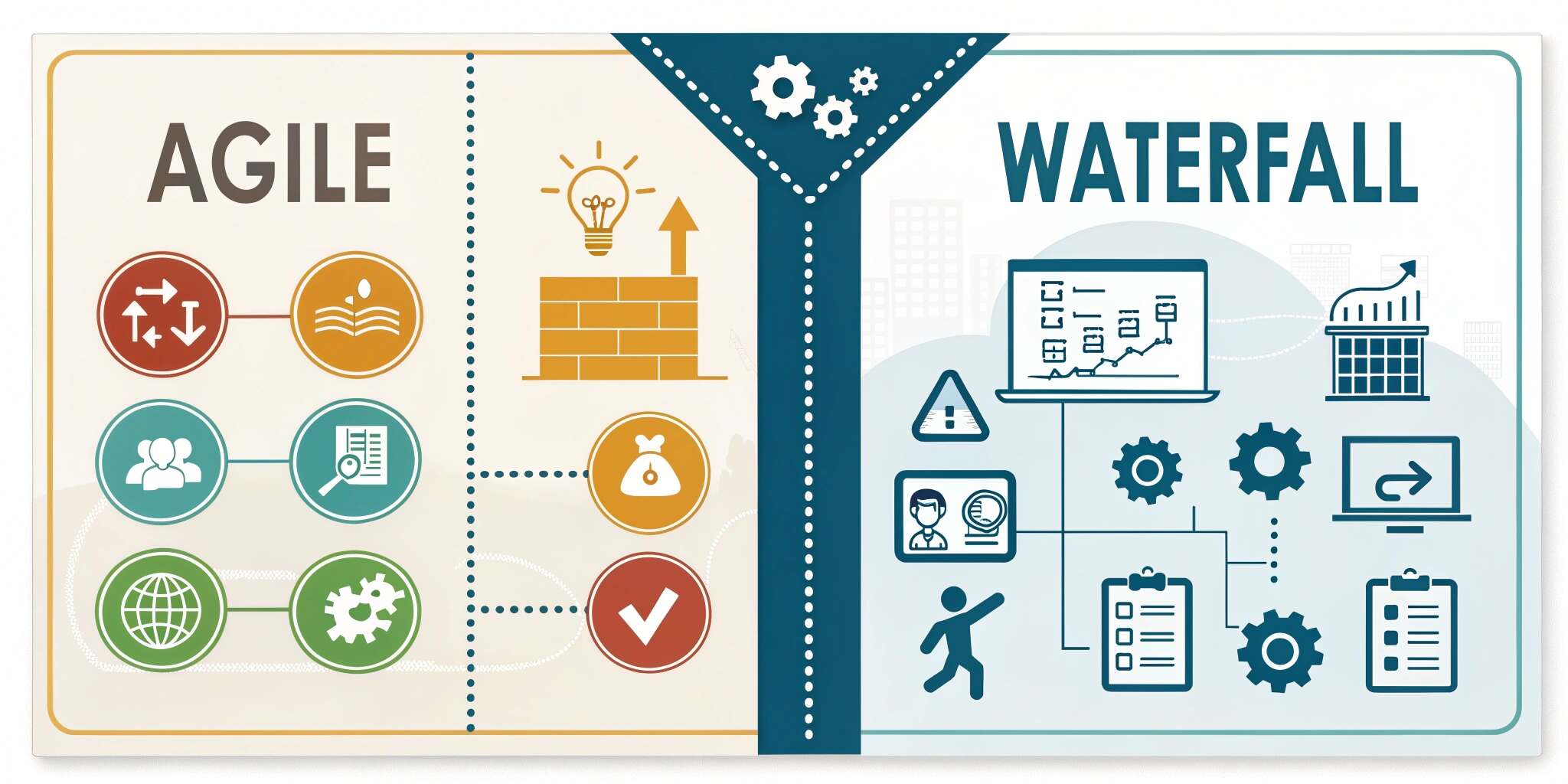
Agile vs. Waterfall: A Direct Comparison
AspectAgileWaterfallFlexibilityHigh – adapts to changeLow – rigid processProject SizeBest for complex, evolving ITBest for small, defined projectsDeliveryIncremental, iterativeSingle final deliveryDocumentationLightweightComprehensiveStakeholder InvolvementContinuousMostly at beginning/end
Which is Better for Enterprise IT Projects?
The answer depends on the nature of the project:
- Choose Waterfall when requirements are clear, compliance is critical, and changes are unlikely. For example, legacy system upgrades or government IT projects.
- Choose Agile when innovation, flexibility, and speed are priorities. For example, cloud migrations, app development, or customer-facing platforms.
- Hybrid Approach: Many enterprises adopt a hybrid Agile-Waterfall model, blending structured documentation with Agile’s adaptability.
Final Thoughts
Neither Agile nor Waterfall is universally better. The success of enterprise IT projects depends on aligning the chosen methodology with project scope, organizational culture, and long-term business goals. Enterprises that evaluate their needs carefully often find that Agile or hybrid models deliver the most value in today’s fast-changing IT landscape.