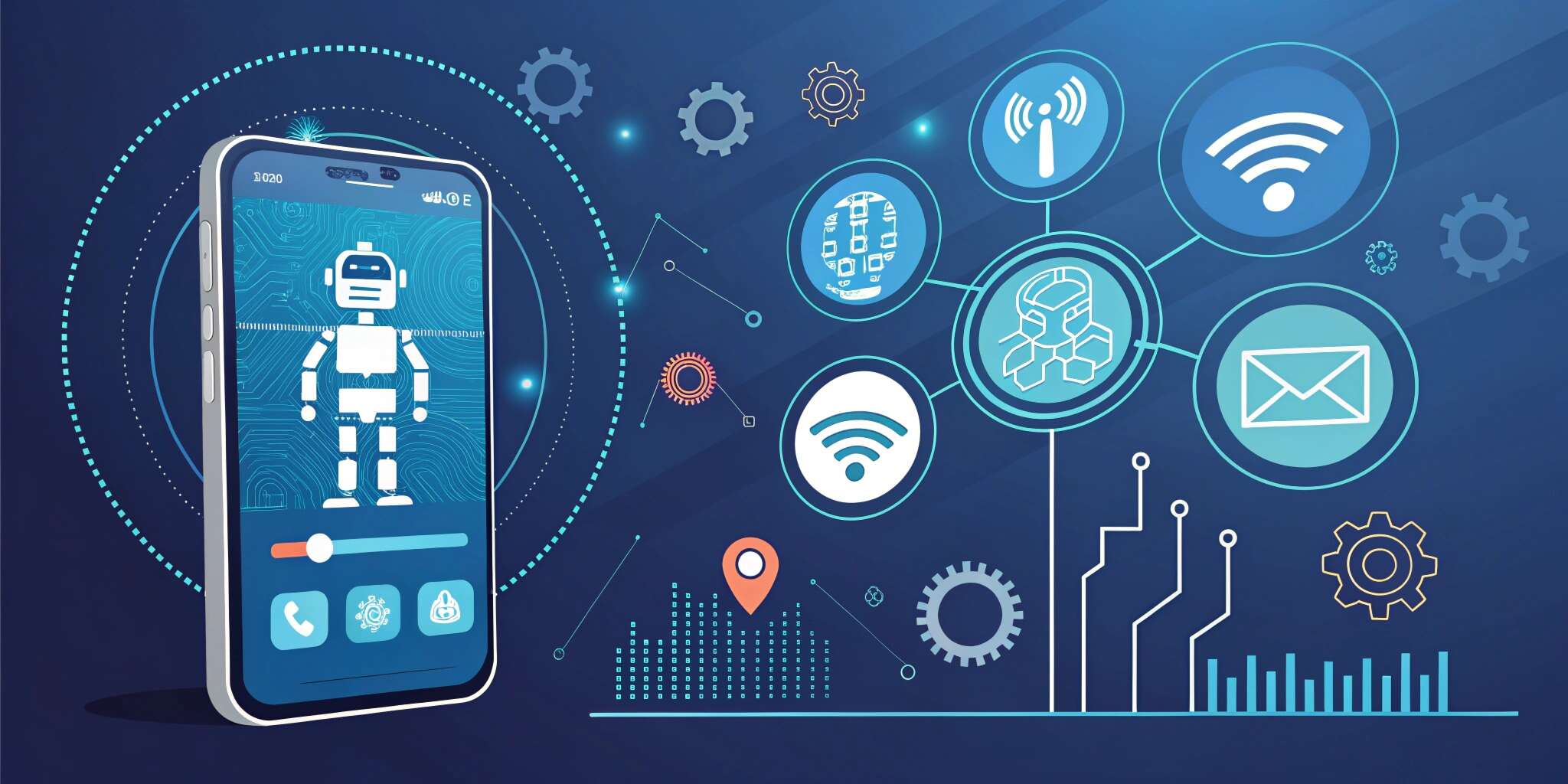
Mobile applications are undergoing a fundamental shift—from tools that simply respond to user input into autonomous systems capable of independent decision-making. At the heart of this transformation are AI agents—goal-driven software entities that perceive context, plan actions, learn continuously, and execute tasks with minimal human intervention. AI agents are not just enhancing mobile apps; they are redefining what apps can do.
What Are AI Agents in Mobile Apps?
AI agents are intelligent components embedded within applications that operate based on objectives rather than predefined scripts. Unlike traditional rule-based automation, AI agents can reason, adapt, and optimize actions dynamically.
Core characteristics of AI agents include:
- Goal-oriented behavior
- Context awareness
- Memory and learning capabilities
- Autonomous decision-making
- Continuous optimization
- Multi-step planning
In mobile apps, these agents act as digital collaborators, anticipating user needs and executing tasks proactively.
How AI Agents Work Inside Mobile Applications
AI agents combine multiple AI technologies to function autonomously:
1. Perception Layer
Agents gather data from user interactions, sensors, location, device context, and external APIs.
2. Reasoning & Planning Layer
Using LLMs, reinforcement learning, or symbolic reasoning, agents plan multi-step actions to achieve goals.
3. Execution Layer
Agents carry out actions such as sending notifications, adjusting UI, making recommendations, or triggering workflows.
4. Learning & Memory
Agents learn from feedback and outcomes, improving decisions over time while maintaining long-term context.
This architecture enables apps to evolve dynamically with each user interaction.
Real-World Use Cases of AI Agents in Mobile Apps
Personal Productivity & Assistants
AI agents schedule meetings, prioritize tasks, summarize messages, and automate workflows based on user habits.
Health & Wellness Apps
Agents monitor behavior patterns, suggest lifestyle improvements, and adjust recommendations in real time.
Finance & FinTech
AI agents track spending, detect anomalies, recommend investments, and automate budgeting decisions.
E-commerce & Retail
Agents personalize shopping experiences, optimize pricing, manage cart recovery, and predict purchasing intent.
Learning & Education
AI agents customize learning paths, adapt content difficulty, and provide personalized feedback.
Gaming & Virtual Worlds
Autonomous NPC agents create dynamic interactions, adaptive challenges, and evolving storylines.
Benefits of Autonomous Mobile Applications
1. Proactive User Experiences
Apps no longer wait for instructions; they act intelligently on behalf of users.
2. Deep Personalization
AI agents tailor experiences at an individual level, increasing engagement and satisfaction.
3. Reduced Cognitive Load
Users spend less time managing tasks and more time benefiting from outcomes.
4. Continuous Optimization
Apps self-improve through learning, making them smarter with each interaction.
5. Scalable Intelligence
AI agents can manage complex workflows across millions of users simultaneously.
Challenges & Considerations
Despite their promise, AI agents introduce important challenges:
- Privacy & Data Security: Agents require access to sensitive user data and must operate transparently and securely.
- Explainability: Autonomous decisions must be interpretable to maintain user trust.
- Resource Constraints: Mobile devices have limited compute and battery capacity.
- Control & Alignment: Agents must remain aligned with user intent and ethical boundaries.
Responsible design and governance are essential for safe deployment.
The Future of AI Agents in Mobile Apps
The next generation of mobile apps will be agent-native by design. Emerging trends include:
- On-device AI agents using TinyML and edge AI
- Multi-agent collaboration across apps and platforms
- Emotion-aware and context-sensitive agents
- AI agents with long-term memory and user goals
- Autonomous app ecosystems that coordinate tasks seamlessly
Soon, apps will not just assist users—they will act as autonomous partners, managing daily tasks, optimizing decisions, and adapting continuously.
AI agents represent the most significant evolution in mobile app development since the introduction of smartphones.