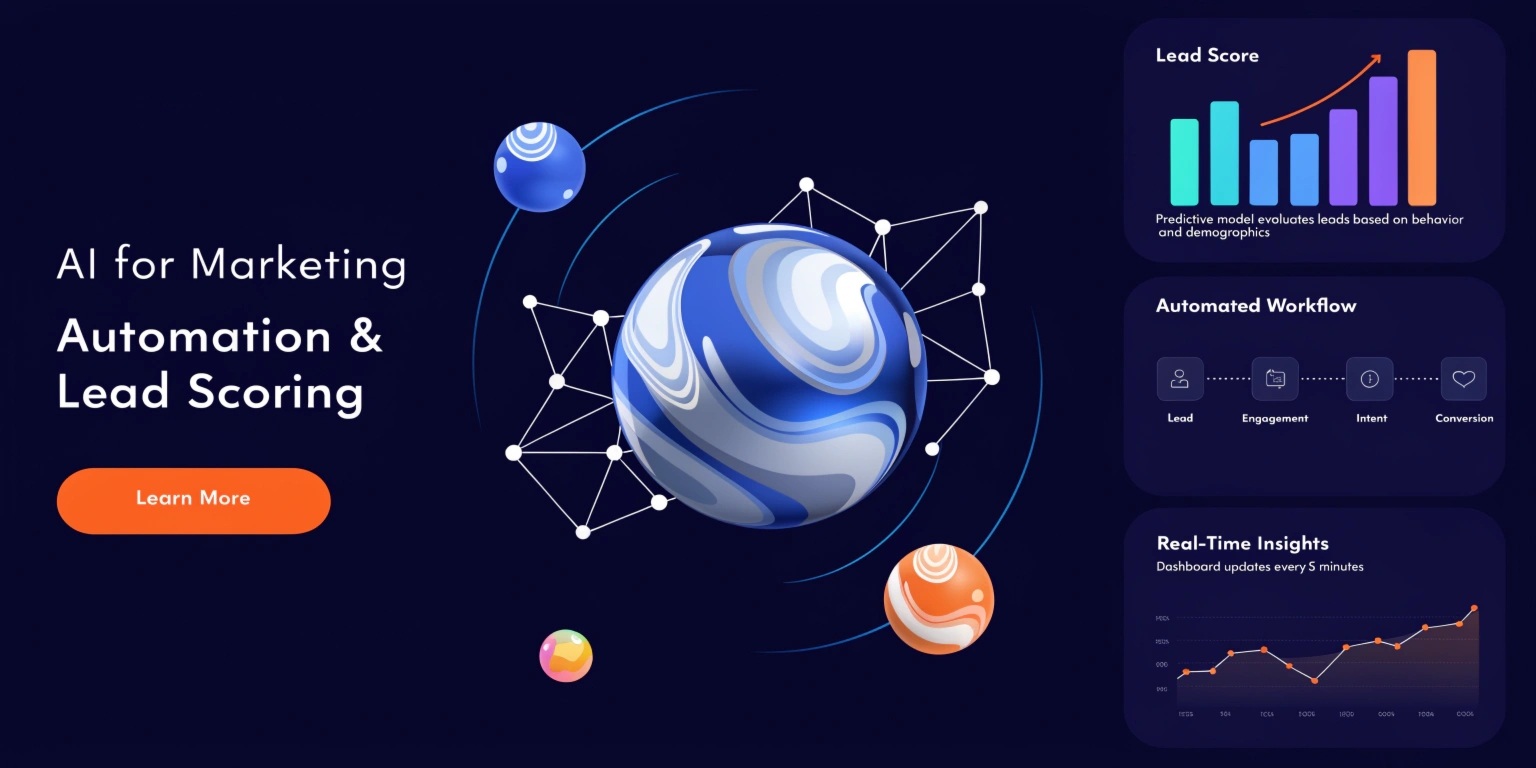
In today’s competitive digital landscape, businesses are constantly seeking smarter ways to attract, engage, and convert customers. Traditional marketing methods are no longer sufficient to handle the complexity and scale of modern consumer behavior. This is where Artificial Intelligence (AI) steps in, transforming marketing automation and lead scoring into more intelligent, data-driven processes.
AI-powered marketing automation enables businesses to streamline repetitive tasks, personalize customer interactions, and optimize campaigns in real time. At the same time, AI-driven lead scoring helps identify the most promising prospects, allowing sales teams to focus their efforts where it matters most.
What is AI in Marketing Automation?
Marketing automation refers to the use of software tools to automate marketing tasks such as email campaigns, social media posting, and customer segmentation. When combined with AI, these systems become significantly more powerful.
AI analyzes vast amounts of customer data, including browsing behavior, purchase history, and engagement patterns. It uses this data to predict customer preferences and deliver highly personalized experiences. For example, AI can automatically send tailored emails based on a user’s behavior or recommend products that align with their interests.
Understanding Lead Scoring with AI
Lead scoring is the process of ranking potential customers based on their likelihood to convert. Traditional lead scoring methods rely on predefined rules, such as assigning points based on actions like email opens or website visits.
AI takes this a step further by using machine learning algorithms to analyze patterns and predict which leads are most likely to convert. It considers multiple variables simultaneously, including demographic data, online behavior, and past interactions.
This predictive approach ensures more accurate scoring, helping businesses prioritize high-quality leads and improve conversion rates.
Key Benefits of AI in Marketing Automation & Lead Scoring
1. Enhanced Personalization
AI enables hyper-personalized marketing by delivering content tailored to individual preferences. This increases engagement and builds stronger customer relationships.
2. Improved Lead Quality
By identifying high-potential leads, AI reduces the time and effort spent on unqualified prospects. Sales teams can focus on leads that are more likely to convert.
3. Increased Efficiency
Automation reduces manual tasks, allowing marketing teams to focus on strategy and creativity. Campaigns can run seamlessly with minimal human intervention.
4. Data-Driven Decision Making
AI provides actionable insights based on real-time data analysis. This helps marketers make informed decisions and optimize campaigns effectively.
5. Higher ROI
With better targeting, personalization, and lead prioritization, businesses can achieve higher conversion rates and maximize their return on investment.
Real-World Applications
AI-driven marketing automation and lead scoring are widely used across industries:
- Email Marketing: Automated, personalized email campaigns based on user behavior.
- Customer Segmentation: Grouping users into segments for targeted marketing.
- Chatbots and Virtual Assistants: Providing instant responses and guiding users through the sales funnel.
- Predictive Analytics: Forecasting customer behavior and campaign performance.
- CRM Integration: Enhancing customer relationship management systems with intelligent insights.
Popular AI Marketing Tools
Several platforms offer AI-powered marketing automation and lead scoring capabilities, including HubSpot, Salesforce, Marketo, and ActiveCampaign. These tools integrate with CRM systems and provide advanced analytics, automation workflows, and predictive insights.
Challenges to Consider
While AI offers numerous advantages, businesses must also address certain challenges:
- Data Quality: AI models require accurate and clean data to function effectively.
- Integration Complexity: Implementing AI tools into existing systems can be challenging.
- Cost: Advanced AI solutions may require significant investment.
- Privacy Concerns: Handling customer data responsibly is crucial to maintain trust and comply with regulations.
Best Practices for Implementation
To successfully implement AI in marketing automation and lead scoring, businesses should:
- Start with clear objectives and measurable goals
- Invest in high-quality data collection and management
- Choose the right tools that align with business needs
- Continuously monitor and optimize AI models
- Ensure compliance with data privacy regulations
The Future of AI in Marketing
The future of marketing lies in intelligent automation. As AI technology continues to evolve, we can expect even more advanced capabilities, such as real-time personalization, voice-based interactions, and deeper predictive analytics.
Businesses that embrace AI-driven marketing strategies will gain a competitive edge by delivering better customer experiences and achieving higher efficiency.
Conclusion
AI is revolutionizing marketing automation and lead scoring by making processes smarter, faster, and more effective. By leveraging AI, businesses can identify high-quality leads, deliver personalized experiences, and optimize their marketing efforts for maximum impact.
In an era where data is king, adopting AI-driven solutions is no longer optional—it’s essential for staying competitive and driving sustainable growth.