Artificial Intelligence has significantly changed the way people interact with technology. From intelligent chatbots and virtual assistants to personalized recommendations and real-time language translation, AI continues to reshape digital experiences. One of the most fascinating developments in recent years is AI Voice Cloning Technology—the ability to replicate human voices with impressive accuracy using advanced machine learning models.
What once required professional recording studios and voice actors can now be accomplished with a few minutes of voice samples and sophisticated AI algorithms. Voice cloning is rapidly becoming a key feature in modern mobile and web applications, enabling businesses to create highly personalized, engaging, and accessible user experiences.
As industries explore new ways to connect with users, AI voice cloning is emerging as a powerful tool that combines convenience, automation, and human-like communication.
What Is AI Voice Cloning?
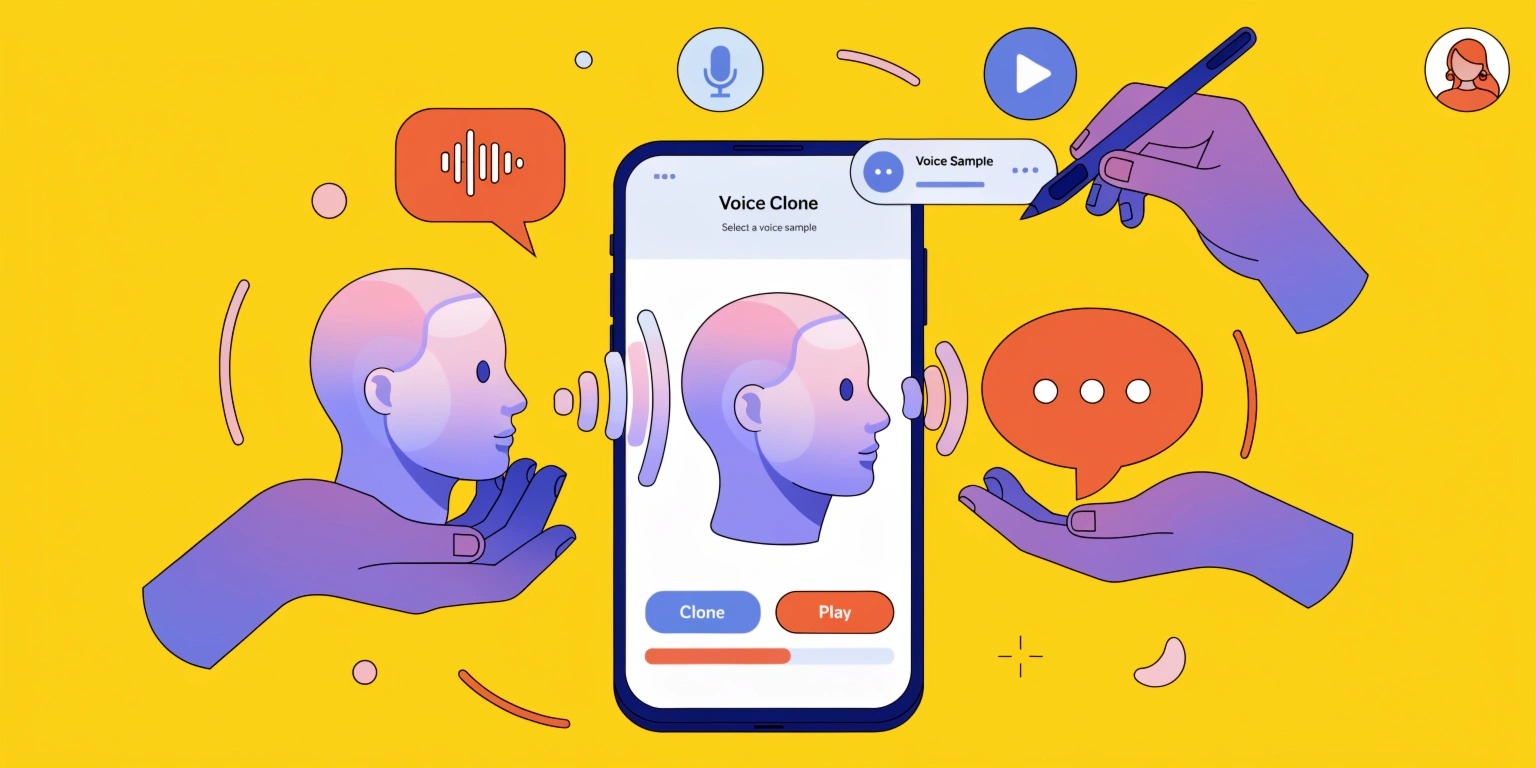
AI voice cloning is a technology that uses artificial intelligence and deep learning models to create a synthetic voice that closely resembles a real person's speech patterns, tone, pronunciation, and vocal characteristics.
The process typically involves:
- Collecting voice samples
- Training AI models
- Generating a digital voice replica
- Converting text into speech using the cloned voice
Modern voice cloning systems can reproduce:
- Accent
- Pitch
- Speaking style
- Emotional tone
- Voice rhythm
The result is highly realistic speech that often sounds nearly indistinguishable from the original speaker.
How AI Voice Cloning Works
Voice cloning relies on several advanced AI technologies.
Speech Data Collection
The process begins by gathering voice recordings from a target speaker.
The more high-quality audio samples available, the better the cloned voice accuracy.
Feature Extraction
AI models analyze:
- Vocal patterns
- Phonemes
- Intonation
- Pronunciation
- Speech timing
This information forms a unique voice profile.
Deep Learning Model Training
Neural networks learn the relationship between text and speech characteristics.
Popular technologies include:
- Transformer models
- Neural Text-to-Speech (TTS)
- Generative AI models
- Speech synthesis networks
Voice Generation
After training, the system converts written text into speech using the cloned voice.
The generated audio can be customized for speed, emotion, and tone.
Why Voice Cloning Is Gaining Popularity
Several factors have accelerated adoption.
Improved User Engagement
Users often respond more positively to natural-sounding voices than robotic text-to-speech systems.
Cost Efficiency
Businesses can generate voice content without repeatedly hiring voice actors.
Personalization
Applications can create unique experiences tailored to individual users.
Accessibility
Voice technology improves digital access for people with disabilities and reading challenges.
These benefits make voice cloning attractive across multiple industries.
Popular Applications of AI Voice Cloning
Virtual Assistants
AI assistants can use customized voices to create more natural interactions.
Examples include:
- Customer support bots
- Smart home assistants
- Enterprise virtual agents
E-Learning Platforms
Educational applications use voice cloning to:
- Narrate lessons
- Deliver personalized tutoring
- Support multilingual learning
Consistent voice delivery improves the learning experience.
Content Creation
Creators can produce:
- Podcasts
- Audiobooks
- Video narrations
- Marketing content
without extensive recording sessions.
Gaming Industry
Game developers use cloned voices to create:
- Dynamic character dialogues
- Non-player character interactions
- Personalized storytelling experiences
This reduces production costs while increasing immersion.
Healthcare
Voice cloning supports patients who may lose their natural speaking ability due to medical conditions.
Digital voice preservation helps individuals maintain personal communication styles.
Benefits of AI Voice Cloning in Apps
Enhanced Personalization
Applications can deliver highly customized interactions that feel more human and engaging.
Faster Content Production
Organizations can generate large volumes of audio content quickly.
Scalability
Voice content can be produced in multiple languages and formats with minimal effort.
Brand Consistency
Businesses can maintain a consistent voice identity across platforms and customer touchpoints.
Improved Accessibility
Voice-based interfaces support users with visual impairments and reading difficulties.
Challenges and Risks
Despite its advantages, voice cloning introduces several concerns.
Ethical Issues
Unauthorized voice replication can raise serious privacy concerns.
Organizations must obtain proper consent before cloning voices.
Deepfake Misuse
Voice cloning technology can potentially be used to create fraudulent audio recordings.
Examples include:
- Impersonation attacks
- Financial fraud
- Misinformation campaigns
Strong safeguards are necessary.
Data Privacy
Voice recordings are sensitive personal data.
Applications must comply with privacy regulations and secure user information.
Accuracy Limitations
Although voice cloning has improved significantly, some generated speech may still sound unnatural in complex scenarios.
Continuous model improvement is required.
Best Practices for Implementing Voice Cloning
Organizations should follow responsible development practices.
Obtain Explicit Consent
Always secure permission before collecting voice samples.
Implement Security Controls
Protect voice data through:
- Encryption
- Access controls
- Secure storage
Provide Transparency
Users should understand when they are interacting with AI-generated voices.
Monitor Usage
Establish safeguards to prevent misuse and unauthorized access.
Responsible implementation builds trust and reduces risks.
The Future of AI Voice Cloning
The future of voice cloning technology is highly promising.
Emerging innovations include:
Emotionally Adaptive Voices
AI systems will adjust emotional tone based on context and user interactions.
Real-Time Voice Translation
Users may speak in one language while AI instantly generates their cloned voice in another language.
Personalized Digital Avatars
Voice cloning will integrate with virtual humans and AI avatars.
Hyper-Realistic Conversations
Future models will create increasingly natural and context-aware speech experiences.
These advancements will further blur the line between human and machine communication.
Business Opportunities
Organizations across industries are investing in voice AI solutions.
Potential opportunities include:
- Customer service automation
- Interactive learning platforms
- Entertainment applications
- Healthcare solutions
- Marketing personalization
- Enterprise productivity tools
Businesses that adopt voice technologies early may gain significant competitive advantages.
Conclusion
AI voice cloning technology is revolutionizing how applications communicate with users. By replicating human speech with remarkable realism, voice cloning enables more engaging, personalized, and accessible digital experiences. From virtual assistants and educational platforms to gaming, healthcare, and content creation, the applications of this technology continue to expand rapidly.
However, with great innovation comes responsibility. Organizations must address ethical considerations, privacy concerns, and security risks while implementing voice cloning solutions. When used responsibly, AI voice cloning has the potential to transform digital communication and become a foundational component of next-generation applications.
As artificial intelligence continues to evolve, voice cloning will play a crucial role in creating more natural, human-centered interactions between people and technology.