In the era of cloud-native applications, microservices, and distributed systems, APIs have become the backbone of digital products. The API-first approach, combined with the rise of GraphQL, is revolutionizing how organizations design, scale, and deliver applications.
What is API-First Development?
API-first is a strategy where APIs are designed before the application itself. Instead of being an afterthought, APIs serve as the foundation for both backend services and frontend applications.
Key Principles:
- APIs are treated as products with well-defined contracts.
- Multiple teams can build independently on the same API.
- APIs drive scalability and seamless integration with third-party services.
Why GraphQL is Gaining Adoption
GraphQL, developed by Facebook, is a query language for APIs that provides a more efficient, powerful, and flexible alternative to REST.
Advantages of GraphQL:
- Precise Data Fetching: Clients request exactly the data they need—no more, no less.
- Single Endpoint: Unlike REST, GraphQL avoids over-fetching or under-fetching.
- Improved Developer Experience: Strongly typed schema enables better tooling and debugging.
- Flexibility Across Devices: Works seamlessly for web, mobile, and IoT applications.
API-First + GraphQL: A Perfect Match
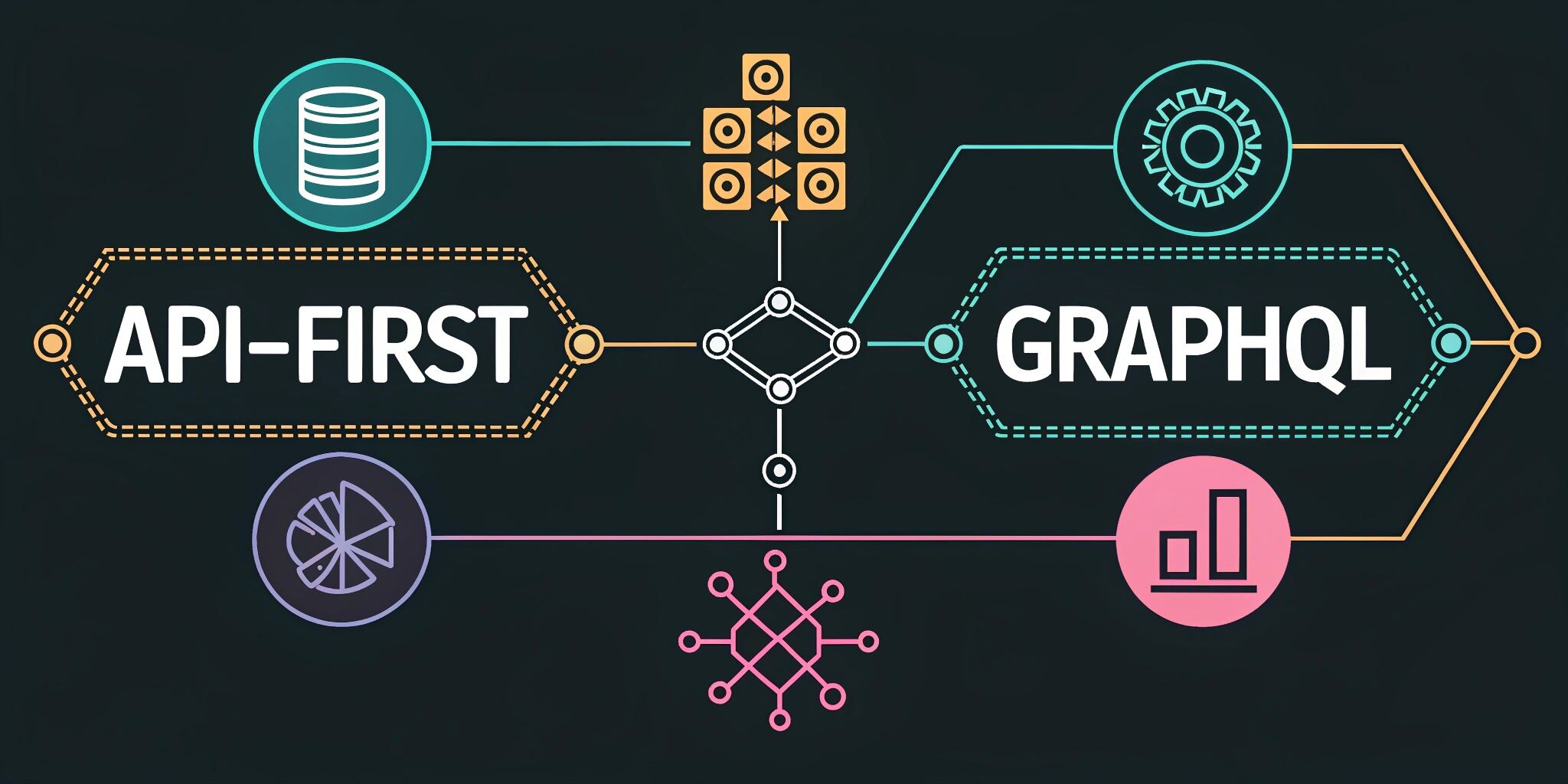
When combined, API-first and GraphQL provide a future-proof architecture.
- API-First Mindset: Ensures APIs are well-planned, standardized, and reusable.
- GraphQL Layer: Offers flexibility and efficiency for consuming data across platforms.
- Outcome: Faster development cycles, reduced API maintenance, and improved scalability.
Use Cases of API-First & GraphQL Adoption
- E-commerce: Powering headless commerce platforms with personalized, real-time product data.
- FinTech: Delivering secure, scalable APIs for banking apps and payment systems.
- Healthcare: Providing interoperable, standardized APIs for medical data access.
- Social Media & Streaming: Optimizing real-time feeds, search, and recommendations.
Challenges & Considerations
- Learning Curve: Teams may need training to shift from REST to GraphQL.
- Performance Management: Complex queries can strain backend systems if not optimized.
- Security: Proper validation and rate-limiting are critical for GraphQL endpoints.
Best Practices for Adoption
- Design APIs with Reusability in Mind.
- Use Schema-First Development in GraphQL.
- Leverage API Gateways for Security & Monitoring.
- Adopt Versioning & Documentation Standards.
- Test & Monitor Performance Continuously.
Conclusion
API-first development and GraphQL adoption are shaping the next generation of applications. Organizations that embrace these approaches gain scalability, faster development cycles, and a superior developer and user experience. The future is API-driven and GraphQL-powered.