Main Content :-
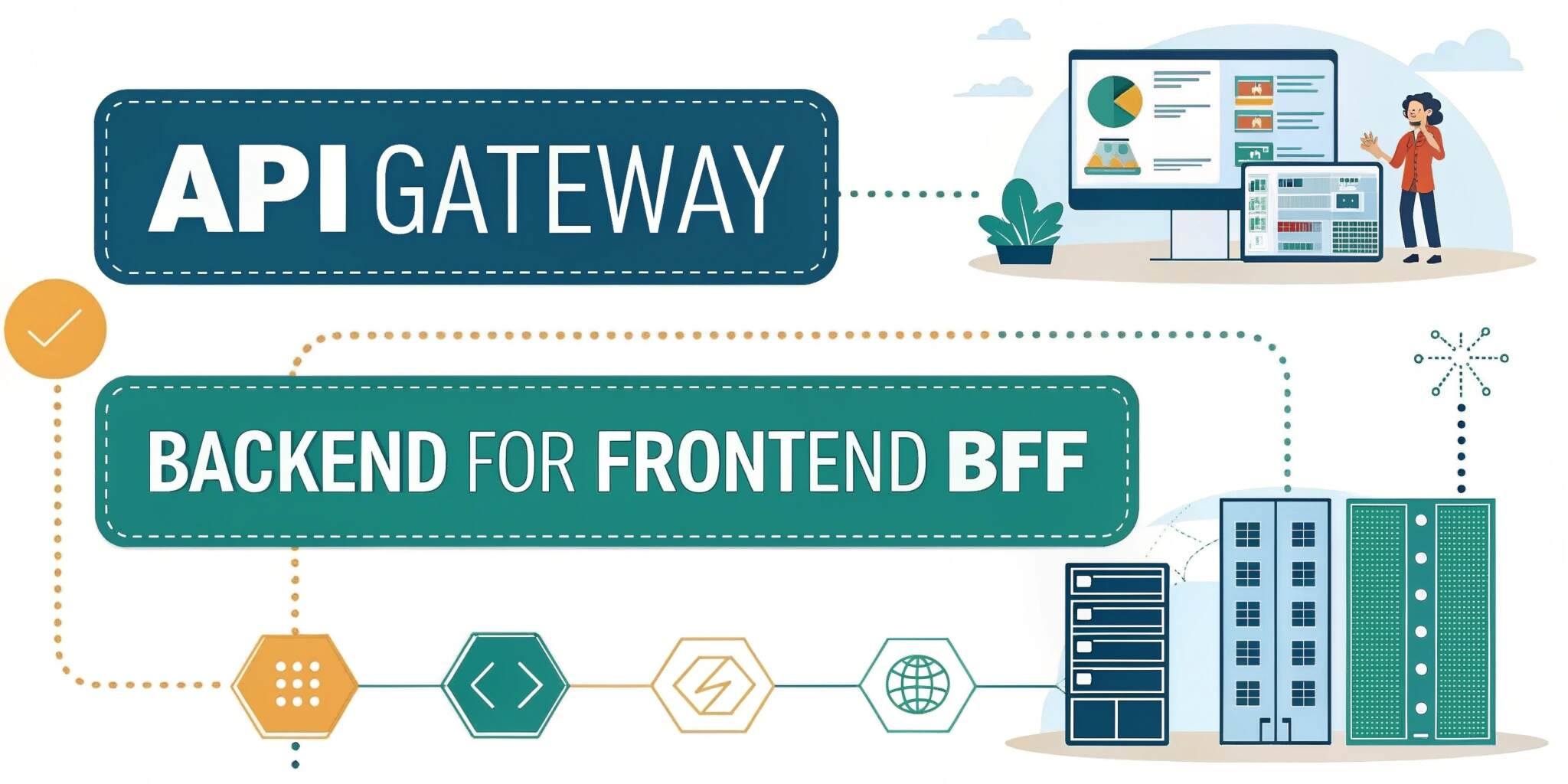
In modern application development, especially in microservices-based systems, choosing the right architecture is critical for performance, scalability, and maintainability. Two commonly used patterns are API Gateway and Backend for Frontend (BFF). While both serve as intermediaries between clients and backend services, they differ significantly in purpose and implementation.
Let’s break down both approaches and understand when to use each.
What is an API Gateway?
An API Gateway acts as a single entry point for all client requests. Instead of clients directly calling multiple backend services, they send requests to the API Gateway, which then routes them to the appropriate services.
The API Gateway handles several responsibilities such as authentication, rate limiting, request routing, caching, and logging. It simplifies client-side logic by aggregating multiple service calls into a single response.
For example, in an e-commerce app, instead of calling product, user, and order services separately, the client interacts with the API Gateway, which fetches and combines data from multiple services.
Advantages of API Gateway
- Centralized control for security and monitoring
- Reduces complexity on the client side
- Supports cross-cutting concerns like authentication and logging
- Improves scalability and flexibility
Limitations of API Gateway
- Can become a bottleneck if not designed properly
- Adds an extra layer, increasing latency slightly
- Not tailored to specific frontend needs
What is Backend for Frontend (BFF)?
Backend for Frontend is a pattern where separate backend services are created for each frontend application. For example, a web app and a mobile app will have their own dedicated backend services.
Each BFF is optimized for the needs of its specific frontend. It processes data in a way that best suits the UI/UX requirements of that platform.
For instance, a mobile app may need lightweight responses and fewer API calls, while a web app might require more detailed data. A BFF ensures both get exactly what they need without over-fetching or under-fetching data.
Advantages of BFF
- Tailored responses for each frontend
- Improves performance and user experience
- Reduces frontend complexity
- Allows independent development for different platforms
Limitations of BFF
- Increased development effort due to multiple backends
- Code duplication across BFFs
- Requires proper management and maintenance
Key Differences Between API Gateway and BFF
The main difference lies in their purpose.
An API Gateway focuses on centralizing backend access and managing cross-cutting concerns, while BFF focuses on customizing backend responses for specific frontend applications.
API Gateway is ideal when you want a unified entry point and consistent handling of requests. BFF is better when different frontends have significantly different requirements.
In many real-world systems, both patterns are used together. The API Gateway handles routing and security, while BFFs handle frontend-specific logic.
When to Use API Gateway
Use an API Gateway when:
- You have multiple microservices
- You need centralized authentication and monitoring
- Your frontend requirements are relatively uniform
- You want to simplify client-side communication
When to Use Backend for Frontend
Use BFF when:
- You support multiple frontends (web, mobile, IoT)
- Each frontend has different data requirements
- Performance optimization is critical
- You want to decouple frontend and backend teams
API Gateway + BFF: Best of Both Worlds
Many organizations combine both patterns. The API Gateway acts as the main entry point, and behind it, multiple BFF services handle frontend-specific needs.
This hybrid approach provides centralized control while still allowing flexibility and optimization for different platforms.
Conclusion
Both API Gateway and Backend for Frontend are powerful architectural patterns, but they serve different purposes. The right choice depends on your application’s complexity, number of frontends, and scalability requirements.
If your goal is centralized management and simplified communication, go with API Gateway. If you need customized experiences for different platforms, BFF is the better option.
In modern application development, combining both often delivers the best results—ensuring scalability, performance, and a seamless user experience.