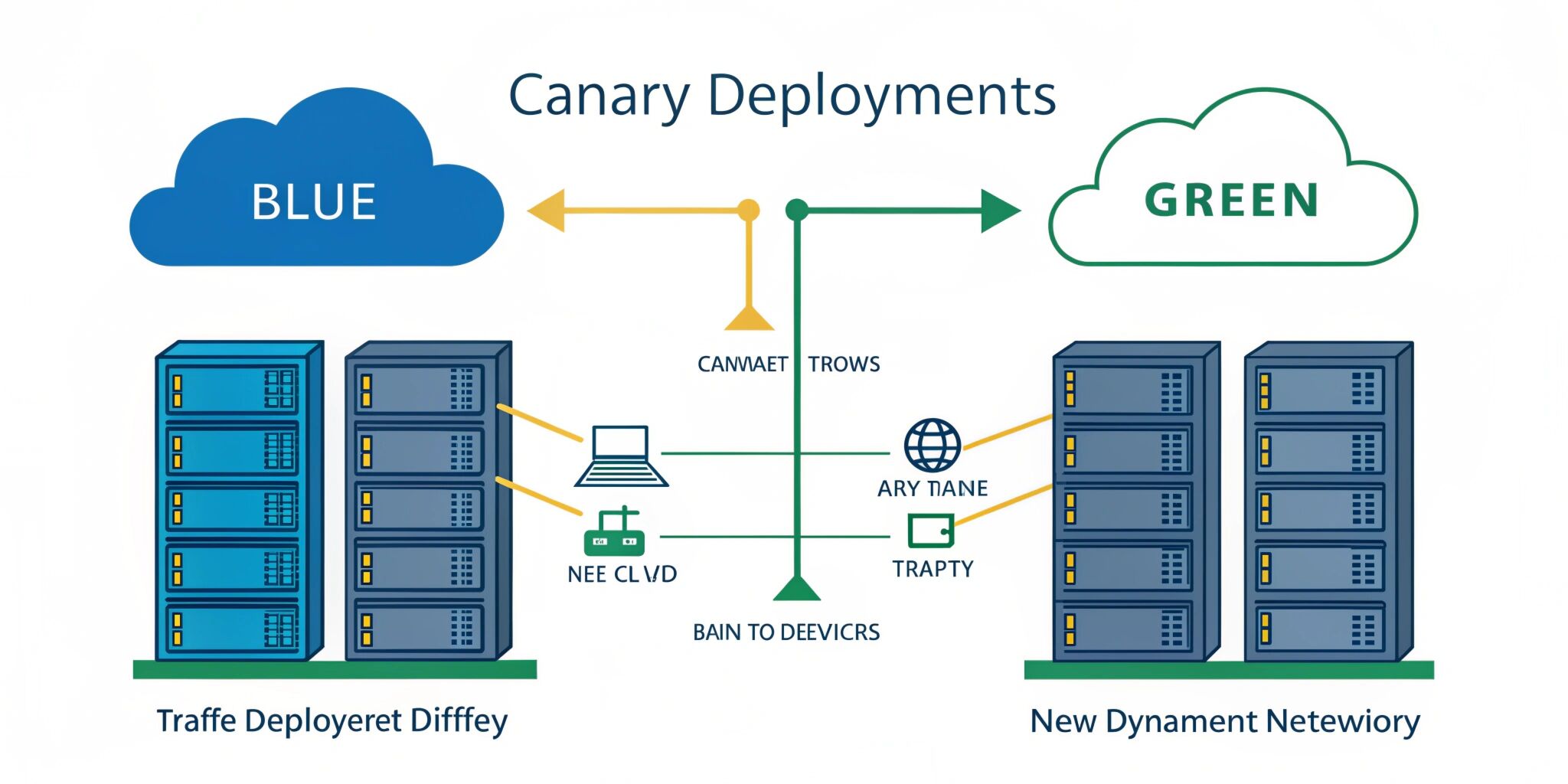
Frequent releases are a necessity in modern web development, but deploying changes to production remains one of the riskiest phases of the software lifecycle. A single faulty deployment can result in downtime, lost revenue, and damaged user trust. To address this challenge, organizations increasingly rely on advanced deployment strategies such as Blue-Green and Canary deployments to release software safely and confidently.
The Challenge of Traditional Deployments
Traditional deployment approaches often involve updating production systems in place. This can cause service interruptions, make rollbacks difficult, and expose all users to potential defects simultaneously. As systems grow more complex and distributed, these risks increase significantly.
Modern deployment strategies aim to:
- Minimize downtime
- Reduce blast radius
- Enable fast rollback
- Validate changes under real traffic
Blue-Green and Canary deployments were designed to meet these goals.
What Is Blue-Green Deployment?
Blue-Green deployment involves maintaining two identical production environments:
- Blue: the current live environment
- Green: the new version with updates applied
Traffic is routed to only one environment at a time. When the new version is ready and tested in the Green environment, traffic is switched from Blue to Green instantly.
Key Benefits of Blue-Green Deployment:
- Zero or near-zero downtime
- Simple and fast rollback
- Clean separation between versions
- Predictable deployment process
However, this approach requires duplicate infrastructure, which may increase operational costs.
What Is Canary Deployment?
Canary deployment releases changes to a small subset of users or traffic before rolling them out to everyone. The new version runs alongside the stable version, and traffic is gradually increased if no issues are detected.
Key Benefits of Canary Deployment:
- Reduced risk exposure
- Real-world validation under production traffic
- Gradual rollout and monitoring
- Early detection of performance or functional issues
Canary deployments are especially valuable when behavior under real user traffic is difficult to predict.
Blue-Green vs Canary: Key Differences
AspectBlue-Green DeploymentCanary DeploymentRolloutInstant switchGradual rolloutRisk ExposureAll users at onceSmall user subsetInfrastructureRequires duplicate environmentsUses shared infrastructureRollbackImmediateGradual or selectiveMonitoringPre-switch validationContinuous monitoring
Both strategies improve reliability, but they solve different problems.
Choosing the Right Strategy
Use Blue-Green Deployment when:
- You need instant rollback
- Downtime must be avoided entirely
- Infrastructure duplication is acceptable
- Releases are well-tested
Use Canary Deployment when:
- User behavior is unpredictable
- Performance impact needs real-world validation
- You want to minimize blast radius
- Feature risk is high
Many organizations use a hybrid approach, combining canary rollouts with blue-green infrastructure.
Observability and Monitoring Are Critical
Neither deployment strategy works effectively without strong observability. Teams must monitor:
- Error rates
- Latency and throughput
- Resource usage
- Business metrics
Automated alerts and dashboards ensure issues are detected early, allowing teams to pause or rollback deployments before users are significantly impacted.
Tooling and Automation
Modern DevOps platforms and orchestrators such as Kubernetes support both deployment strategies through:
- Traffic routing and load balancing
- Feature flags
- Automated rollbacks
- CI/CD pipeline integration
Automation reduces human error and ensures consistent deployments across environments.
Common Challenges and Pitfalls
- Insufficient monitoring during rollout
- Rolling out too quickly without validation
- Poor rollback planning
- Ignoring data consistency and schema changes
Successful deployments require careful coordination between application, infrastructure, and database changes.
Final Thoughts
Blue-Green and Canary deployments are powerful tools for reducing deployment risk and improving system reliability. By enabling controlled rollouts, fast rollbacks, and real-world validation, these strategies help teams deliver features faster without sacrificing stability. In modern web systems, safe deployment is not a luxury—it is a necessity.