When developers start building real-world applications, one truth becomes very clear:
Servers fail. APIs fail. Networks fail.
Unlike small projects, production systems depend on many external services — authentication providers, payment gateways, email servers, analytics platforms, and databases. If one component stops responding, your entire application can slow down or crash.
This is a common problem in distributed systems and microservices architectures. To handle this, software engineers use special design patterns called resilience patterns. The two most important ones are:
• Retry Pattern
• Circuit Breaker Pattern
Together, they help applications survive failures instead of collapsing.
The Core Problem: Cascading Failures
Consider a food delivery application:
- User places an order
- Order service calls payment service
- Payment service calls bank API
Now imagine the bank API becomes slow.
The payment service waits.
The order service waits.
Users keep sending requests.
Soon, all server threads become busy waiting for responses. CPU usage increases, memory fills, and database connections run out. Eventually, the whole website crashes.
The system didn’t fail because of your code.
It failed because you didn’t handle failure properly.
This chain reaction is called a cascading failure.
Retry Pattern
The Retry Pattern is the simplest recovery mechanism.
When a request fails due to a temporary issue, instead of returning an error immediately, the application retries the request after a delay.
Why Retries Work
Many failures are temporary:
• Network packet loss
• Short service overload
• Server restart
• Brief downtime
A second attempt often succeeds.
Bad Retry vs Smart Retry
Bad retry:
Immediately retry 5 times.
Result → Overloads the failing service.
Smart retry: Exponential Backoff
Instead of retrying instantly, increase delay gradually:
1st retry → 1 second
2nd retry → 2 seconds
3rd retry → 4 seconds
4th retry → 8 seconds
This allows the service time to recover.
You can also add jitter (random delay) so thousands of users don’t retry at the same time.
When to Retry
Retry only temporary errors:
• Timeout
• Connection reset
• HTTP 5xx errors
Do NOT retry:
• 400 Bad Request
• 401 Unauthorized
• 403 Forbidden
• 404 Not Found
These are permanent failures.
Circuit Breaker Pattern
Retries alone are dangerous if a service is completely down.
If you keep retrying continuously, you overload your own servers and waste resources. This is where the Circuit Breaker Pattern helps.
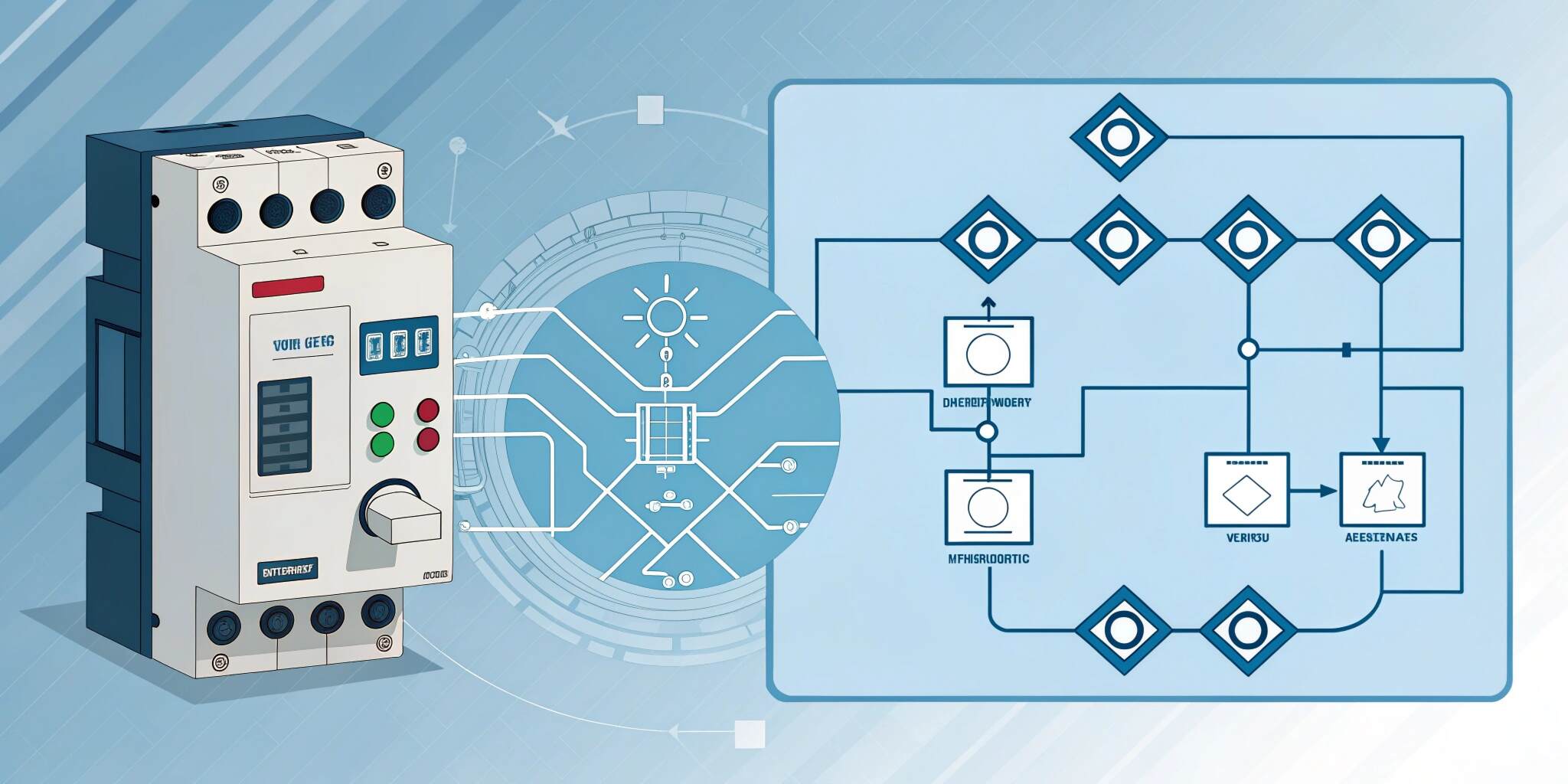
It acts like an electrical circuit breaker. When too many failures occur, the system stops sending requests to the failing service.
Circuit Breaker States
1. Closed (Normal Operation)
Requests go normally. Failures are monitored.
2. Open (Failure Protection)
If failures exceed a threshold (for example 50% failures in 20 requests), the circuit opens.
Now:
• No more external calls are made
• Requests fail immediately
• System remains fast
Instead of waiting for timeout, the user receives a fallback response.
3. Half-Open (Recovery Testing)
After a cooldown time, a few test requests are allowed.
If they succeed → circuit closes.
If they fail → circuit opens again.
Fallback Responses
When the circuit is open, your app must still respond.
Examples:
• Show cached data
• Disable feature temporarily
• Queue the request
• Display friendly message
Example:
Instead of payment page crashing:
“Payments are temporarily unavailable. Please try again later.”
This protects user experience.
Retry + Circuit Breaker Together
The best architecture combines both:
Retry → handles temporary issues
Circuit Breaker → handles persistent failures
Flow:
- Request fails
- Retry with backoff
- Failures continue
- Circuit breaker opens
- Fallback response returned
This prevents system overload and downtime.
Real-World Tools
Node.js
- Opossum
- Axios-retry
Java
- Resilience4j
- Spring Retry
Cloud Platforms
- AWS SDK retry policies
- Azure resilience strategies
Benefits
Using these patterns provides:
• High availability
• Better performance
• Protection from cascading failures
• Reduced downtime
• Improved user trust
Without resilience patterns, microservices systems become fragile and unreliable.
Conclusion
In modern web development, handling success is easy. Handling failure is the real skill.
Retry Pattern allows recovery from temporary errors, while Circuit Breaker Pattern prevents system collapse during prolonged failures. Together, they form the backbone of resilient software architecture.
A professional backend system is not the one that never fails —
it is the one that continues working even when failures happen.