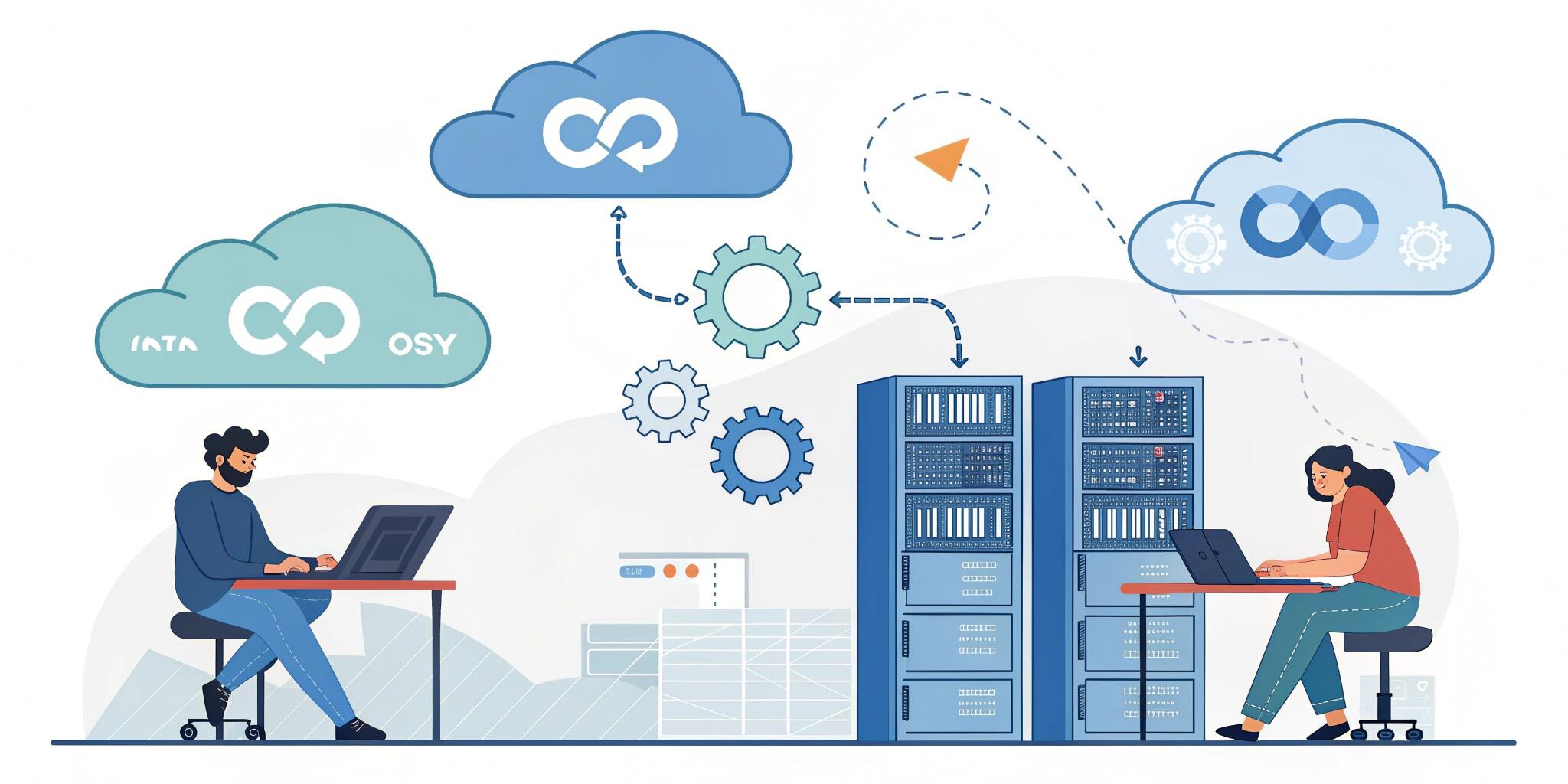
The digital era demands agility, scalability, and resilience from IT systems. As organizations migrate to the cloud, three critical paradigms—cloud-native development, multi-cloud strategies, and DevOps integration—are redefining how applications are built, deployed, and managed.
Together, these approaches empower businesses to create scalable, portable, and resilient applications while accelerating delivery cycles. This blog examines how cloud-native, multi-cloud, and DevOps intersect, and why they represent the future of enterprise IT.
What is Cloud-Native?
Cloud-native refers to building and running applications specifically designed to leverage cloud environments. Instead of simply lifting and shifting workloads, cloud-native apps are architected to exploit the elasticity, scalability, and automation inherent in cloud platforms.
Key characteristics:
- Microservices architecture: Applications are broken into smaller, independent services.
- Containerization: Containers (like Docker) package apps for portability and scalability.
- Orchestration: Tools like Kubernetes manage container deployment and scaling.
- Continuous delivery: Frequent, automated updates ensure agility.
Benefits: Faster release cycles, resilience to failures, and cost efficiency through optimized cloud usage.
Multi-Cloud: Beyond Vendor Lock-In
Multi-cloud refers to using services from more than one cloud provider (e.g., AWS, Microsoft Azure, Google Cloud) simultaneously. Organizations adopt multi-cloud to avoid vendor lock-in, enhance resilience, and optimize workloads based on cost or performance.
Why Multi-Cloud?
- Resilience: Outages in one provider won’t cripple business operations.
- Flexibility: Different providers offer specialized services (e.g., AI, analytics, IoT).
- Cost optimization: Companies can negotiate better pricing and allocate workloads efficiently.
- Compliance: Regulatory requirements may dictate data residency across multiple providers.
Challenges: Managing multiple environments, ensuring interoperability, and avoiding complexity in governance.
DevOps: The Cultural & Technical Glue
DevOps integrates development and operations teams to enable faster delivery, better collaboration, and continuous improvement. With automation and CI/CD pipelines, DevOps drives the agility required to thrive in cloud-native and multi-cloud environments.
Core DevOps Practices:
- Continuous integration and delivery (CI/CD).
- Infrastructure as Code (IaC) with tools like Terraform and Ansible.
- Automated testing and monitoring.
- Shift-left security (DevSecOps).
Benefits: Faster deployments, reduced human error, better alignment between business and IT.
The Power of Integration: Cloud-Native + Multi-Cloud + DevOps
When cloud-native architectures, multi-cloud strategies, and DevOps practices converge, organizations achieve:
- Scalability on Demand
- Cloud-native design enables horizontal scaling.
- Multi-cloud ensures workloads can move seamlessly between providers.
- DevOps automation scales environments dynamically.
- Resilience and Reliability
- Multi-cloud redundancy ensures uptime.
- Cloud-native microservices isolate failures.
- DevOps monitoring ensures quick detection and recovery.
- Speed and Agility
- CI/CD pipelines accelerate release cycles.
- Cloud-native environments enable experimentation and innovation.
- Multi-cloud strategies let teams choose the best-fit platform for each workload.
- Cost Optimization
- Multi-cloud adoption reduces vendor dependency and cost overheads.
- DevOps-driven automation prevents resource wastage.
Real-World Use Cases
- Financial Services
- Multi-cloud ensures compliance across regions.
- Cloud-native apps handle massive transaction loads.
- DevOps enables rapid innovation in digital banking services.
- Healthcare
- Cloud-native apps process patient data securely and at scale.
- Multi-cloud allows compliance with international data regulations.
- DevOps accelerates deployment of telemedicine apps.
- E-Commerce
- Multi-cloud ensures high availability during peak traffic.
- DevOps CI/CD pipelines support frequent feature rollouts.
- Cloud-native microservices personalize user experiences.
Challenges in Integration
- Complexity of Multi-Cloud Management
- Requires sophisticated monitoring and orchestration across providers.
- Skill Gaps
- Teams need expertise in containers, cloud orchestration, and DevOps tools.
- Security & Compliance
- Managing policies across multiple environments increases risk.
- Cost Visibility
- Without proper governance, multi-cloud costs can spiral out of control.
Best Practices for Success
- Adopt Containers and Kubernetes: Standardize deployments across cloud providers.
- Leverage IaC Tools: Automate infrastructure provisioning for consistency.
- Use Unified Monitoring: Employ platforms that provide visibility across multiple clouds.
- Implement DevSecOps: Integrate security early in the DevOps pipeline.
- Train Teams Continuously: Invest in upskilling engineers in cloud-native and DevOps practices.
The Future of Cloud-Native, Multi-Cloud & DevOps
The future of IT is a hybrid, multi-cloud world where organizations use best-in-class services while relying on DevOps to drive agility. Cloud-native will remain central to designing resilient and scalable systems, while multi-cloud adoption will grow as businesses seek flexibility.
Emerging trends include:
- AI-driven DevOps (AIOps) for smarter automation.
- Serverless computing integrated into multi-cloud strategies.
- Stronger security frameworks for distributed architectures.
- Edge computing + multi-cloud for low-latency, real-time applications.
Conclusion
Cloud-native, multi-cloud, and DevOps integration are not just buzzwords—they are the foundation of modern IT strategy. Together, they empower businesses to achieve agility, resilience, and scalability in an increasingly digital-first world.
While challenges exist, organizations that embrace this integration will be better positioned to innovate, compete, and thrive in the future of technology.