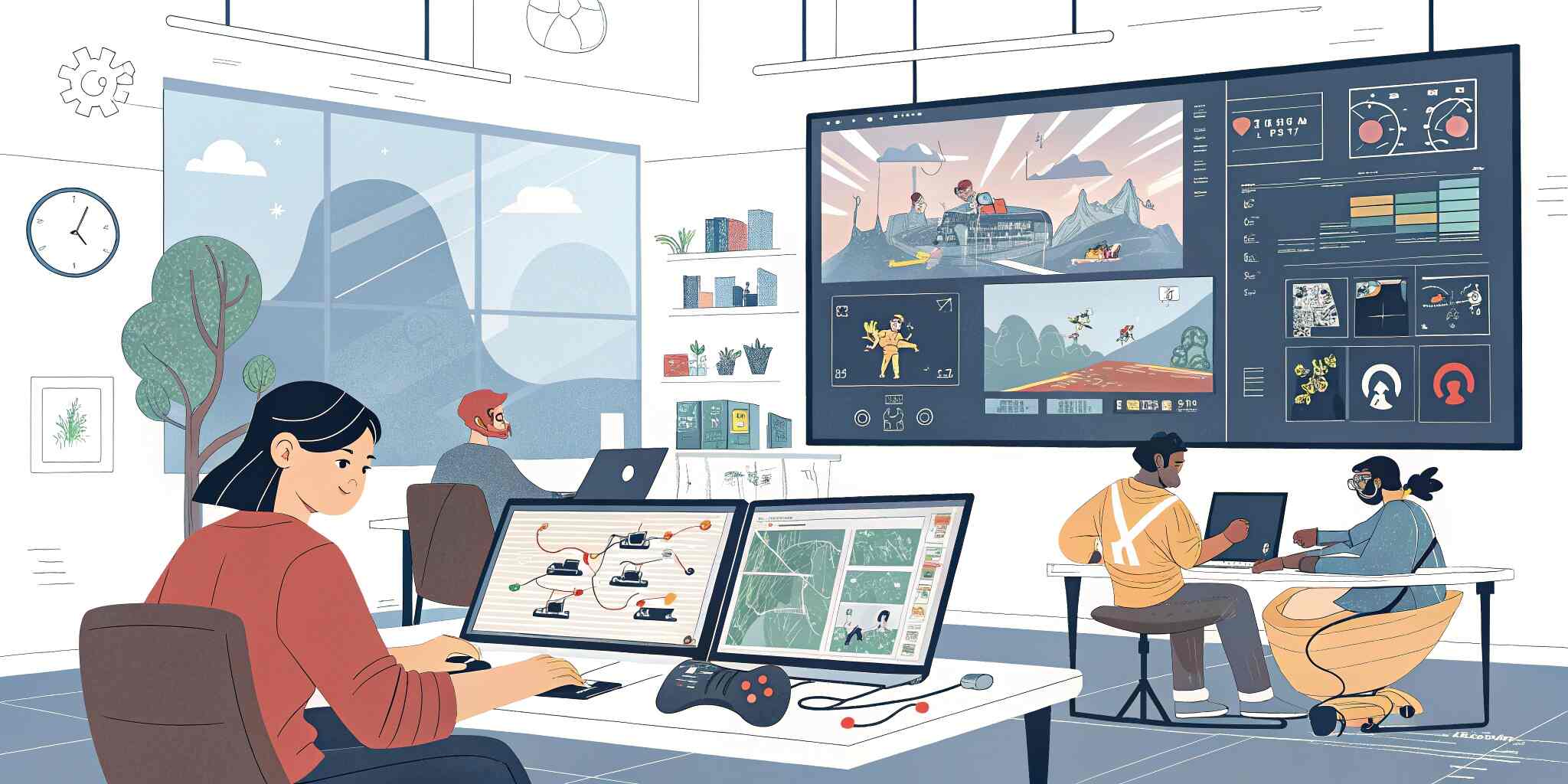
Creating a successful game is not a solo effort. Behind every immersive game lies a cross-disciplinary team of animators, developers, and designers working in unison. Collaboration is at the heart of game development, where creativity, technical expertise, and gameplay vision must align.
Understanding how these roles collaborate can improve project outcomes, reduce bottlenecks, and ensure that players get the best possible experience.
The Core Roles in Game Development Collaboration
1. Game Designers
- Define game mechanics, story, and user experience.
- Create wireframes, game loops, and level designs.
- Provide guidelines on character behavior, interactions, and animations.
2. Animators
- Bring characters and environments to life through motion.
- Interpret design documents into expressive character animations.
- Work closely with developers to ensure animations integrate seamlessly.
3. Developers (Programmers)
- Build the game’s functionality, mechanics, and systems.
- Integrate animations using game engines (Unity, Unreal).
- Implement user inputs, physics, and AI that trigger animations and gameplay events.
How These Teams Collaborate
Pre-Production Phase
- Concept Meetings: All teams align on vision and scope.
- Storyboarding & Prototyping: Designers and animators create early visuals, developers test mechanics.
Production Phase
- Asset Creation & Rigging: Animators create character rigs and animations based on design needs.
- Integration into Engine: Developers import animations, test them with gameplay code, and provide feedback.
- Iteration Loops: Regular playtests ensure animations match gameplay mechanics and design goals.
Post-Production Phase
- Polish & Optimization: Teams refine animations, fix bugs, and adjust designs for balance.
- QA Testing: Cross-team review to identify inconsistencies between design, animation, and code.
Best Practices for Effective Collaboration
- Clear Communication
- Use project management tools like Trello, Jira, or Asana.
- Hold daily stand-ups or weekly sprint meetings.
- Share visual references and documentation.
- Early Integration
- Avoid working in silos. Integrate animations and mechanics early to catch issues before they escalate.
- Use Version Control Systems
- Tools like Git or Perforce help manage code, assets, and animations efficiently.
- Define Roles & Responsibilities
- Avoid confusion by establishing clear pipelines and responsibilities.
- Foster a Collaborative Culture
- Encourage feedback from all team members, regardless of role.
- Celebrate shared milestones to boost team morale.
Real-World Examples
- Overwatch (Blizzard): Character abilities are designed with animation and gameplay in mind from the start, leading to smooth, readable actions.
- Uncharted Series (Naughty Dog): Animators and developers collaborate to merge cinematic storytelling with interactive gameplay.
Why Cross-Team Collaboration Matters
- Enhanced Player Experience: Seamless integration between animation, design, and development creates a more immersive game.
- Efficiency & Productivity: Collaborative workflows reduce rework and misunderstandings.
- Innovation: Diverse perspectives lead to creative solutions and fresh gameplay ideas.
Conclusion
Game development is a collaborative art form. When animators, developers, and designers work together closely, they turn static ideas into living, breathing game worlds. By fostering communication and teamwork, studios can deliver unforgettable gaming experiences.