Sales forecasting is one of the most critical aspects of business growth in the IT industry. Whether you're running a software development company, an outsourcing firm, or a SaaS business, understanding the likelihood of closing deals helps leaders make informed decisions regarding hiring, budgeting, resource allocation, and growth planning.
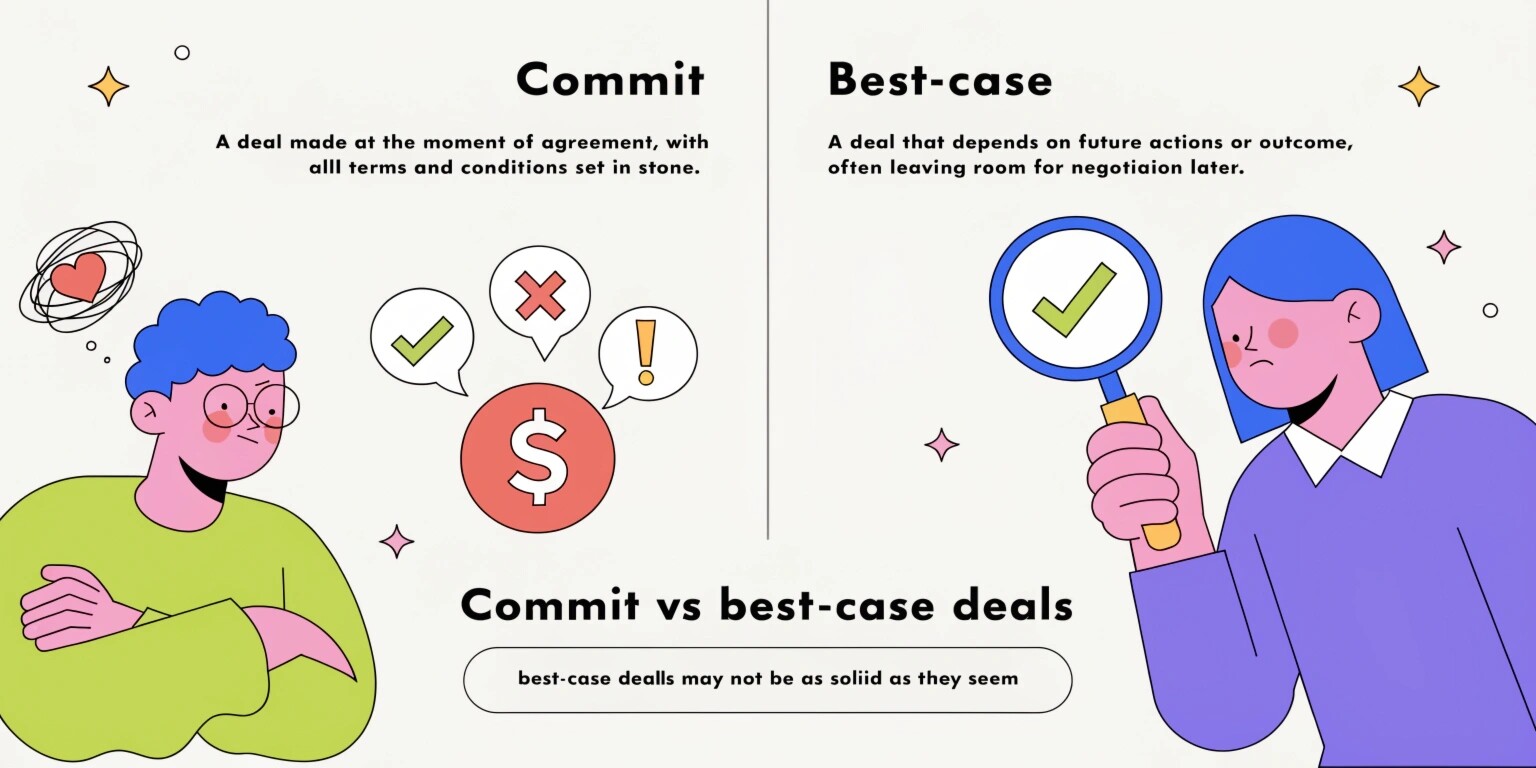
One of the most commonly used forecasting methods in B2B and IT sales involves categorizing opportunities into two key groups: Commit Deals and Best-Case Deals.
Although these categories may seem similar, they serve different purposes and significantly impact forecasting accuracy. Understanding the distinction can help organizations create realistic revenue expectations and avoid costly business decisions.
What Are Commit Deals?
Commit deals are opportunities that sales representatives are highly confident will close within a specific forecast period.
These deals typically have:
- Completed discovery sessions
- Approved budgets
- Identified decision-makers
- Finalized requirements
- Proposal acceptance
- Ongoing contract discussions
- Clear implementation timelines
A commit deal represents revenue that sales teams are willing to confidently forecast.
For example:
An enterprise client has completed technical discussions, approved the budget, selected your company as the preferred vendor, and is reviewing the final contract. This opportunity would likely qualify as a commit deal.
Because of the high probability of closure, management often uses commit forecasts for financial planning and resource allocation.
What Are Best-Case Deals?
Best-case deals are opportunities that have strong potential but still contain uncertainties.
These deals may have:
- Positive client engagement
- Multiple stakeholder discussions
- Strong business interest
- Budget under review
- Pending executive approvals
- Vendor comparisons
- Unresolved technical questions
A best-case deal can close during the forecast period, but there is no guarantee.
For example:
A prospect has shown significant interest in a custom software solution and requested a proposal. However, they are still evaluating multiple vendors and have not finalized internal approvals.
This opportunity would generally be classified as a best-case deal.
Why the Difference Matters
Many organizations make the mistake of treating all pipeline opportunities equally.
This often leads to:
- Inflated forecasts
- Unrealistic revenue expectations
- Resource planning issues
- Hiring mistakes
- Cash flow challenges
Separating commit deals from best-case deals creates a more realistic view of future revenue.
For example:
Pipeline Overview
Deal TypeValueCommit Deals$100,000Best-Case Deals$200,000
Management can confidently plan around the $100,000 commitment while viewing the additional $200,000 as potential upside.
This approach reduces forecasting risk and improves business stability.
Criteria for Classifying Commit Deals
To maintain forecasting accuracy, organizations should establish clear qualification criteria.
A deal may qualify as a commit opportunity when:
Budget Is Approved
The client has secured funding for the project.
Decision-Maker Is Engaged
The final authority is actively involved in discussions.
Business Need Is Confirmed
The problem being solved is a priority.
Timeline Is Defined
The client has established a target implementation schedule.
Proposal Acceptance Is Likely
Commercial terms have been reviewed and largely agreed upon.
If any of these elements are missing, the deal may be better categorized as best-case.
Managing Best-Case Opportunities
Best-case opportunities should not be ignored simply because they are less certain.
In fact, many future commit deals begin as best-case opportunities.
To improve conversion rates:
Conduct Regular Follow-Ups
Maintain consistent communication with prospects.
Address Objections Early
Identify concerns before they become deal blockers.
Share Relevant Case Studies
Demonstrate proven success through real-world examples.
Engage Multiple Stakeholders
Build relationships across departments and decision-making levels.
Create Urgency
Help prospects understand the cost of delaying implementation.
These activities can gradually move opportunities from best-case to commit status.
Common Forecasting Mistakes
Overcommitting Revenue
Sales teams sometimes classify optimistic opportunities as commit deals.
This creates unrealistic expectations and forecasting errors.
Ignoring Risk Factors
Every deal contains risks, including budget changes, leadership turnover, and shifting priorities.
Accurate forecasting requires continuous risk assessment.
Lack of Qualification Standards
Without defined criteria, different sales representatives may interpret deal stages differently.
Standardized qualification frameworks improve consistency.
Failure to Update Pipelines
Opportunities evolve rapidly.
Regular pipeline reviews help ensure forecasts remain accurate and actionable.
Best Practices for IT Sales Teams
Successful IT organizations typically follow these forecasting principles:
- Review pipelines weekly
- Define objective qualification criteria
- Separate commit and best-case forecasts
- Track historical close rates
- Monitor deal progression metrics
- Identify risks early
- Maintain CRM data accuracy
These practices improve forecast reliability and support better business decisions.
Conclusion
Commit deals and best-case deals are both essential components of a healthy sales pipeline, but they should never be treated the same. Commit deals represent high-confidence revenue that organizations can plan around, while best-case deals provide potential growth opportunities that require further nurturing.
For IT companies operating in competitive markets, accurate forecasting is a strategic advantage. By clearly distinguishing between commit and best-case opportunities, businesses can improve revenue predictability, optimize resource allocation, and build a more scalable sales process.
The most successful sales organizations are not those with the largest pipelines—they are the ones with the most accurate understanding of which deals are truly likely to close.