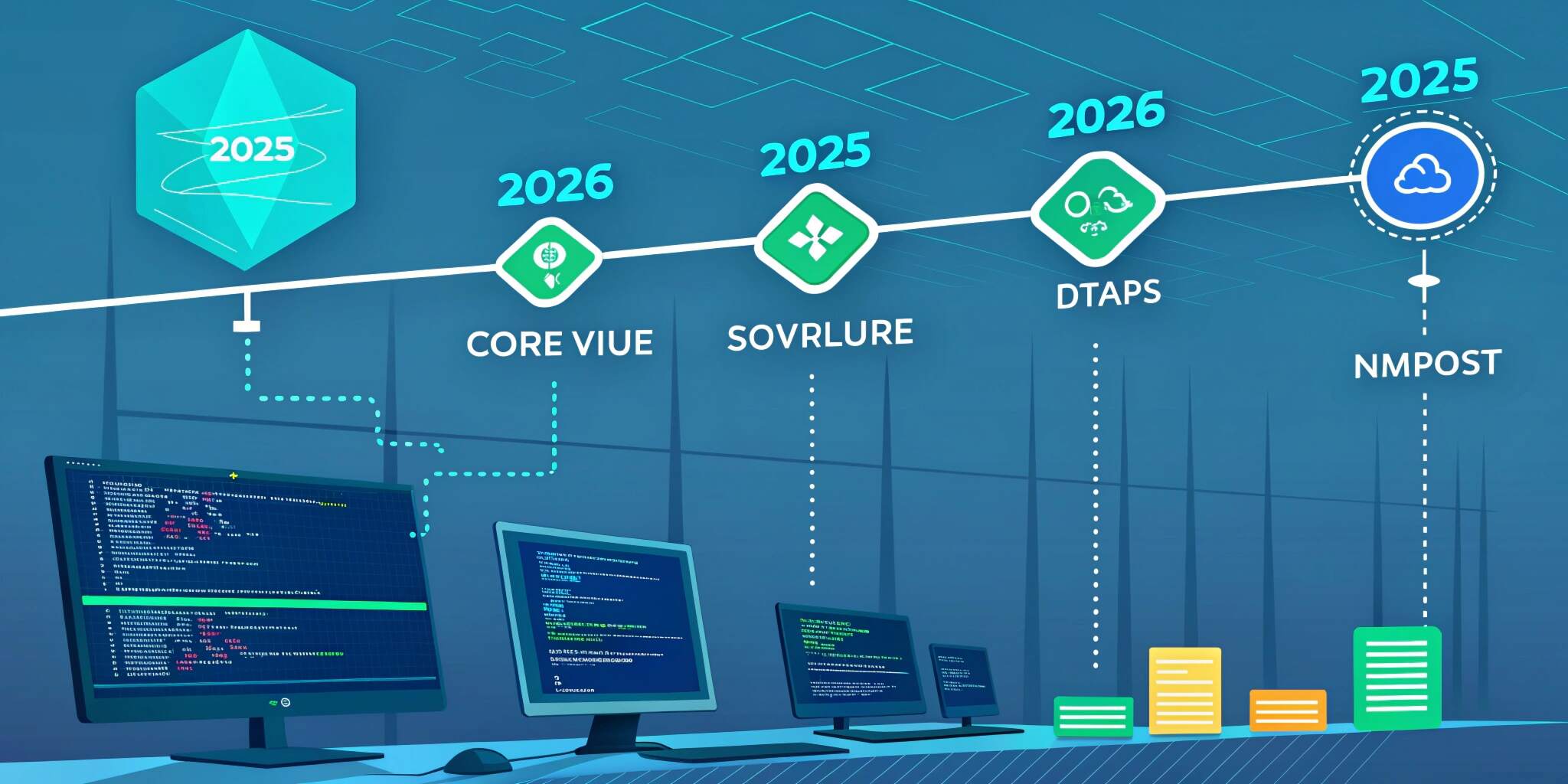
Vue.js has consistently earned its place as one of the most developer-friendly and adaptable JavaScript frameworks. As we move through 2025–2026, the core evolution of Vue.js reflects a clear vision: improved performance, scalability, maintainability, and seamless integration with modern web standards. These advancements strengthen Vue’s position in both startup environments and large-scale enterprise applications.
A Maturing Framework with Long-Term Stability
By 2025, Vue has transitioned from a fast-growing framework into a mature, production-proven ecosystem. The core team has focused heavily on long-term stability rather than frequent disruptive changes. This ensures backward compatibility while allowing incremental improvements, giving developers confidence when upgrading existing applications.
The emphasis on predictable release cycles and enhanced documentation has also helped organizations plan long-term frontend strategies with Vue.
Performance Improvements at the Core
Performance remains a key focus in Vue’s evolution. Between 2025 and 2026, Vue introduces more efficient rendering pipelines and optimized virtual DOM diffing. These enhancements reduce unnecessary re-renders, improve memory usage, and deliver faster load times—especially for large, component-heavy applications.
Vue’s fine-grained reactivity system continues to evolve, allowing more precise dependency tracking. This ensures that only the necessary components update when state changes, improving responsiveness and overall application performance.
Deeper TypeScript Integration
TypeScript adoption has become a standard requirement in modern frontend development. Vue’s core evolution strengthens native TypeScript support, making type inference more reliable across components, composables, and state management.
Improved tooling, smarter auto-completion, and clearer error detection help developers catch issues earlier in the development cycle. This results in cleaner codebases, easier refactoring, and improved collaboration across teams.
Composition API as the Default Standard
The Composition API, introduced earlier, becomes the dominant pattern by 2025–2026. Vue’s core evolution refines this approach, making logic reuse, modularity, and scalability significantly easier.
Developers can now organize code by feature rather than lifecycle hooks, leading to better maintainability in complex applications. Enhanced documentation and community best practices further simplify onboarding for new developers.
Ecosystem Growth and Tooling Enhancements
Vue’s ecosystem continues to expand alongside core development. State management, routing, testing, and build tools are more tightly integrated and aligned with Vue’s core principles.
Modern tooling improvements focus on:
- Faster development servers
- Better debugging experiences
- Improved build optimization
- Seamless integration with cloud and serverless platforms
These advancements reduce setup complexity and speed up development workflows.
Improved Server-Side Rendering and Hydration
As SEO and performance remain critical, Vue’s server-side rendering (SSR) capabilities see meaningful enhancements. Faster hydration, reduced bundle sizes, and smarter rendering strategies improve performance for content-heavy and enterprise-level applications.
This makes Vue an even stronger choice for projects requiring both rich interactivity and strong search engine visibility.
Enterprise-Ready Architecture
Vue’s core evolution also focuses on enterprise readiness. Enhanced modularity, better security practices, and improved support for large-scale architectures allow Vue to compete confidently with other major frameworks.
Organizations benefit from:
- Long-term support strategies
- Stable APIs
- Strong community and corporate backing
These factors make Vue a reliable option for mission-critical applications.
Community and Open-Source Momentum
The Vue community remains one of its strongest assets. Continuous feedback from developers shapes core decisions, ensuring Vue evolves in alignment with real-world needs. Open-source contributions, plugins, and learning resources continue to grow, reinforcing Vue’s accessibility and popularity.
Conclusion
The Core Vue.js Evolution (2025–2026) demonstrates a framework that values stability, performance, and developer happiness. By refining its core architecture, embracing modern development standards, and strengthening its ecosystem, Vue.js positions itself as a future-ready solution for modern web development. Whether for startups or enterprises, Vue remains a powerful, elegant, and dependable choice for building next-generation web applications.