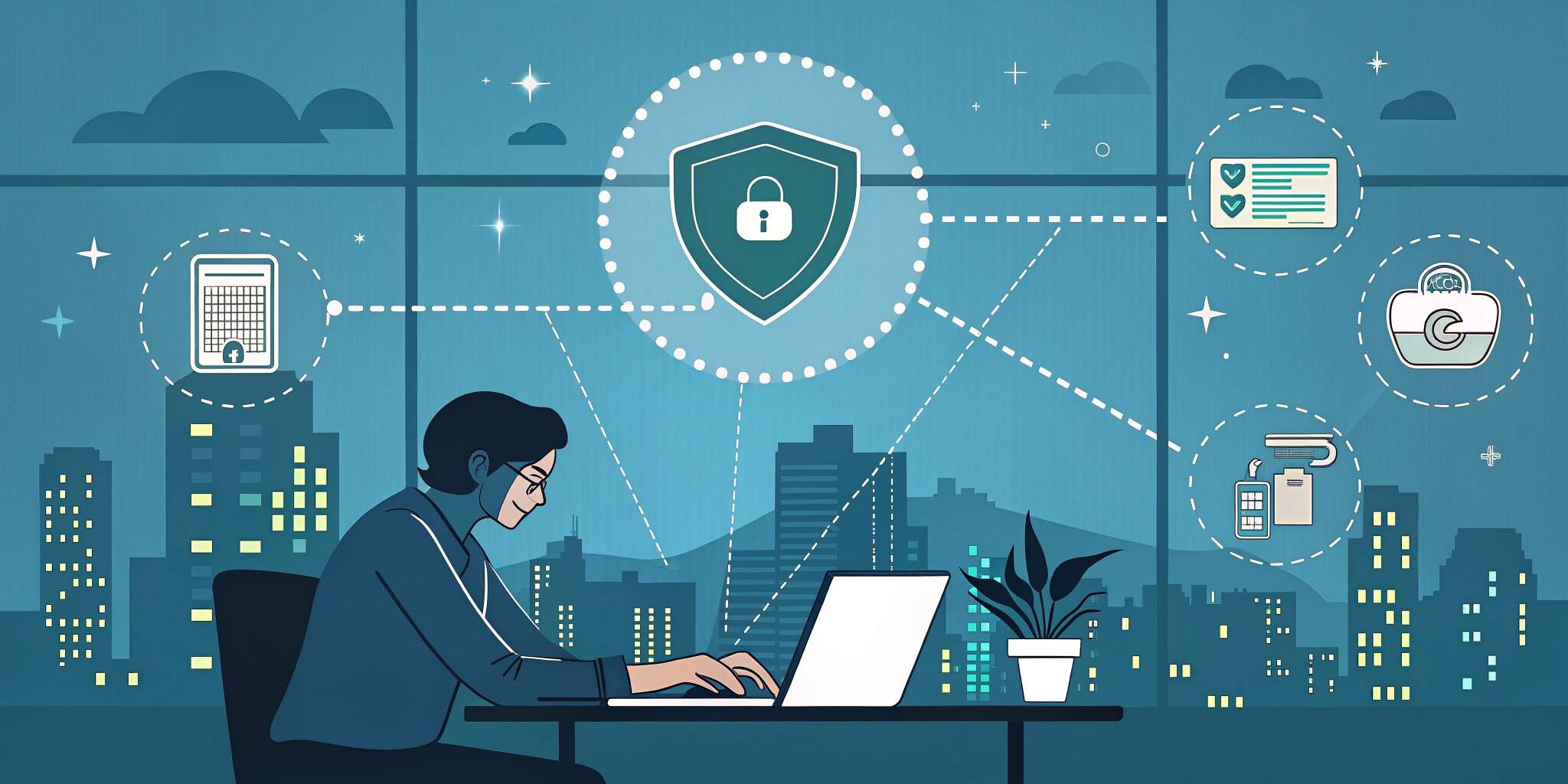
The shift toward remote and hybrid work environments has redefined how organizations operate. While this transformation has boosted flexibility and productivity, it has also introduced a new wave of cybersecurity challenges. As employees access corporate systems from various devices and locations, the traditional security perimeter has dissolved — creating more opportunities for cybercriminals.
In 2025, cybersecurity in remote work is no longer optional; it’s a vital business priority. Protecting data, securing endpoints, and educating employees are fundamental to maintaining trust and business continuity in the digital age.
1. The Rising Cybersecurity Risks of Remote Work
Remote work introduces several vulnerabilities that organizations must address:
- Unsecured Wi-Fi networks: Employees often work from home or public spaces with weak or no encryption.
- Personal devices: Many workers use personal laptops or smartphones that lack enterprise-grade protection.
- Phishing and social engineering attacks: Cybercriminals target remote workers with deceptive emails, fake links, and impersonation scams.
- Cloud misconfigurations: Incorrectly set permissions in cloud applications can expose sensitive data.
These risks make it essential for IT teams to adopt robust and adaptive security measures that go beyond traditional firewalls.
2. Implement a Zero-Trust Security Framework
The zero-trust model is a foundational approach to modern cybersecurity. It operates on the principle of “never trust, always verify.”
This means every user, device, and application must be authenticated before accessing network resources — regardless of location.
Key components include:
- Identity verification using Multi-Factor Authentication (MFA).
- Device posture assessment to ensure compliance before granting access.
- Continuous monitoring of all network activities.
By enforcing zero trust, organizations can minimize the risk of breaches even if attackers infiltrate one part of the system.
3. Use VPNs and Secure Remote Connections
A Virtual Private Network (VPN) creates an encrypted tunnel between the user’s device and the company network, protecting sensitive data from eavesdropping.
However, in 2025, companies are increasingly shifting to cloud-based Secure Access Service Edge (SASE) solutions, which combine VPN functionality with firewall and identity management capabilities.
Whether through VPNs or SASE, remote connections must always be encrypted and monitored for suspicious activity.
4. Strengthen Authentication and Access Control
One of the simplest yet most effective ways to improve security is through strong authentication. Passwords alone are no longer sufficient.
Best practices include:
- Implementing Multi-Factor Authentication (MFA).
- Enforcing strong password policies with periodic updates.
- Using Single Sign-On (SSO) for efficiency and security.
- Applying role-based access control (RBAC) to limit data access to necessary personnel only.
This layered approach reduces the likelihood of unauthorized access and credential theft.
5. Protect Endpoints and Devices
With remote teams using multiple devices — laptops, tablets, and smartphones — endpoint protection becomes critical.
Organizations should deploy Endpoint Detection and Response (EDR) solutions to continuously monitor and respond to suspicious behavior on employee devices.
Additional recommendations:
- Enforce automatic software updates and patch management.
- Enable firewall and antivirus protection on all devices.
- Use Mobile Device Management (MDM) systems to track and secure mobile endpoints.
6. Secure Data in the Cloud
Cloud-based collaboration tools like Google Workspace, Microsoft 365, and Slack have become integral to remote operations. However, they also create potential security gaps.
To mitigate these:
- Use data encryption for files stored and transmitted in the cloud.
- Apply Data Loss Prevention (DLP) policies.
- Regularly audit user permissions and revoke access for inactive accounts.
- Back up critical data to secure, isolated environments.
Proper cloud governance ensures compliance and minimizes data exposure.
7. Build Cybersecurity Awareness Among Employees
Human error remains the biggest cause of security breaches. Employees often click on malicious links or fall for phishing scams, compromising entire systems.
Regular cybersecurity training programs can help:
- Educate staff on identifying phishing emails.
- Encourage immediate reporting of suspicious activity.
- Simulate cyberattack drills to test readiness.
Building a security-first culture transforms employees into the first line of defense.
8. Implement Continuous Monitoring and Incident Response
Even the strongest defenses can be breached. Therefore, organizations need real-time monitoring and incident response (IR) strategies to detect and contain threats quickly.
Steps include:
- Using Security Information and Event Management (SIEM) tools to track anomalies.
- Establishing clear incident response protocols.
- Performing regular security audits and penetration tests.
The faster a threat is detected and resolved, the lesser the damage.
Conclusion
The remote work revolution is here to stay — and so are its cybersecurity challenges. Businesses that invest in secure technologies, employee education, and proactive defense mechanisms will thrive in this evolving landscape.
By embracing zero trust, encryption, and continuous monitoring, organizations can ensure that remote work remains not just flexible and efficient, but also safe and resilient.
Cybersecurity is no longer a technical necessity — it’s the foundation of digital trust in the modern workplace.