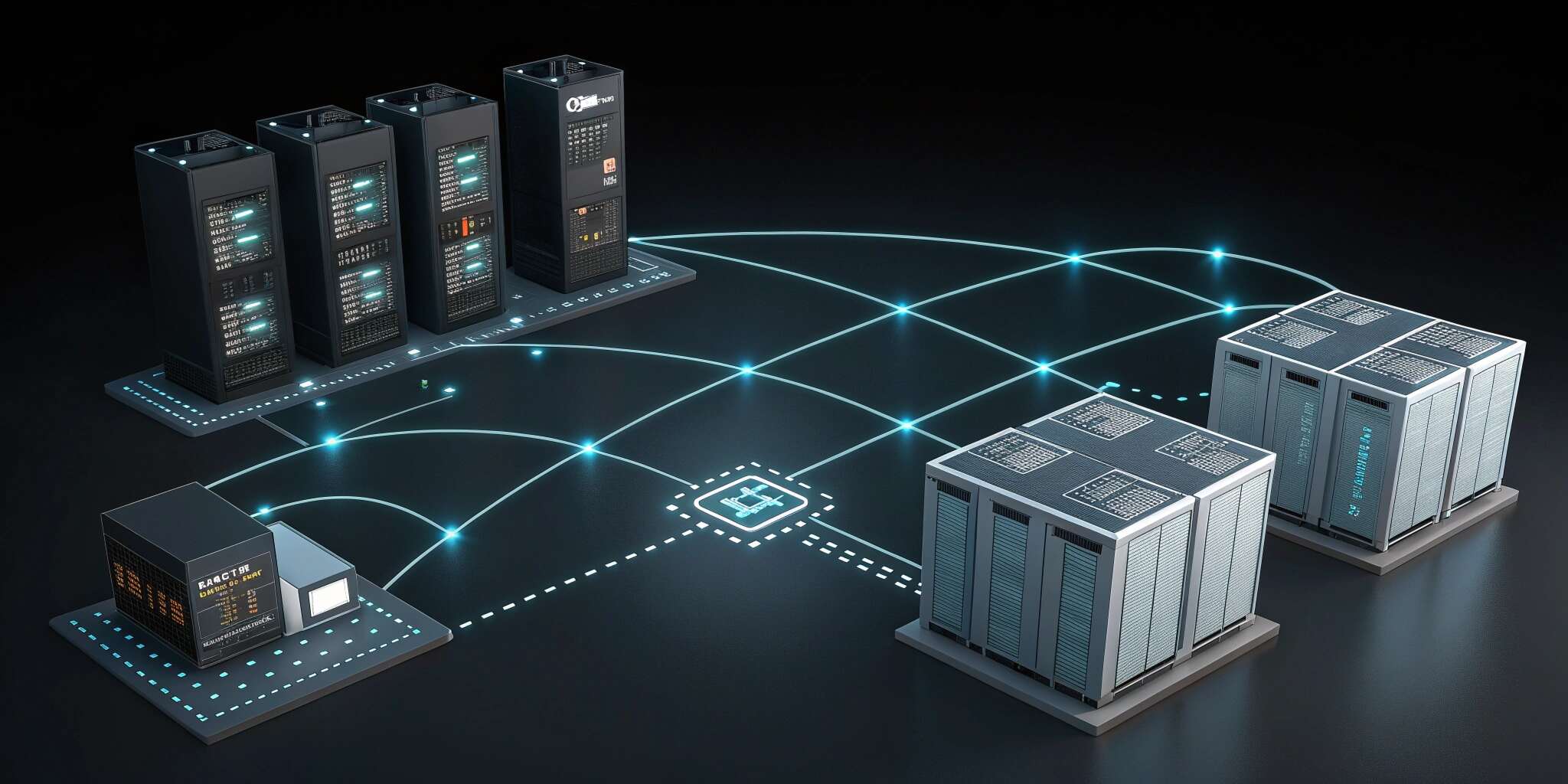
In today’s rapidly evolving digital landscape, enterprises generate massive amounts of data from numerous applications, devices, users, and distributed systems. Managing and integrating this dynamic data efficiently is essential for strategic decision-making and building competitive advantage. However, traditional centralized data architectures struggle to keep up with the complexity and scale of modern data ecosystems, leading to issues such as silos, latency, limited accessibility, and governance challenges. To address these limitations, two revolutionary architectural models—Data Fabric and Data Mesh—have emerged and are gaining significant attention across industries.
Data Fabric is an intelligent, integrated data architecture designed to unify data across on-premise, cloud, and hybrid environments. Leveraging AI technology, metadata-driven automation, knowledge graphs, and advanced analytics, Data Fabric enables seamless data access without requiring physical centralization. It creates a virtualized and automated layer that connects diverse data sources and ensures real-time discovery, integration, and governance. By eliminating manual processes and ensuring complete visibility across platforms, Data Fabric improves efficiency, enhances decision-making, and reduces operational complexity. As a result, organizations can achieve accessibility and data quality at scale while maintaining strong security and compliance controls. Data Fabric is ideal for enterprises handling hybrid or multi-cloud infrastructures that require automation and unified data management.
On the other hand, Data Mesh represents a decentralized data architecture that distributes data ownership to domain-specific teams. Instead of depending on a single centralized data lake or warehouse, Data Mesh treats data as a product managed by individual business domains, enabling faster access, better quality, and improved accountability. It empowers autonomous teams to manage their datasets independently while following a federated governance model that ensures standardization without removing flexibility. With domain experts handling their own data pipelines and services, Data Mesh helps eliminate bottlenecks often caused by centralized engineering teams. This model is highly suitable for large-scale organizations with diverse business units such as banking, retail, telecom, and multinational corporations.
Although both approaches seek to enhance enterprise data accessibility, they differ in architecture, governance, and ownership. Data Fabric focuses on technology-driven integration and central governance through automation, while Data Mesh focuses on organizational structure by decentralizing ownership and enabling domain-specific autonomy. In simpler terms, Data Fabric solves technical complexity, and Data Mesh solves organizational complexity. Despite their differences, these approaches are not competitors but complementary. Many modern enterprises are adopting a combined strategy, where Data Fabric provides a unified integration and automation layer and Data Mesh establishes distributed ownership, collaboration, and governance. Together, they create a transformative data ecosystem that supports scalable analytics, accelerates AI and machine learning initiatives, improves real-time decision-making, and drives innovation.
Looking ahead, the future of enterprise data architecture lies in flexibility, intelligence, and self-service. As the volume of structured and unstructured data expands, organizations will require architectures capable of supporting rapid scalability, federated governance, and seamless interoperability. Data Fabric and Data Mesh will play a critical role in enabling businesses to unlock the true value of data while strengthening security and compliance. Enterprises embracing these modern frameworks will achieve faster innovation cycles, better operational performance, and improved customer experiences, positioning themselves ahead in the era of digital transformation.