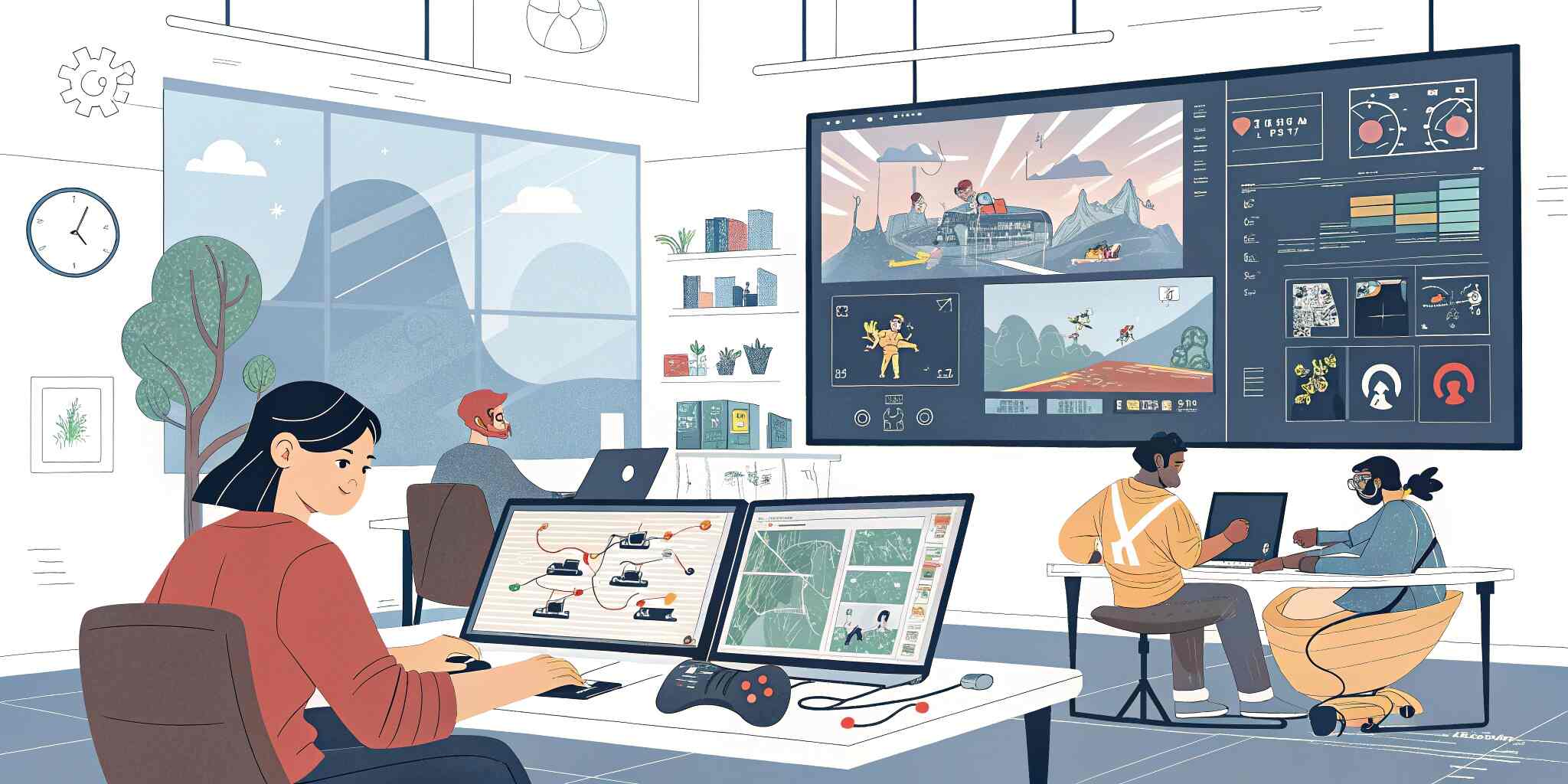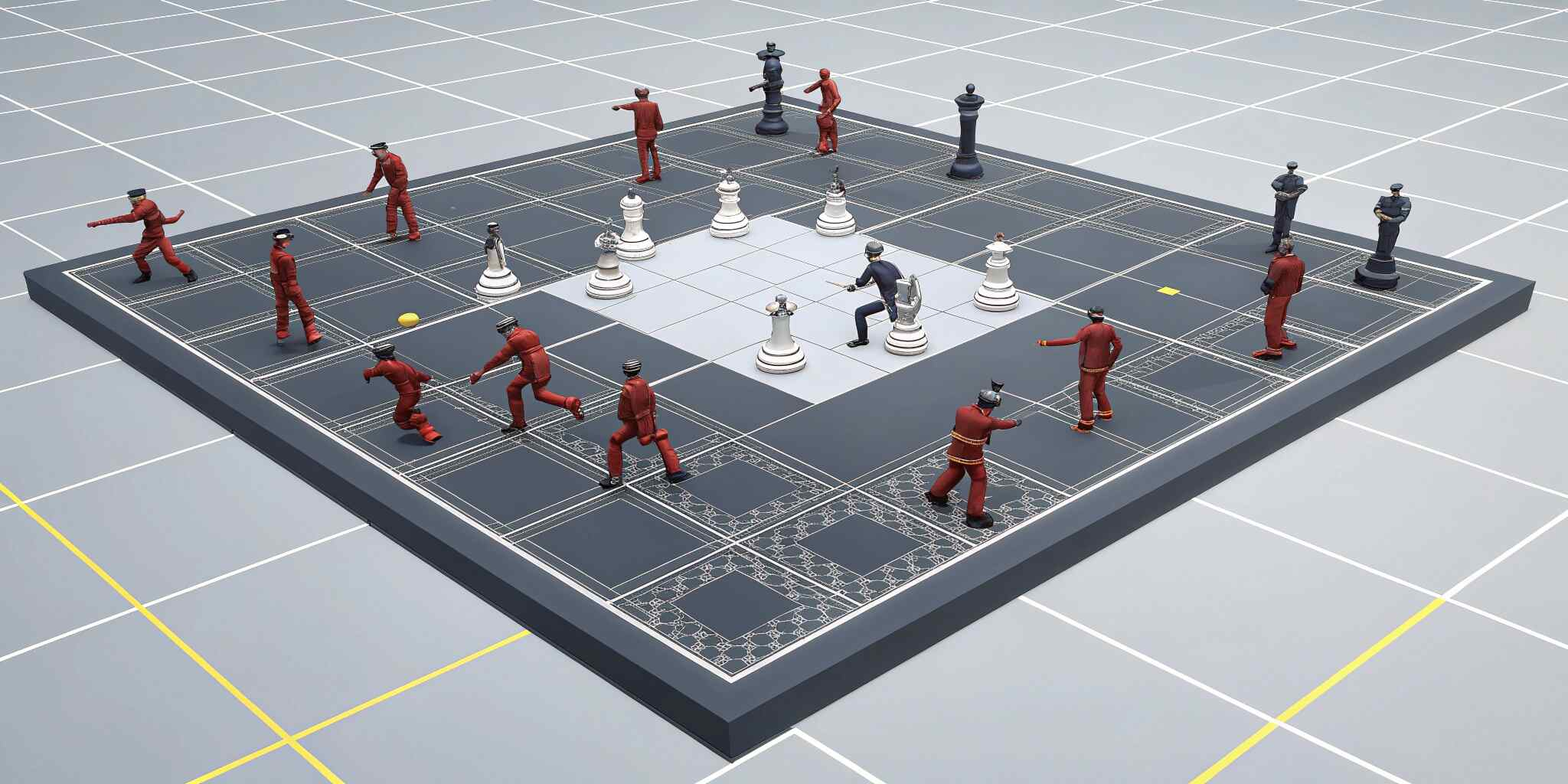
Multiplayer games require all participants to experience a shared world that evolves consistently over time. In lockstep multiplayer engines, this consistency is achieved through deterministic simulation rather than continuous state synchronization. Instead of transmitting full game state across the network, each client runs the same simulation locally and exchanges only player inputs. When designed correctly, this approach results in perfectly synchronized gameplay with minimal bandwidth usage.
Deterministic simulation means that given the same initial state and the same sequence of inputs, the simulation will always produce identical results. Every system in the game—movement, combat, resource generation, and AI—must behave identically across all machines. This requirement makes deterministic simulation both powerful and challenging, as even small numerical differences can lead to desynchronization over time.
Lockstep engines operate by advancing the simulation in fixed time steps. At each step, every client collects player inputs and shares them with other participants. The simulation does not advance until all required inputs are received. Once inputs are synchronized, each client processes them locally and advances the game state. Because all clients use the same logic and inputs, the resulting state remains identical without the need to transmit positions, velocities, or other state data.
One of the primary advantages of deterministic lockstep systems is extremely low bandwidth usage. Since only player commands are transmitted, network traffic remains minimal regardless of world complexity or entity count. This makes lockstep particularly well-suited for real-time strategy games, simulation-heavy titles, and competitive games with large numbers of units.
However, deterministic simulation imposes strict technical constraints. Floating-point arithmetic is a common source of non-determinism, as different CPUs, compilers, and instruction sets may produce slightly different results. To mitigate this, many engines rely on fixed-point math or carefully controlled floating-point operations. Ensuring consistent execution order across systems is also critical, as multithreading can introduce race conditions that break determinism.
Randomness presents another challenge. Games often rely on random values for combat outcomes, AI decisions, or procedural events. In deterministic systems, randomness must be fully deterministic and synchronized. This is typically achieved by using seeded pseudo-random number generators and ensuring that random calls occur in the same order on every client.
Desynchronization detection and recovery are essential components of lockstep engines. Even with careful design, bugs or hardware differences can cause clients to diverge. Many engines periodically compute checksums of the game state and compare them across clients. If a mismatch is detected, the game can pause, attempt resynchronization, or report an error. Early detection prevents silent divergence that could invalidate competitive play.
Lockstep simulation also affects game design. Because the simulation waits for inputs from all players, network latency directly impacts responsiveness. Developers often introduce input delay or prediction to smooth gameplay, particularly in fast-paced games. This trade-off between responsiveness and synchronization must be carefully balanced to maintain a fair and enjoyable experience.
Compared to server-authoritative models, lockstep systems distribute computation evenly across clients. This reduces server costs but increases the importance of cheat prevention. Since clients simulate the game locally, validating inputs and detecting malicious behavior becomes more complex. Some hybrid architectures combine lockstep simulation with authoritative validation to mitigate cheating risks.
Despite these challenges, deterministic lockstep engines remain highly relevant. Modern implementations benefit from improved tooling, deterministic physics libraries, and advanced debugging techniques. For genres that demand large-scale simulation and precise synchronization, deterministic simulation remains one of the most efficient and elegant networking solutions available.
In conclusion, deterministic simulation is the cornerstone of lockstep multiplayer engines. By ensuring that all clients produce identical results from shared inputs, developers can build scalable, low-bandwidth multiplayer experiences. While the technical demands are high, the payoff is a synchronized, fair, and efficient multiplayer system well-suited for complex and competitive games.