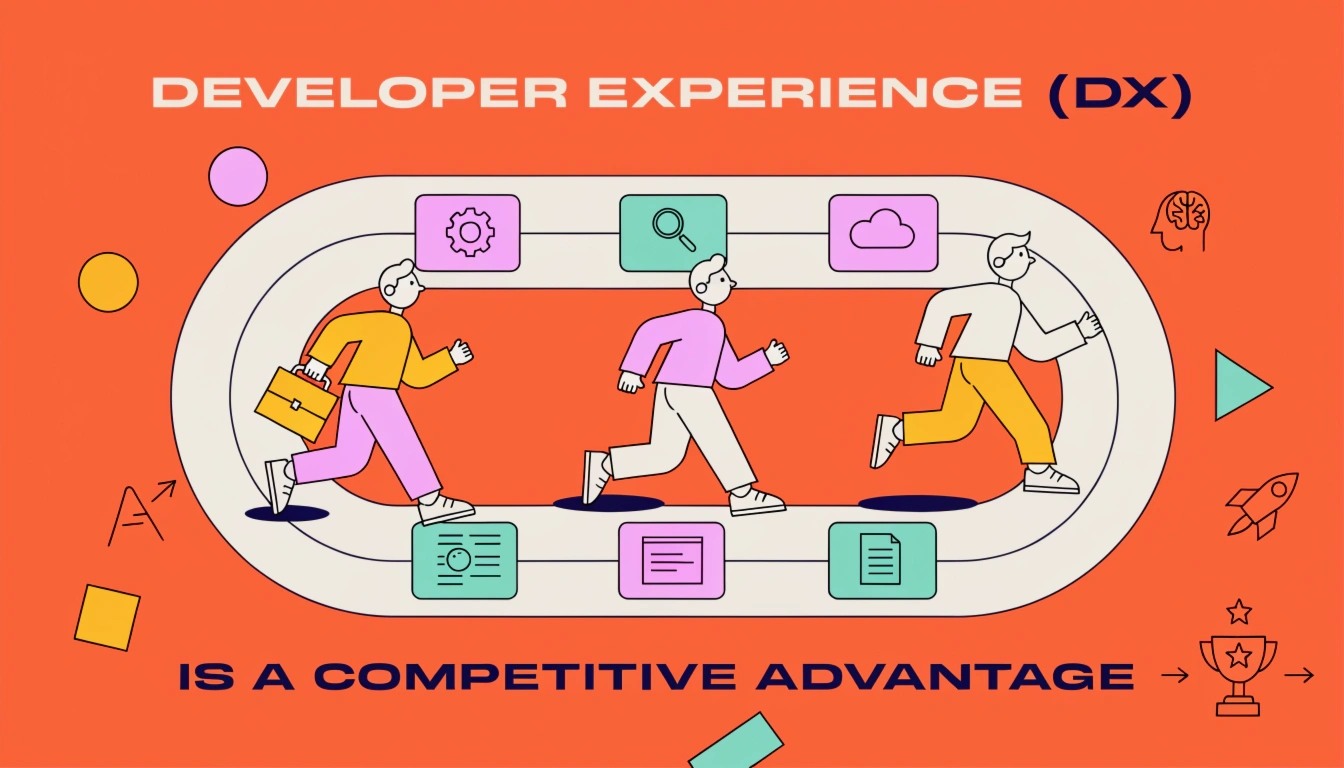
In today’s fast-moving technology landscape, software development speed and quality have become critical business differentiators. Companies are no longer competing only on product features or pricing—they are also competing on how efficiently their engineering teams can build, deploy, and maintain software.
This shift has brought growing attention to Developer Experience (DX).
Developer Experience refers to the overall experience developers have while interacting with tools, platforms, workflows, APIs, infrastructure, and internal systems during software development. A strong DX enables engineers to work more efficiently, solve problems faster, and build higher-quality products with less friction.
Organizations that prioritize developer experience often achieve:
- Faster development cycles
- Better software quality
- Increased innovation
- Improved engineering productivity
- Higher developer retention
As software complexity continues increasing, DX is rapidly becoming a major competitive advantage for modern technology companies.
What is Developer Experience (DX)?
Developer Experience (DX) is the experience developers have throughout the software development lifecycle.
It includes:
- Development tools
- APIs and SDKs
- Documentation quality
- CI/CD workflows
- Testing systems
- Deployment infrastructure
- Internal platforms
- Collaboration processes
DX focuses on reducing friction and improving developer productivity.
A positive developer experience allows engineers to:
- Build features faster
- Debug issues efficiently
- Deploy confidently
- Collaborate smoothly
- Learn systems quickly
DX is similar to User Experience (UX), but instead of optimizing experiences for customers, it optimizes experiences for developers.
Why DX Matters More Than Ever
Modern software systems are becoming increasingly complex.
Development teams now manage:
- Cloud infrastructure
- Microservices
- APIs
- CI/CD pipelines
- Security systems
- Observability platforms
- AI integrations
Without efficient workflows, developers spend excessive time dealing with:
- Configuration issues
- Tooling problems
- Documentation gaps
- Deployment failures
- Environment inconsistencies
Poor developer experience reduces productivity and slows innovation.
Companies that improve DX create engineering environments where developers can focus on solving business problems instead of struggling with infrastructure complexity.
Developer Experience as a Business Advantage
Many organizations now view DX as a strategic investment rather than just an engineering concern.
Faster Product Delivery
Good DX reduces development friction, enabling teams to:
- Release features faster
- Shorten deployment cycles
- Respond quickly to market demands
Faster delivery directly improves business competitiveness.
Improved Software Quality
When developers have reliable tooling and workflows, they can focus more on:
- Code quality
- Testing
- Security
- Performance optimization
This reduces bugs and improves system reliability.
Better Talent Retention
Developers prefer working in environments where:
- Workflows are efficient
- Documentation is clear
- Tools are modern
- Deployment processes are reliable
Strong DX improves job satisfaction and reduces developer burnout.
Companies such as GitHub and Stripe are widely recognized for investing heavily in developer-centric ecosystems and tools.
Key Components of Great Developer Experience
1. Excellent Documentation
Documentation is one of the most important aspects of DX.
Developers need:
- Clear setup instructions
- API references
- Architecture guides
- Troubleshooting support
- Code examples
Poor documentation slows onboarding and increases frustration.
Well-designed documentation accelerates learning and implementation significantly.
2. Reliable Development Environments
Setting up development environments should be fast and consistent.
Modern DX strategies use:
- Containerization
- Infrastructure as Code
- Automated environment setup
- Cloud development environments
This reduces “works on my machine” problems and onboarding delays.
3. Efficient CI/CD Pipelines
Continuous Integration and Continuous Deployment systems are central to developer productivity.
Good CI/CD systems provide:
- Fast build times
- Reliable testing
- Automated deployments
- Rollback capabilities
- Clear feedback mechanisms
Efficient pipelines help developers ship code confidently and frequently.
4. Strong API Design
APIs are products for developers.
Developer-friendly APIs should include:
- Consistent naming conventions
- Predictable behavior
- Strong authentication systems
- Comprehensive examples
- SDK support
Companies like Twilio and Stripe became highly successful partly because of their exceptional developer experience and API usability.
5. Internal Developer Platforms (IDPs)
Large engineering organizations increasingly build Internal Developer Platforms to simplify infrastructure complexity.
IDPs provide:
- Self-service deployment tools
- Standardized workflows
- Automated infrastructure provisioning
- Centralized observability systems
This allows developers to focus on application development rather than operational overhead.
Role of DevOps in Developer Experience
DevOps practices significantly influence DX.
Strong DevOps cultures improve:
- Collaboration between teams
- Deployment automation
- Monitoring visibility
- Incident response speed
Modern DX depends heavily on reducing operational bottlenecks across engineering workflows.
Developer Onboarding and Productivity
Developer onboarding is often overlooked.
New engineers need to:
- Understand architecture
- Configure environments
- Access documentation
- Learn workflows
- Integrate into team processes
Poor onboarding slows productivity significantly.
Organizations with strong DX optimize onboarding through:
- Automated setup scripts
- Interactive documentation
- Training systems
- Mentorship workflows
Fast onboarding improves both productivity and employee satisfaction.
Measuring Developer Experience
Companies increasingly use engineering metrics to evaluate DX.
Common DX indicators include:
- Deployment frequency
- Build success rates
- Developer satisfaction surveys
- Mean time to recovery (MTTR)
- Pull request cycle time
- Onboarding duration
These metrics help organizations identify workflow inefficiencies.
AI and the Future of Developer Experience
Artificial intelligence is rapidly transforming developer workflows.
AI-powered tools now assist with:
- Code generation
- Bug detection
- Documentation creation
- Test automation
- Code review suggestions
Platforms such as OpenAI and GitHub are driving the growth of AI-assisted software development tools.
AI is expected to become a major component of future developer experience ecosystems.
Common DX Challenges
Despite growing awareness, many companies still struggle with:
- Legacy systems
- Fragmented tooling
- Slow deployments
- Inconsistent environments
- Poor documentation
- Infrastructure complexity
Improving DX often requires organizational and cultural changes, not just better tools.
Best Practices for Improving Developer Experience
Prioritize Developer Feedback
Engineering teams should continuously collect feedback about workflow pain points.
Automate Repetitive Tasks
Automation reduces manual errors and operational friction.
Simplify Infrastructure Complexity
Developers should not need deep operational expertise for routine workflows.
Invest in Documentation
Good documentation saves significant engineering time.
Focus on Reliability
Stable systems improve confidence and productivity.
The Future of DX
Developer Experience will become even more important as:
- Software complexity increases
- AI-assisted development expands
- Cloud-native systems evolve
- Remote engineering teams grow
Future DX trends may include:
- Autonomous development environments
- AI-powered engineering copilots
- Predictive debugging systems
- Self-healing CI/CD pipelines
- Intelligent developer analytics
Organizations that build developer-first engineering cultures will innovate faster and attract stronger technical talent.
Conclusion
Developer Experience (DX) is no longer just an internal engineering concern—it is now a major competitive advantage for modern technology companies. Businesses that prioritize efficient workflows, reliable infrastructure, strong documentation, and developer-friendly systems can build software faster, improve product quality, and retain top engineering talent.
As software ecosystems continue becoming more complex, companies that invest in developer productivity and engineering experience will gain long-term advantages in innovation, scalability, and business growth.