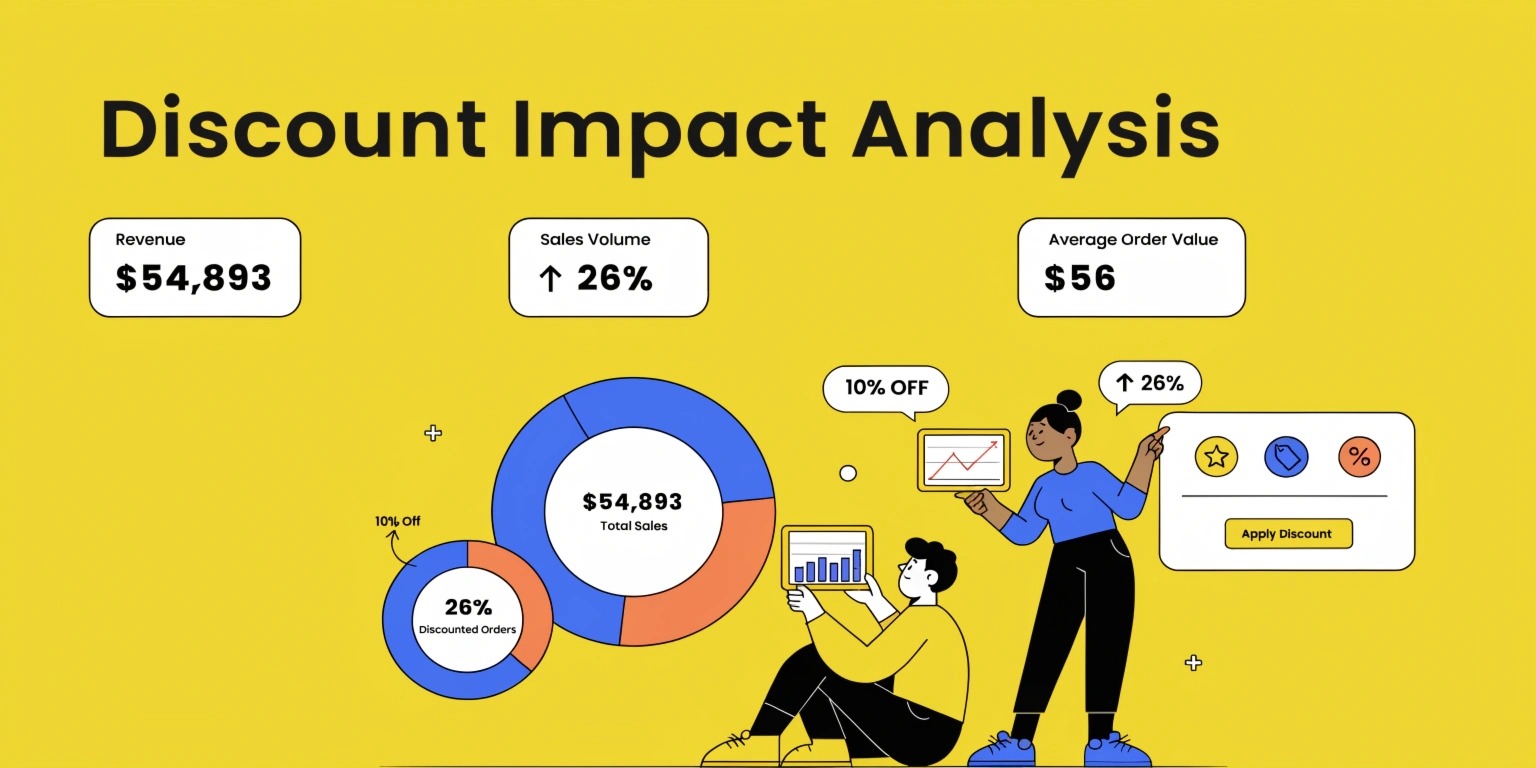
Discounts are among the most widely used sales strategies across industries. Whether offered to attract new customers, close enterprise deals, clear inventory, or reward loyal clients, discounts can significantly influence purchasing decisions. However, while discounts often increase short-term sales, they can also reduce profit margins, lower perceived value, and create long-term pricing challenges if not managed carefully.
For IT service companies, SaaS providers, software agencies, and digital businesses, pricing decisions directly affect revenue growth and profitability. Offering a discount without understanding its financial impact can result in increased sales volume but lower overall profits. This is why Discount Impact Analysis has become an essential part of modern pricing strategy.
Discount Impact Analysis evaluates how pricing reductions affect revenue, profit margins, customer acquisition, deal velocity, and long-term customer value. By analyzing these outcomes, businesses can determine whether discounts are creating sustainable growth or simply reducing earnings.
This article explains the importance of discount impact analysis, the metrics involved, analytical approaches, and best practices for making data-driven pricing decisions.
What Is Discount Impact Analysis?
Discount Impact Analysis is the process of measuring the financial and operational effects of discounts on business performance.
Rather than asking, "Did sales increase?", organizations evaluate broader questions such as:
- Did profitability improve?
- Were higher-value customers acquired?
- Did discounts shorten the sales cycle?
- Was customer lifetime value maintained?
- Were additional products or services purchased?
This broader perspective helps businesses understand the true return on discounting strategies.
Why Discount Impact Analysis Matters
Discounts influence more than immediate sales revenue.
Analyzing their impact helps businesses:
- Protect profit margins
- Improve pricing strategies
- Increase customer acquisition efficiency
- Support revenue forecasting
- Strengthen sales negotiations
- Identify profitable promotions
- Prevent unnecessary discounting
Data-driven analysis replaces assumptions with measurable outcomes.
Key Metrics to Measure
Effective discount analysis relies on several performance indicators.
Revenue Growth
Measure whether discounts generated meaningful increases in total sales rather than simply shifting existing demand.
Gross Profit Margin
Higher sales do not always translate into greater profitability.
Compare profit margins before and after promotional campaigns to determine whether discounts created sustainable value.
Average Deal Size
Discounts may encourage larger purchases.
Track whether customers purchased:
- Additional products
- Higher-tier plans
- Longer subscriptions
- Expanded service packages
Increased deal size can offset reduced pricing.
Customer Acquisition Cost (CAC)
Evaluate whether discounts reduced the cost of acquiring new customers by improving conversion rates and shortening sales cycles.
Customer Lifetime Value (CLV)
A discount that attracts long-term customers may produce greater overall revenue than one focused only on immediate transactions.
Analyze retention, renewal rates, and upselling opportunities to understand long-term value.
Types of Discount Strategies
Different pricing approaches produce different business outcomes.
Common strategies include:
Percentage Discounts
Examples:
- 10% off
- 20% seasonal offers
- First-time customer promotions
Volume Discounts
Encourage larger purchases through tiered pricing.
Examples include:
- Multi-user software licenses
- Bulk service packages
- Enterprise subscription plans
Time-Limited Promotions
Limited-duration offers create urgency while reducing the likelihood of customers expecting permanent discounts.
Loyalty Discounts
Reward existing customers through:
- Renewal incentives
- Upgrade offers
- Referral programs
- Long-term partnership pricing
These discounts often strengthen retention.
How to Conduct Discount Impact Analysis
A structured evaluation process improves decision-making.
Step 1: Define Objectives
Identify the purpose of the discount.
Examples:
- Increase sales
- Acquire new customers
- Improve retention
- Launch a new product
- Expand market share
Step 2: Collect Data
Gather relevant business information such as:
- Revenue
- Profit margins
- Conversion rates
- Sales cycle length
- Customer acquisition costs
- Renewal rates
- Customer feedback
Reliable data ensures accurate analysis.
Step 3: Compare Performance
Evaluate business performance before, during, and after discount campaigns.
Look for changes in:
- Revenue
- Customer behavior
- Profitability
- Sales productivity
- Retention
This comparison reveals the true business impact.
Step 4: Identify Patterns
Determine which discount types consistently deliver positive results.
For example:
- Enterprise discounts
- Seasonal promotions
- Annual subscription incentives
- Product bundle pricing
Understanding these trends supports future pricing decisions.
Common Mistakes
Organizations frequently reduce profitability by making avoidable pricing errors.
Examples include:
- Offering discounts too quickly during negotiations
- Using discounts without clear objectives
- Ignoring profitability analysis
- Applying identical discounts to all customer segments
- Failing to monitor campaign performance
- Overlooking long-term customer value
Effective pricing requires strategy rather than habit.
Best Practices
To maximize discount effectiveness:
- Define clear discount approval policies.
- Analyze profitability before offering price reductions.
- Personalize discounts based on customer value and buying behavior.
- Test multiple pricing strategies using controlled experiments.
- Combine discounts with value-added services instead of relying solely on price reductions.
- Review campaign performance regularly.
- Use CRM and analytics platforms to monitor pricing trends.
- Educate sales teams on value-based selling before approving discounts.
These practices protect margins while maintaining competitiveness.
Role of Technology and AI
Modern pricing decisions increasingly rely on automation and analytics.
AI-powered pricing platforms can:
- Predict customer price sensitivity
- Recommend optimal discount levels
- Forecast revenue outcomes
- Detect unprofitable pricing patterns
- Segment customers intelligently
- Automate approval workflows
- Generate pricing reports in real time
These capabilities improve pricing accuracy and reduce manual decision-making.
Future Trends
Discount management continues to evolve alongside advances in data analytics.
Emerging trends include:
- Dynamic pricing powered by AI
- Predictive revenue optimization
- Personalized promotional offers
- Real-time pricing analytics
- Revenue Operations (RevOps) integration
- Behavioral pricing models
- Subscription pricing optimization
- Machine learning-based demand forecasting
These innovations enable businesses to balance competitiveness with long-term profitability.
Conclusion
Discounts can be a powerful tool for driving sales, acquiring customers, and strengthening relationships, but they should never be offered without understanding their financial impact. Discount Impact Analysis helps organizations evaluate how pricing decisions influence revenue, profitability, customer acquisition, and long-term business performance.
By measuring the right metrics, leveraging data analytics, adopting value-based pricing, and using AI-powered pricing tools, businesses can optimize discount strategies without sacrificing profit margins. For IT companies, SaaS providers, and service-based organizations, disciplined discount analysis is essential for sustainable growth, stronger customer relationships, and smarter revenue management in an increasingly competitive marketplace.