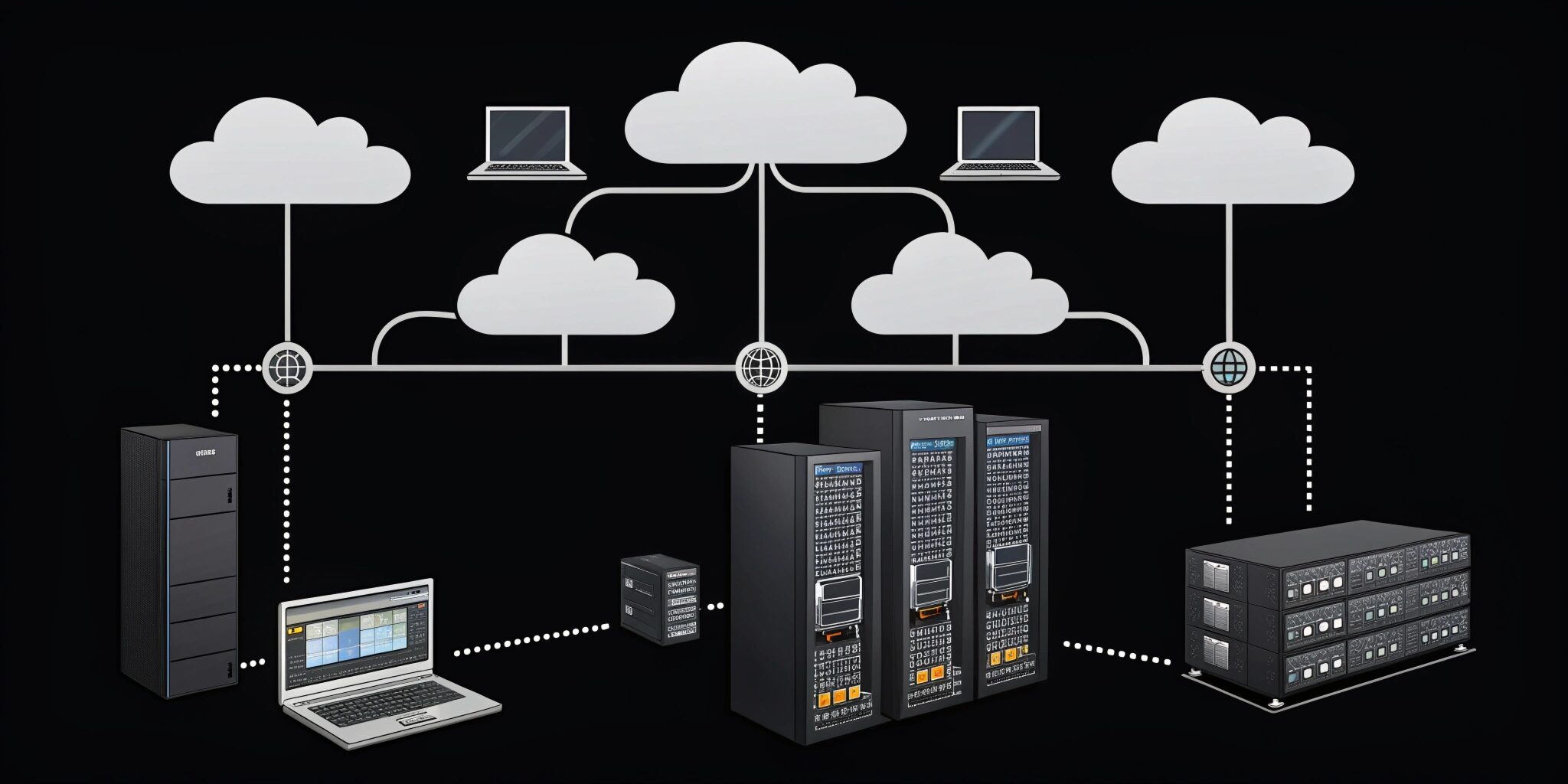
The rapid global adoption of cloud technology has dramatically reshaped the way organizations build, deploy, and manage digital infrastructure. As businesses expand and digital products evolve, the need for flexibility, scalability, and performance has given rise to Distributed Cloud and Multi-Cloud Management models. Instead of depending on a single cloud provider, enterprises now strategically combine services across multiple public, private, and edge platforms to ensure reliability, performance, and cost efficiency.
Distributed Cloud refers to an architectural approach where cloud services are physically distributed across different geographical locations, data centers, and edge zones while being centrally managed by a single provider. This ensures that applications and workloads run closer to users and data sources, reducing latency and improving performance. On the other hand, Multi-Cloud Management involves using multiple cloud providers simultaneously—such as AWS, Google Cloud, and Microsoft Azure—to optimize resource usage, minimize vendor lock-in, and enhance resilience.
Over the past decade, organizations have moved away from traditional centralized data centers and single-cloud systems due to limitations in scale and flexibility. Multi-cloud adoption provides a competitive advantage by allowing companies to choose the best-performing service for each workload. For example, an enterprise might use AWS for compute power, Google Cloud for data analytics, and Azure for enterprise integration. This model also supports high availability by distributing workloads across platforms, ensuring uninterrupted business continuity in case of outages.
Distributed Cloud extends the benefits of multi-cloud by enabling cloud providers to deliver resources at edge locations closer to end-users. In industries such as manufacturing, logistics, gaming, and healthcare, where real-time data processing is essential, distributed cloud minimizes latency and enhances response times. It also accelerates emerging technologies like IoT, autonomous systems, AR/VR, and AI workloads that require speed and local processing power.
One of the key motivations behind adopting Distributed Cloud and Multi-Cloud Management is the ability to optimize costs. Instead of relying on a single provider’s pricing model, enterprises allocate resources dynamically to reduce expenditure. Automated orchestration and FinOps strategies help organizations balance performance and budgets through real-time usage monitoring, workload placement, and predictive analytics. Additionally, the flexibility to scale resources based on demand prevents overprovisioning and resource waste.
Security and compliance remain crucial considerations in multi-cloud ecosystems. Managing data across various environments requires strong governance, identity access control, encryption, and Zero Trust security frameworks. Enterprises increasingly leverage cloud management platforms, service meshes, and AI-driven monitoring tools to ensure visibility, threat detection, and unified control panels for multi-cloud operations.
Compliance regulations such as GDPR and HIPAA also drive the adoption of distributed cloud models, where data can be processed locally while centrally governed.
Managing complexity is a major challenge, pushing the use of automation and container orchestration technologies. Kubernetes, Terraform, cloud-native DevOps pipelines, and service mesh platforms help simplify workload deployment, scaling, and failover processes. These tools enable standardized cross-cloud operations, reducing human error and accelerating development cycles. Organizations also use APIs, cloud gateways, and AI-driven decision engines to streamline resource distribution.
In the future, Distributed Cloud and Multi-Cloud Management will become the default strategy for global enterprises. AI-powered orchestration, autonomous cloud optimization, and self-healing systems will play a central role in advancing automation. Edge computing will continue expanding into sectors such as autonomous vehicles, smart cities, and Industry 4.0 manufacturing. Businesses that adopt flexible and resilient multi-cloud strategies gain the ability to innovate faster and remain competitive in a rapidly changing digital landscape.
In conclusion, Distributed Cloud and Multi-Cloud Management offer unmatched advantages in scalability, performance, security, and operational efficiency. As modern enterprises continue navigating complex workloads and global user demands, multi-cloud strategies will empower them to achieve technological agility and sustainable growth.