Main Content
The mobile application industry is evolving rapidly, and users today expect applications to be lightweight, fast, and constantly updated with new functionalities. Traditional mobile app deployment methods often require users to download complete app updates even for small feature additions or bug fixes. This process can lead to user frustration, increased uninstall rates, and slower adoption of new features.
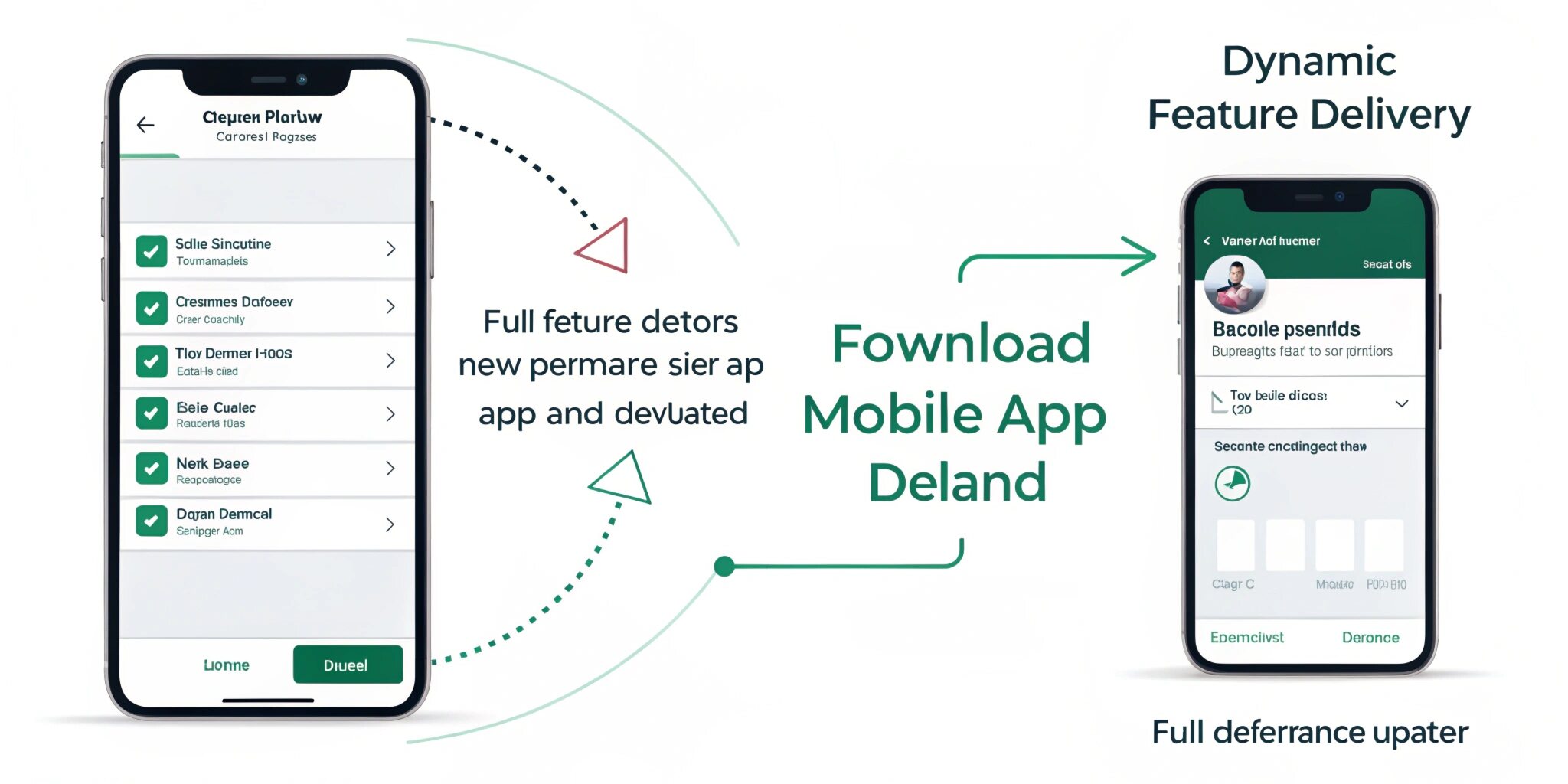
Dynamic Feature Delivery has emerged as a revolutionary solution that transforms how mobile applications are developed, deployed, and experienced. It allows developers to deliver app features only when users need them, reducing application size and enhancing overall performance.
What is Dynamic Feature Delivery?
Dynamic Feature Delivery is a modern app delivery architecture that enables developers to modularize applications into separate feature modules. Instead of packaging all functionalities into a single large application, features can be downloaded and installed dynamically during runtime.
This approach is commonly associated with Android App Bundles and modular development practices. Features are delivered based on user behavior, device capability, geographic location, or specific business requirements.
For example, a food delivery application may initially install only the core ordering system. Additional modules such as live tracking, loyalty programs, or augmented reality menus can be downloaded later when required.
Why Dynamic Feature Delivery Matters
Modern users demand high-speed mobile experiences. Large application sizes often discourage downloads, especially in regions with slower internet connectivity or limited device storage.
Dynamic Feature Delivery solves several major challenges:
1. Reduced Initial App Size
One of the biggest benefits is minimizing the initial download size. Users can install the core functionality quickly while optional features remain available for later download.
Smaller applications improve:
- Installation rates
- App store rankings
- User retention
- Device performance
2. Faster Feature Rollouts
Developers can release new functionalities independently without forcing users to update the entire application. This accelerates deployment cycles and supports agile development methodologies.
3. Improved User Experience
Users only access features relevant to them. This creates a cleaner and more personalized app experience while reducing unnecessary resource consumption.
4. Better Performance Optimization
Since only required modules are loaded, applications consume less memory and processing power, resulting in smoother performance across devices.
Key Components of Dynamic Feature Delivery
Modular Architecture
Applications are divided into independent modules. Each module contains specific functionalities such as:
- Payment systems
- Messaging
- Video streaming
- AR experiences
- Analytics dashboards
This modular approach enhances maintainability and scalability.
On-Demand Features
Features are downloaded only when users request them. For example, a travel application may install offline maps only when a user plans to travel.
Conditional Delivery
Developers can define conditions for feature installation based on:
- Device specifications
- Country or region
- Android version
- User subscription plans
Instant Experiences
Some features can be launched instantly without full installation, enabling users to test app functionality before downloading complete modules.
Real-World Applications
Dynamic Feature Delivery is widely used across industries.
E-Commerce Applications
Shopping apps dynamically load:
- AR product visualization
- Recommendation engines
- Seasonal campaign modules
Gaming Industry
Mobile games often deliver:
- Additional levels
- High-resolution textures
- Multiplayer modes
- Event-based content
This significantly reduces the initial installation size.
Streaming Platforms
Video streaming applications dynamically install:
- Offline download capabilities
- Premium content modules
- Advanced subtitle systems
Enterprise Applications
Business applications use modular delivery for:
- HR systems
- Finance dashboards
- Reporting tools
- CRM integrations
Technical Advantages for Developers
Dynamic Feature Delivery offers substantial technical improvements.
Easier Maintenance
Independent modules simplify debugging and maintenance processes. Teams can work on separate features without affecting the entire application.
Scalable Development
Large development teams can independently build and deploy feature modules, improving productivity and collaboration.
Improved Testing
Testing individual modules reduces complexity and allows faster quality assurance cycles.
Enhanced Security
Sensitive features can remain isolated and protected until required, reducing attack surfaces.
Challenges in Dynamic Feature Delivery
Despite its benefits, implementing Dynamic Feature Delivery comes with certain challenges.
Complex Architecture Planning
Developers must carefully design modular systems to avoid dependency conflicts and maintain consistent user experiences.
Internet Dependency
Some features require active internet connectivity for downloading modules, which may affect users in low-network environments.
Compatibility Management
Managing multiple feature combinations across devices can increase testing complexity.
User Education
Users may not immediately understand why certain features require downloading after app installation.
Best Practices for Implementation
Organizations adopting Dynamic Feature Delivery should follow strategic development practices.
Prioritize Core Features
The base application should include essential functionalities that guarantee a complete user experience.
Optimize Module Size
Feature modules should remain lightweight for faster downloads and better performance.
Use Analytics
Analyze user behavior to determine which features should be dynamically delivered.
Maintain Seamless UX
Feature downloads should occur smoothly in the background without disrupting the user journey.
Monitor Performance
Continuous monitoring helps identify performance bottlenecks and feature adoption trends.
The Future of Dynamic Mobile Experiences
Dynamic Feature Delivery is becoming increasingly important as applications grow more complex. Emerging technologies such as Artificial Intelligence, Augmented Reality, and Cloud Gaming will rely heavily on modular delivery systems.
Future mobile ecosystems may support:
- Real-time feature streaming
- AI-powered feature recommendations
- Hyper-personalized app experiences
- Cloud-based modular execution
As 5G connectivity expands globally, dynamic delivery systems will become even faster and more efficient.
Conclusion
Dynamic Feature Delivery represents a major shift in modern mobile application development. By enabling modular deployment, faster feature releases, and personalized user experiences, businesses can create scalable and high-performing applications that meet evolving market demands.
Organizations investing in mobile innovation should strongly consider adopting Dynamic Feature Delivery strategies to improve performance, reduce costs, and deliver better customer experiences. As mobile technology continues advancing, modular application ecosystems will become the foundation of next-generation app development.