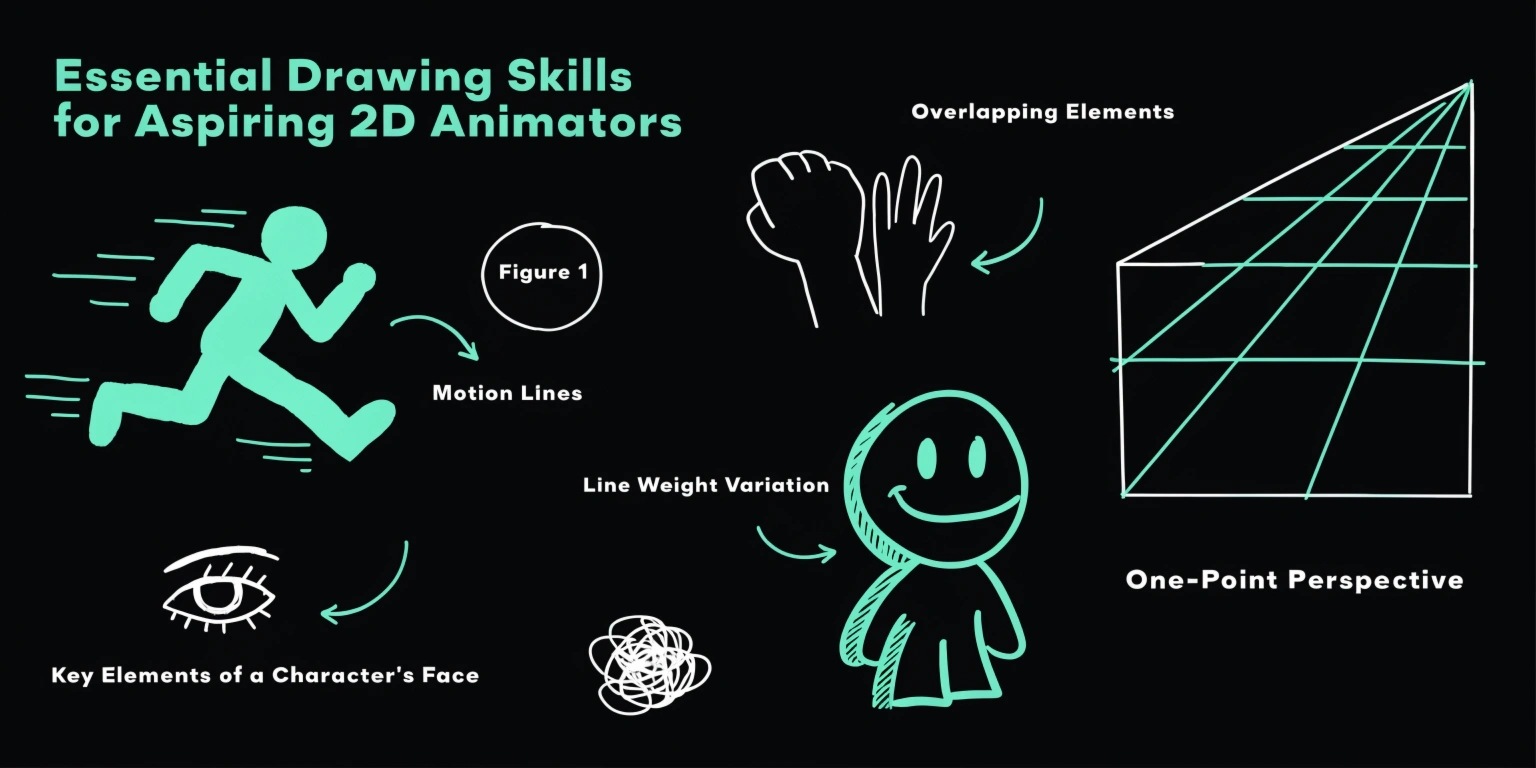
The world of 2D animation is built on creativity, storytelling, and artistic expression. Whether creating animated films, television series, advertisements, educational content, or video game assets, successful 2D animators rely heavily on strong drawing fundamentals.
While modern animation software offers advanced tools that simplify production workflows, technology cannot replace the importance of solid drawing skills. Understanding how to draw characters, environments, expressions, and movement remains one of the most valuable abilities an animator can develop.
For aspiring 2D animators, mastering key drawing techniques not only improves artistic quality but also enhances storytelling, character development, and animation performance.
Why Drawing Skills Matter in 2D Animation
Drawing is the language of animation.
Every animated scene begins with visual concepts that communicate:
- Character personalities
- Emotions
- Actions
- Environments
- Story progression
Strong drawing skills allow animators to:
- Visualize ideas clearly
- Create believable characters
- Animate convincing movement
- Build immersive worlds
- Improve production efficiency
Without a solid artistic foundation, even the most advanced animation software cannot fully realize creative visions.
1. Gesture Drawing
Gesture drawing is one of the most important skills for animators.
It focuses on capturing:
- Movement
- Energy
- Action
- Pose dynamics
Rather than emphasizing details, gesture drawing helps artists understand how a character moves and interacts with the environment.
Benefits include:
- Better action poses
- Improved animation flow
- More dynamic character performances
- Stronger storytelling through movement
Daily gesture practice significantly improves animation quality.
2. Understanding Human Anatomy
Many animated characters are based on human proportions and movement.
Anatomy studies help artists understand:
- Skeletal structure
- Muscle groups
- Joint movement
- Body proportions
Even stylized cartoon characters benefit from anatomical knowledge because realistic movement often forms the foundation of exaggerated animation.
Understanding anatomy enables animators to create characters that move naturally and convincingly.
3. Perspective Drawing
Perspective is essential for creating depth and believable environments.
Animators should master:
One-Point Perspective
Used for straightforward scenes and interior spaces.
Two-Point Perspective
Common for buildings and environmental layouts.
Three-Point Perspective
Creates dramatic camera angles and dynamic compositions.
Strong perspective skills help establish immersive worlds and realistic spatial relationships.
4. Character Design Fundamentals
Character design is a critical aspect of 2D animation.
Effective character designs communicate:
- Personality
- Background
- Role in the story
- Emotional traits
Aspiring animators should learn:
- Shape language
- Silhouette design
- Proportion variations
- Costume design
- Visual consistency
Memorable characters often become the centerpiece of successful animated projects.
5. Facial Expressions and Emotions
Animation relies heavily on emotional communication.
Artists must learn to draw:
- Happiness
- Sadness
- Anger
- Fear
- Surprise
- Confusion
Subtle changes in:
- Eyes
- Eyebrows
- Mouth shapes
- Head positioning
can dramatically alter a character's emotional impact.
Mastering expressions helps audiences connect with animated characters on a deeper level.
6. Drawing Movement and Action
Animation is the art of creating the illusion of motion.
Understanding movement allows animators to create:
- Walk cycles
- Running animations
- Jumping sequences
- Action scenes
- Character interactions
Artists should study:
- Motion arcs
- Weight distribution
- Timing
- Balance
- Body mechanics
Observing real-life movement is one of the best ways to improve action drawing skills.
7. Line Quality and Clean Drawing
Professional animation requires clear and readable artwork.
Good line quality helps:
- Improve visual appeal
- Enhance clarity
- Simplify production workflows
Animators should practice:
- Confident strokes
- Consistent line weight
- Smooth curves
- Accurate shapes
Clean drawings make animation production more efficient and visually polished.
8. Composition and Visual Storytelling
Drawing is not just about creating attractive images.
It is also about guiding the audience's attention.
Strong composition helps:
- Highlight important actions
- Establish mood
- Support storytelling
- Improve scene readability
Animators should understand:
- Framing
- Camera angles
- Visual hierarchy
- Scene balance
Storytelling skills are often what separate great animators from good artists.
9. Environment and Background Drawing
Characters need believable worlds to exist in.
Environmental drawing involves creating:
- Landscapes
- Cities
- Interiors
- Fantasy worlds
- Natural settings
Strong background design contributes to:
- World-building
- Narrative depth
- Visual immersion
Animators who can draw both characters and environments become more versatile professionals.
10. Mastering Animation Principles Through Drawing
Traditional animation principles remain essential even in modern digital workflows.
Key principles include:
- Squash and Stretch
- Anticipation
- Follow Through
- Overlapping Action
- Timing and Spacing
- Exaggeration
- Appeal
These principles help create animations that feel lively, expressive, and engaging.
Drawing practice is often the best way to understand and apply these concepts effectively.
Digital Drawing Skills for Modern Animators
Today's animation industry increasingly relies on digital tools.
Aspiring animators should become familiar with:
- Graphic tablets
- Digital sketching software
- Layer management
- Vector drawing
- Digital painting techniques
Popular tools include:
- Adobe Animate
- Toon Boom Harmony
- TVPaint
- Clip Studio Paint
- Adobe Photoshop
Combining traditional drawing skills with digital proficiency increases employability.
Building a Strong Practice Routine
Consistent practice is essential for improvement.
A productive routine might include:
- Daily gesture drawing
- Anatomy studies
- Perspective exercises
- Character sketches
- Expression practice
- Animation breakdown analysis
Even 30–60 minutes of focused practice each day can produce significant progress over time.
Career Benefits of Strong Drawing Skills
Animators with excellent drawing abilities often have opportunities in:
- Film animation
- Television production
- Advertising
- Game development
- Educational content creation
- Motion graphics
- Freelance illustration
Strong artistic foundations provide flexibility across multiple creative industries.
Conclusion
Drawing remains one of the most important skills for aspiring 2D animators. From gesture drawing and anatomy to perspective, character design, and storytelling, mastering these fundamentals helps artists create engaging, believable, and memorable animations.
While software tools continue to evolve, the ability to draw effectively remains at the heart of great animation. By consistently practicing essential drawing techniques and developing a strong understanding of movement, emotion, and visual storytelling, aspiring animators can build a solid foundation for a successful and rewarding career in the animation industry.