has become one of the most valuable assets for modern businesses. Organizations collect information from websites, mobile applications, IoT devices, customer interactions, social media platforms, and enterprise systems. However, raw data alone provides little value unless it is properly processed and transformed into actionable insights.
This is where data integration and processing methodologies such as ETL and ELT come into play. Both approaches are designed to move data from multiple sources into a centralized repository for analysis and reporting. While they share similar objectives, they differ significantly in how data is transformed and processed.
As cloud computing, big data technologies, and scalable storage solutions continue to evolve, organizations must understand the differences between ETL and ELT to make informed decisions about their data infrastructure.
What is ETL?
ETL stands for:
- Extract
- Transform
- Load
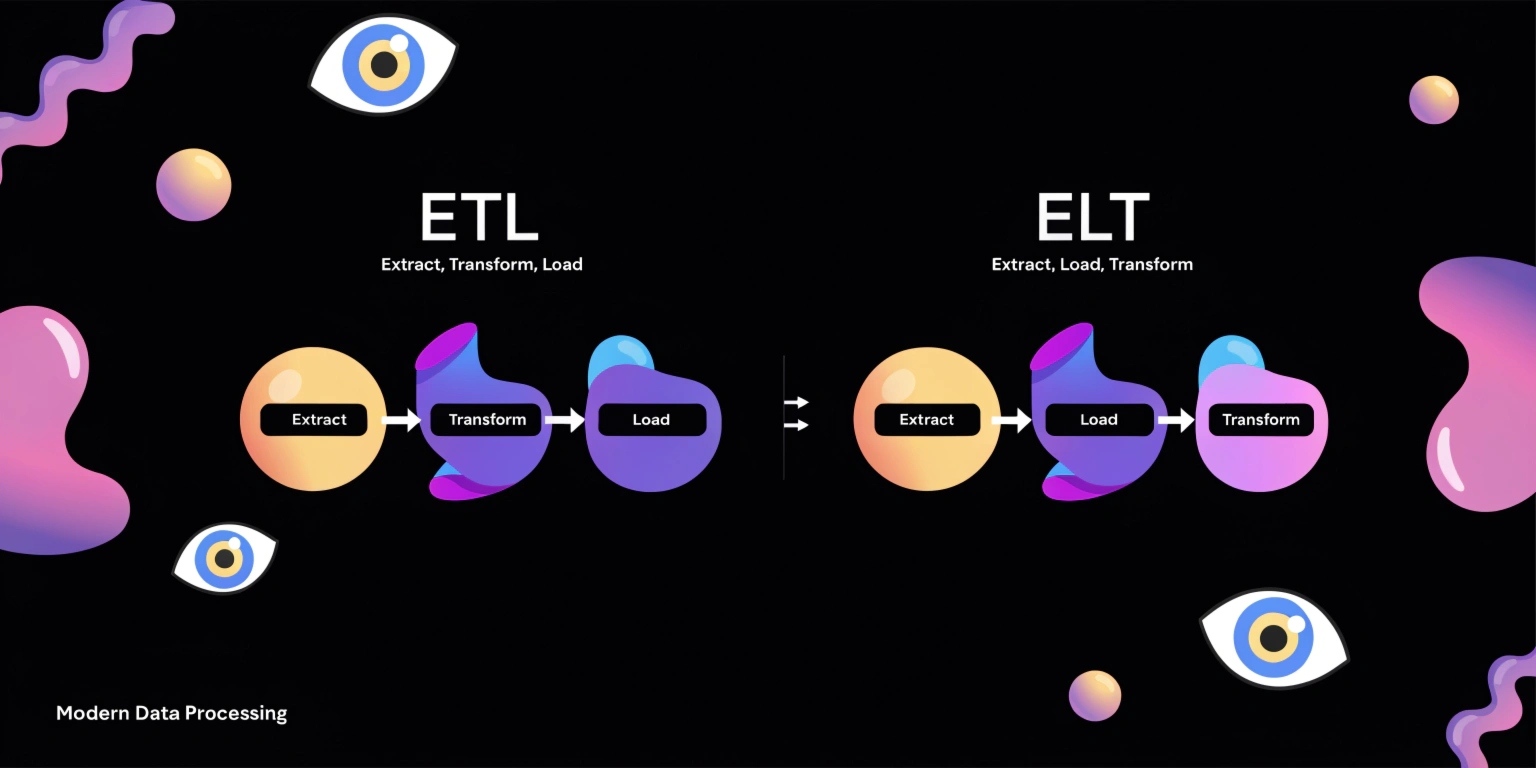
In the ETL process, data is first extracted from various source systems. It is then transformed into a structured and usable format before being loaded into a target data warehouse.
ETL Workflow
- Extract data from sources.
- Clean, validate, and transform data.
- Load transformed data into the warehouse.
For example, an e-commerce company may collect customer information from multiple platforms. ETL processes can standardize formats, remove duplicates, and apply business rules before storing the data in a reporting database.
Advantages of ETL
Improved Data Quality
Since transformation occurs before loading, only clean and validated data enters the warehouse.
Better Governance
Organizations can enforce business rules, compliance requirements, and data standards during transformation.
Reduced Storage Costs
Only processed and relevant data is stored, minimizing unnecessary storage consumption.
Established Technology
ETL has been widely used for decades and is supported by numerous mature tools and platforms.
Limitations of ETL
Despite its benefits, ETL has certain challenges:
- Processing large datasets can be time-consuming.
- Scaling ETL infrastructure may become costly.
- Data transformations require significant computing resources.
- Real-time analytics can be difficult to achieve.
What is ELT?
ELT stands for:
- Extract
- Load
- Transform
Unlike ETL, ELT loads raw data directly into the target storage system before performing transformations.
ELT Workflow
- Extract data from source systems.
- Load raw data into the data warehouse.
- Transform data within the warehouse when needed.
This approach has gained popularity with cloud-native platforms such as Snowflake, BigQuery, Redshift, and Azure Synapse, which provide powerful processing capabilities directly within the data warehouse.
Advantages of ELT
Faster Data Ingestion
Raw data can be loaded immediately without waiting for transformation processes.
Scalability
Modern cloud platforms offer virtually unlimited storage and processing resources.
Flexibility
Raw data remains available, allowing analysts to perform different transformations for various use cases.
Support for Big Data
ELT is well-suited for handling massive datasets generated by modern applications.
Limitations of ELT
ELT also presents some challenges:
- Larger storage requirements.
- Potential security risks if raw sensitive data is stored.
- Increased governance complexity.
- Data quality issues may persist until transformations occur.
ETL vs ELT: Key Differences
FeatureETLELTTransformation TimingBefore LoadingAfter LoadingData StorageProcessed DataRaw + Processed DataProcessing LocationETL EngineData WarehouseScalabilityLimited by ETL InfrastructureCloud-Based ScalabilitySpeedSlower for Large DatasetsFaster Data IngestionData FlexibilityLowerHigherBig Data SupportModerateExcellent
When to Choose ETL
ETL is often the better choice when:
- Data quality is critical before storage.
- Regulatory compliance requires strict validation.
- Data volumes are moderate.
- Legacy systems are involved.
- Storage costs need to be minimized.
Industries such as banking, healthcare, and government frequently rely on ETL for its strong governance capabilities.
When to Choose ELT
ELT is ideal when:
- Large-scale data processing is required.
- Cloud data warehouses are used.
- Real-time or near-real-time analytics are needed.
- Data scientists require access to raw datasets.
- Advanced analytics and machine learning are priorities.
Technology companies, SaaS platforms, and data-driven enterprises often prefer ELT because of its scalability and flexibility.
ETL and ELT in Modern Cloud Architectures
The rise of cloud computing has significantly influenced the shift toward ELT.
Modern cloud data warehouses offer:
- Elastic computing resources
- Massive storage capacity
- High-speed parallel processing
- Integrated analytics capabilities
As a result, many organizations now use hybrid approaches that combine ETL and ELT techniques depending on specific business requirements.
For example:
- ETL for sensitive financial data.
- ELT for customer behavior analytics.
- Hybrid pipelines for enterprise-wide reporting systems.
Best Practices for Modern Data Processing
To maximize efficiency and performance:
Establish Clear Data Governance
Implement policies for data quality, security, and compliance.
Automate Data Pipelines
Use orchestration tools to streamline extraction, loading, and transformation processes.
Monitor Performance
Continuously evaluate pipeline efficiency and resource utilization.
Secure Sensitive Information
Apply encryption, access controls, and auditing mechanisms.
Leverage Cloud Scalability
Take advantage of cloud-native services for storage and compute optimization.
Future of Data Processing
As organizations continue generating unprecedented volumes of data, ELT adoption is expected to grow rapidly. However, ETL remains highly relevant in scenarios where governance, validation, and data quality are paramount.
Future trends include:
- AI-powered data transformation
- Real-time data pipelines
- Automated data quality management
- Serverless data processing
- Hybrid ETL-ELT architectures
Businesses that strategically combine these approaches will be better equipped to extract value from their data assets.
Conclusion
ETL and ELT are both essential methodologies in modern data processing. ETL emphasizes data quality and governance before storage, while ELT prioritizes speed, scalability, and flexibility by leveraging powerful cloud data warehouses.
Choosing between ETL and ELT depends on factors such as data volume, compliance requirements, infrastructure capabilities, and business objectives. By understanding the strengths and limitations of each approach, organizations can design efficient data architectures that support analytics, business intelligence, and future innovation.