Data has become one of the most valuable assets for modern businesses. Organizations collect massive amounts of information from websites, mobile applications, IoT devices, customer interactions, business systems, and cloud platforms every day. However, raw data alone is not useful unless it can be processed, organized, and transformed into actionable insights.
This is where data processing architectures such as ETL and ELT play a critical role.
Both ETL and ELT are methodologies used to move and transform data for analytics, reporting, machine learning, and business intelligence systems. While they share similar goals, they differ significantly in how data is processed and managed.
As cloud computing and big data technologies continue evolving, ELT is increasingly becoming the preferred approach for modern data engineering workflows.
Understanding the differences between ETL and ELT is essential for building scalable and efficient data systems.
What is ETL?
ETL stands for:
- Extract
- Transform
- Load
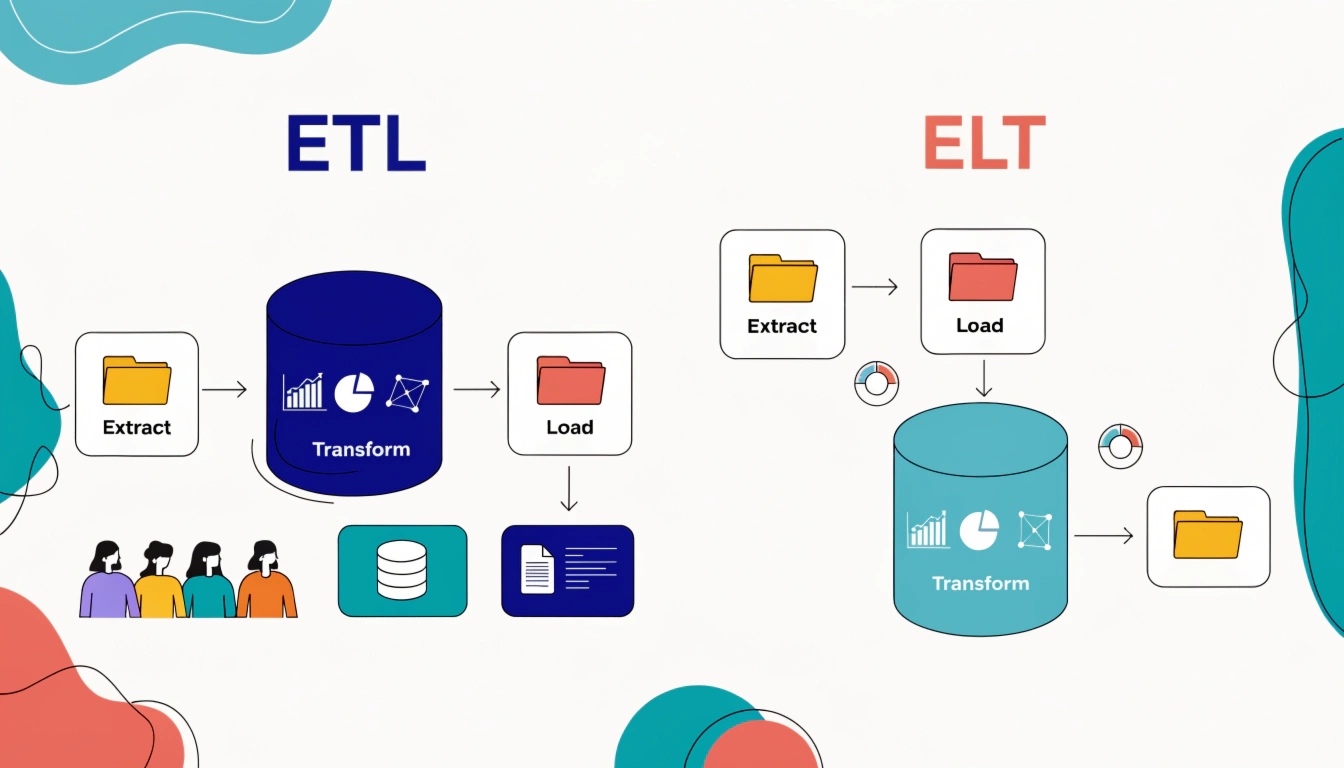
In the ETL process:
- Data is extracted from source systems
- Data is transformed into the required format
- The transformed data is loaded into a target system such as a data warehouse
The transformation step happens before the data reaches the final storage destination.
ETL has traditionally been used in enterprise data warehousing environments where:
- Data quality is highly controlled
- Structured reporting is required
- Storage systems are expensive
- Compute power is limited
ETL Workflow
The ETL process typically follows this sequence:
Extract→Transform→Load\text{Extract} \rightarrow \text{Transform} \rightarrow \text{Load}Extract→Transform→Load
Extract
Data is collected from multiple sources such as:
- Databases
- APIs
- CRM systems
- ERP platforms
- Web applications
Transform
Data is cleaned, standardized, validated, and enriched before storage.
Transformation tasks may include:
- Removing duplicates
- Formatting dates
- Applying business rules
- Aggregating data
Load
The processed data is stored in a centralized warehouse for analysis.
What is ELT?
ELT stands for:
- Extract
- Load
- Transform
Unlike ETL, ELT loads raw data into the target storage system first and performs transformations afterward inside the data warehouse or cloud platform.
The ELT workflow looks like this:
Extract→Load→Transform\text{Extract} \rightarrow \text{Load} \rightarrow \text{Transform}Extract→Load→Transform
This approach became popular with the rise of cloud-native data warehouses capable of handling massive computational workloads efficiently.
Modern cloud platforms provide scalable storage and compute resources that make post-load transformations highly practical.
Why ELT Became Popular
Traditional ETL systems were designed during an era when:
- Storage was expensive
- Compute resources were limited
- Data volumes were smaller
Today, cloud platforms provide:
- Elastic scalability
- Distributed computing
- Affordable storage
- High-performance query engines
This allows businesses to store raw data first and transform it later when needed.
Cloud platforms such as Snowflake, Google BigQuery, and Amazon Redshift are major drivers behind ELT adoption.
Key Differences Between ETL and ELT
Data Transformation Timing
ETL
Data is transformed before loading.
ELT
Data is transformed after loading into the warehouse.
Infrastructure Requirements
ETL
Requires separate transformation engines and middleware systems.
ELT
Leverages cloud warehouse compute power directly.
Scalability
ETL
Can become difficult to scale with very large datasets.
ELT
Designed for large-scale cloud-native data processing.
Flexibility
ETL
Highly structured and predefined workflows.
ELT
More flexible for exploratory analytics and evolving business requirements.
Data Storage
ETL
Only processed data is typically stored.
ELT
Raw data is preserved for future transformations and analysis.
Advantages of ETL
Despite ELT’s growing popularity, ETL still offers several advantages.
Strong Data Governance
ETL ensures data quality before storage, reducing inconsistencies.
Better Compliance Control
Sensitive industries such as healthcare and finance may prefer ETL because data can be sanitized before entering centralized systems.
Efficient for Structured Reporting
ETL works well for highly standardized reporting environments.
Reduced Storage Usage
Since only processed data is stored, ETL may reduce storage requirements.
Advantages of ELT
ELT is increasingly preferred for modern analytics ecosystems.
Scalability
Cloud-native systems handle massive data volumes efficiently.
Faster Data Availability
Raw data becomes available immediately after loading.
Greater Flexibility
Teams can transform data differently for various use cases without reloading source systems.
Supports Big Data and AI
ELT works well with:
- Machine learning pipelines
- Real-time analytics
- Data lakes
- AI-driven applications
ETL and ELT in the Modern Data Stack
Modern data architectures often combine multiple technologies:
- Data warehouses
- Data lakes
- Streaming systems
- Cloud analytics platforms
- AI pipelines
The modern data stack frequently uses ELT because of its compatibility with cloud ecosystems.
Popular tools include:
- Fivetran
- dbt Labs
- Databricks
These platforms simplify scalable data transformation workflows.
Real-Time Data Processing
Modern businesses increasingly require real-time analytics.
Examples include:
- Fraud detection
- Recommendation systems
- Financial monitoring
- IoT analytics
- Operational dashboards
ELT architectures integrate more naturally with modern streaming and cloud-native systems.
Challenges of ETL and ELT
ETL Challenges
- Complex transformation pipelines
- Slower processing at scale
- Higher maintenance overhead
- Limited flexibility for changing requirements
ELT Challenges
- Increased cloud compute costs
- Governance complexity
- Raw data security risks
- Need for strong warehouse optimization
Choosing between ETL and ELT depends on business requirements, compliance needs, infrastructure strategy, and analytics goals.
Role of AI in Modern Data Processing
Artificial intelligence is increasingly integrated into data engineering workflows.
AI-powered systems can:
- Automate data cleaning
- Detect anomalies
- Optimize transformations
- Predict pipeline failures
- Improve query performance
Modern data platforms are becoming increasingly intelligent and automated.
Future of Data Processing Architectures
The future of data engineering will likely include:
- Fully automated pipelines
- Real-time streaming architectures
- AI-driven transformations
- Serverless data platforms
- Unified analytics ecosystems
Hybrid approaches combining ETL and ELT may also become more common depending on enterprise requirements.
Conclusion
ETL and ELT are both essential data processing methodologies, but they are designed for different technological environments and business needs. ETL remains valuable for structured, compliance-heavy systems requiring strict governance, while ELT has emerged as the dominant approach for cloud-native analytics and large-scale data processing.
As businesses continue generating enormous volumes of data, scalable and flexible architectures will become increasingly important. Understanding the strengths and limitations of ETL and ELT helps organizations design modern data platforms capable of supporting analytics, AI, and future digital transformation initiatives.