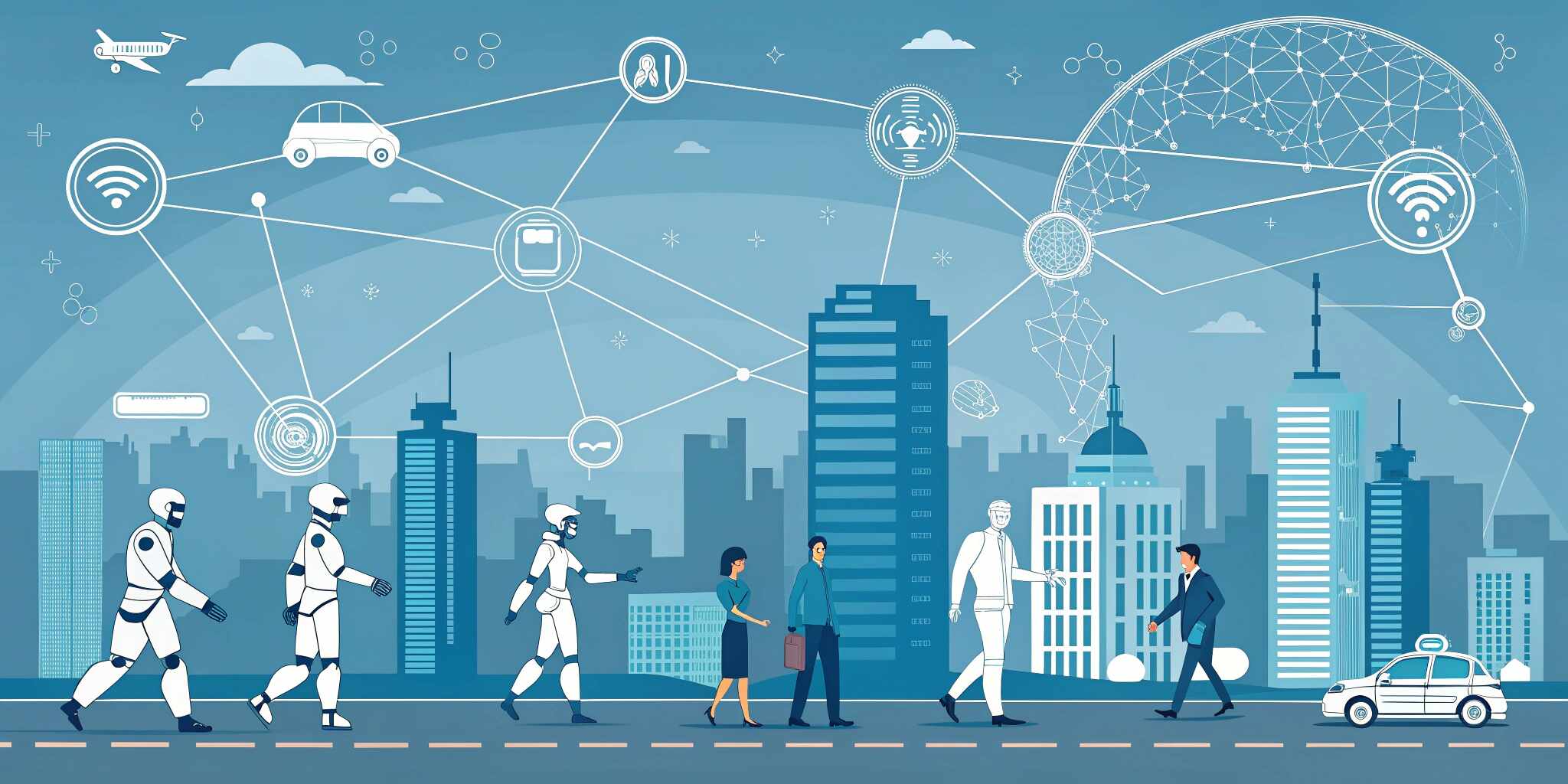
As artificial intelligence continues to evolve, the demand for real-time, scalable, and responsive systems is growing rapidly. Traditional architectures often struggle to handle dynamic data flows and instant decision-making requirements. This is where Event-Driven Architecture (EDA) becomes a game-changer for AI applications.
What is Event-Driven Architecture?
Event-driven architecture is a design pattern where system components communicate through events. An event represents a change in state—such as a user action, sensor input, or system update.
Instead of relying on direct requests and responses, EDA uses asynchronous communication. This allows systems to react to events in real time, making them highly efficient and scalable.
Why AI Applications Need EDA
AI systems often process continuous streams of data—from user interactions to IoT sensors. Traditional request-response models can create bottlenecks, limiting performance.
EDA addresses these challenges by:
- Enabling real-time data processing
- Supporting high scalability
- Decoupling system components
- Improving responsiveness
For AI applications like recommendation engines, fraud detection, or autonomous systems, real-time decision-making is critical.
Core Components of Event-Driven Architecture
1. Event Producers
These are sources that generate events, such as applications, sensors, or user actions.
2. Event Brokers
Event brokers manage the flow of events between producers and consumers. Tools like Apache Kafka and RabbitMQ are widely used.
3. Event Consumers
Consumers process events and trigger actions, such as updating a model or sending notifications.
How EDA Powers AI Systems
In AI applications, EDA enables seamless integration between data pipelines and machine learning models.
For example:
- A user clicks on a product → event generated
- Event triggers recommendation model → AI processes data
- System responds with personalized suggestions in real time
This continuous loop ensures that AI systems remain dynamic and responsive.
Key Benefits
1. Real-Time Processing
EDA allows AI systems to process data as it arrives, enabling instant insights and decisions.
2. Scalability
Components can scale independently, making it easier to handle large volumes of data.
3. Flexibility
New services can be added without disrupting existing components.
4. Fault Tolerance
Failures in one component do not affect the entire system, improving reliability.
Real-World Use Cases
Fraud Detection
Financial systems use EDA to analyze transactions in real time and detect suspicious activities instantly.
Recommendation Engines
Streaming platforms and e-commerce websites provide personalized recommendations based on user behavior.
IoT and Smart Systems
EDA processes continuous sensor data for smart cities, healthcare monitoring, and industrial automation.
Autonomous Systems
Self-driving cars rely on real-time event processing to make split-second decisions.
Companies like Netflix leverage event-driven systems to deliver personalized content and maintain seamless user experiences.
Challenges of Event-Driven Architecture
While powerful, EDA comes with challenges:
- Complexity: Designing and managing distributed systems can be difficult
- Debugging Issues: Tracking events across services is not straightforward
- Data Consistency: Ensuring consistency in asynchronous systems requires careful planning
- Latency Management: Improper configuration can lead to delays
Addressing these challenges requires strong architecture design and monitoring tools.
Best Practices for Implementation
To successfully implement EDA in AI applications:
- Use scalable event brokers like Kafka
- Design loosely coupled services
- Implement proper monitoring and logging
- Ensure data validation and security
- Optimize event schemas for performance
Following these practices helps build robust and efficient systems.
Future of Event-Driven AI
As AI systems become more complex and data-driven, event-driven architecture will play a central role in enabling real-time intelligence.
With advancements in cloud computing, edge computing, and streaming technologies, EDA will continue to evolve, supporting next-generation AI applications.
Conclusion
Event-driven architecture is transforming how AI applications are built and deployed. By enabling real-time processing, scalability, and flexibility, it provides the foundation for modern intelligent systems.
For organizations looking to build high-performance AI solutions, adopting EDA is not just an option—it’s a necessity. In a world driven by instant data and rapid decision-making, event-driven systems offer the speed and agility required to stay competitive.