In today's highly competitive business environment, acquiring new customers is becoming increasingly expensive. Companies are investing significant budgets in marketing, advertising, and lead generation, yet customer acquisition costs continue to rise. As a result, many successful organizations are shifting their focus toward a more sustainable growth strategy: expansion revenue.
Expansion revenue refers to the additional revenue generated from existing customers through upselling, cross-selling, add-on purchases, subscription upgrades, and account expansion. Rather than constantly chasing new customers, businesses maximize the value of their current customer base.
For SaaS companies, IT service providers, and subscription-based businesses, expansion revenue is often one of the most important indicators of long-term growth and profitability.
What Is Expansion Revenue?
Expansion revenue is the increase in revenue generated from existing customers after the initial sale.
Common sources include:
- Subscription plan upgrades
- Additional user licenses
- Premium feature purchases
- Service package enhancements
- Complementary product purchases
- Increased usage-based billing
For example, a client initially purchases a website development package. Later, they add SEO services, mobile app development, and maintenance support. The additional income generated from these services becomes expansion revenue.
Understanding Upselling
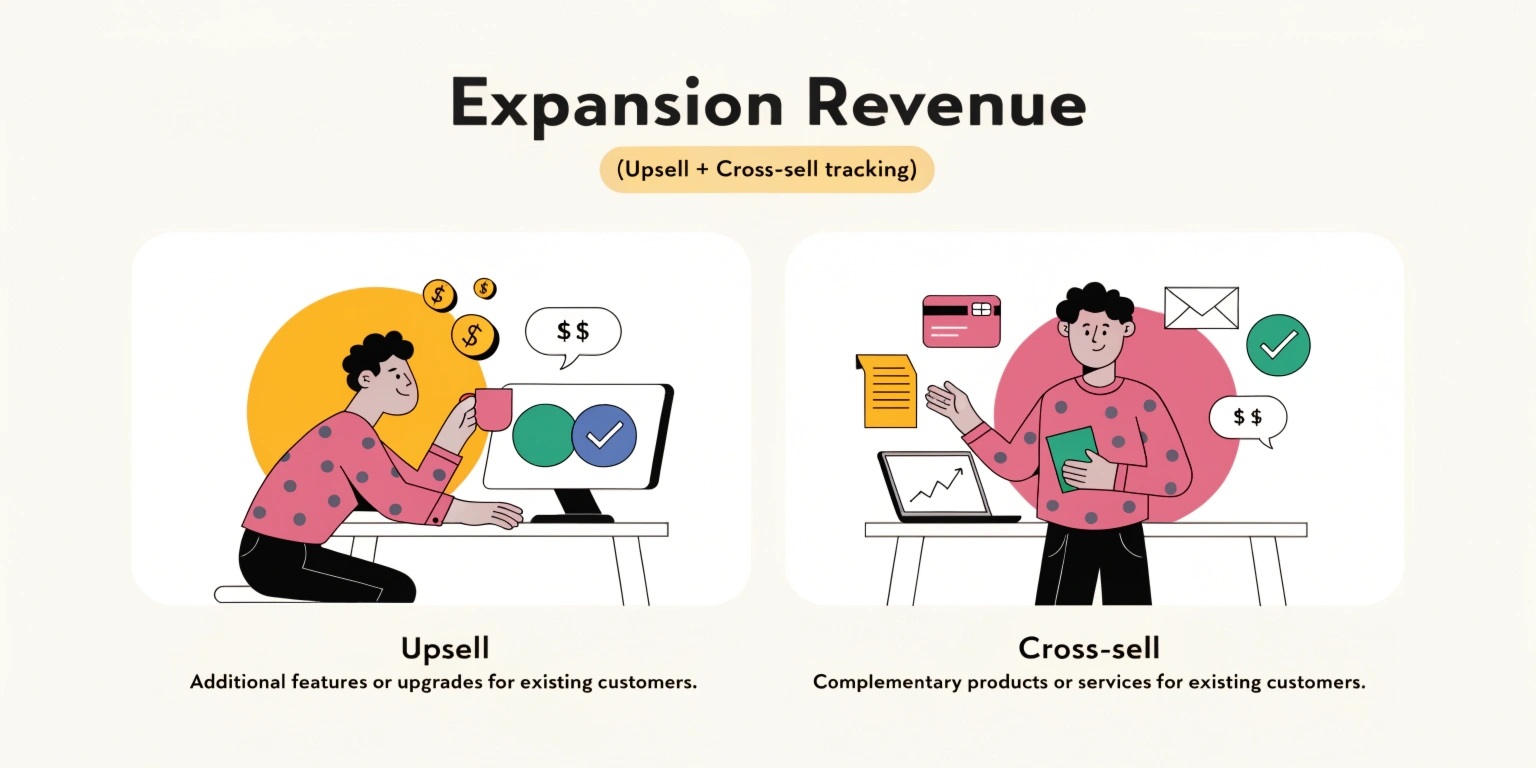
Upselling encourages customers to purchase a higher-value version of a product or service they already use.
Examples include:
- Upgrading from a basic SaaS plan to a premium plan
- Purchasing advanced analytics features
- Increasing storage capacity
- Expanding team licenses
The goal of upselling is to increase the average revenue generated per customer while providing additional value.
Successful upselling occurs when the upgraded solution directly addresses customer needs and business growth requirements.
Understanding Cross-Selling
Cross-selling involves offering complementary products or services that enhance the customer's existing purchase.
Examples include:
- Website development clients purchasing SEO services
- Mobile app clients adding maintenance support
- Software customers purchasing training services
- Cloud service users adopting security solutions
Cross-selling improves customer satisfaction by delivering a more comprehensive solution while simultaneously increasing revenue.
Why Expansion Revenue Matters
Many businesses focus heavily on customer acquisition while overlooking the opportunities within their existing customer base.
Expansion revenue offers several advantages:
Lower Acquisition Costs
Selling to an existing customer is significantly less expensive than acquiring a new one.
Existing customers already:
- Trust your business
- Understand your services
- Have completed the purchasing process
This reduces sales friction and improves conversion rates.
Higher Customer Lifetime Value (CLV)
Customer Lifetime Value measures the total revenue generated by a customer throughout their relationship with a business.
Effective upselling and cross-selling directly increase CLV, making each customer more valuable over time.
Improved Customer Retention
Customers who adopt multiple services are generally less likely to leave.
The deeper the integration between your business and the customer, the stronger the relationship becomes.
Key Metrics for Tracking Expansion Revenue
To measure success, businesses should monitor several key performance indicators.
Expansion Monthly Recurring Revenue (Expansion MRR)
This measures additional recurring revenue generated from existing customers during a specific period.
Formula:
Expansion MRR = Revenue from Upgrades + Add-ons + Cross-Sells
Net Revenue Retention (NRR)
NRR evaluates how much revenue is retained and expanded from existing customers.
Formula:
NRR = (Starting Revenue + Expansion Revenue − Churn Revenue) ÷ Starting Revenue × 100
An NRR above 100% indicates that expansion revenue exceeds losses from customer churn.
Customer Lifetime Value (CLV)
CLV helps determine the long-term profitability of customer relationships.
Tracking CLV allows businesses to evaluate the effectiveness of upselling and cross-selling initiatives.
Building an Effective Tracking System
Successful expansion revenue management requires proper tracking and analytics.
CRM Integration
Customer Relationship Management (CRM) systems help monitor:
- Customer interactions
- Purchase history
- Upgrade opportunities
- Sales pipeline activities
Popular CRM platforms include:
- Salesforce
- HubSpot
- Zoho CRM
Customer Segmentation
Segmenting customers based on:
- Industry
- Company size
- Product usage
- Revenue potential
allows businesses to identify high-value expansion opportunities.
Product Usage Analytics
Monitoring user behavior helps identify when customers may be ready for upgrades or additional services.
For example:
- Increased platform usage
- Storage limits approaching
- Feature adoption trends
These indicators often signal expansion opportunities.
Best Practices for Upsell and Cross-Sell Success
Focus on Customer Value
Recommendations should solve real business problems rather than simply increase revenue.
Customers respond positively when additional offerings provide measurable benefits.
Use Data-Driven Insights
Leverage analytics to identify patterns and recommend services based on customer behavior.
Train Sales and Customer Success Teams
Expansion opportunities often emerge during customer support interactions and account reviews.
Well-trained teams can identify these opportunities naturally.
Automate Expansion Campaigns
Marketing automation can trigger personalized recommendations based on customer activity and lifecycle stages.
Common Mistakes to Avoid
Businesses often struggle with expansion initiatives because they:
- Push irrelevant upgrades
- Ignore customer needs
- Fail to track performance metrics
- Focus solely on sales instead of value
Successful expansion strategies prioritize customer success alongside revenue growth.
Final Thoughts
Expansion revenue has become one of the most powerful growth drivers for modern businesses. By effectively tracking upsell and cross-sell opportunities, organizations can increase customer lifetime value, improve retention, and generate sustainable revenue growth.
Rather than relying entirely on costly customer acquisition efforts, businesses should invest in understanding existing customers, identifying expansion opportunities, and delivering additional value through relevant products and services.
When implemented strategically, expansion revenue transforms existing customers into long-term growth engines for the business.