Enterprises today face growing challenges in workforce training—ranging from skill gaps and employee engagement to cost and scalability. Traditional methods like classroom lectures or online modules often fail to provide the immersive, hands-on experience employees need. This is where Extended Reality (XR) comes in.
XR, which encompasses Virtual Reality (VR), Augmented Reality (AR), and Mixed Reality (MR), is revolutionizing enterprise training by delivering interactive, realistic, and engaging learning experiences. Let’s explore how XR is reshaping workforce development.
1. What is Extended Reality (XR)?
Extended Reality is an umbrella term for immersive technologies that blend digital and physical environments:
- Virtual Reality (VR): Fully immersive simulations using headsets.
- Augmented Reality (AR): Overlaying digital information onto the real world via smartphones or AR glasses.
- Mixed Reality (MR): Combining real and virtual environments with interactive elements.
In training, XR allows employees to learn by doing—without the risks or costs of real-world scenarios.
2. Why Enterprises Are Adopting XR Training
The rise of XR in enterprise training is fueled by several key factors:
- Immersive Learning: XR places employees in realistic environments, increasing retention and engagement.
- Cost Efficiency: Reduces travel, instructor, and physical resource costs.
- Scalability: Training modules can be deployed globally with consistent quality.
- Safety: Provides risk-free environments for practicing hazardous or complex tasks.
Industries like healthcare, manufacturing, aviation, and retail are leading adopters.
3. Use Cases of XR in Enterprise Training
XR training is versatile, offering practical applications across industries:
- Healthcare: Medical students and professionals use VR for surgical simulations and AR for anatomy visualization.
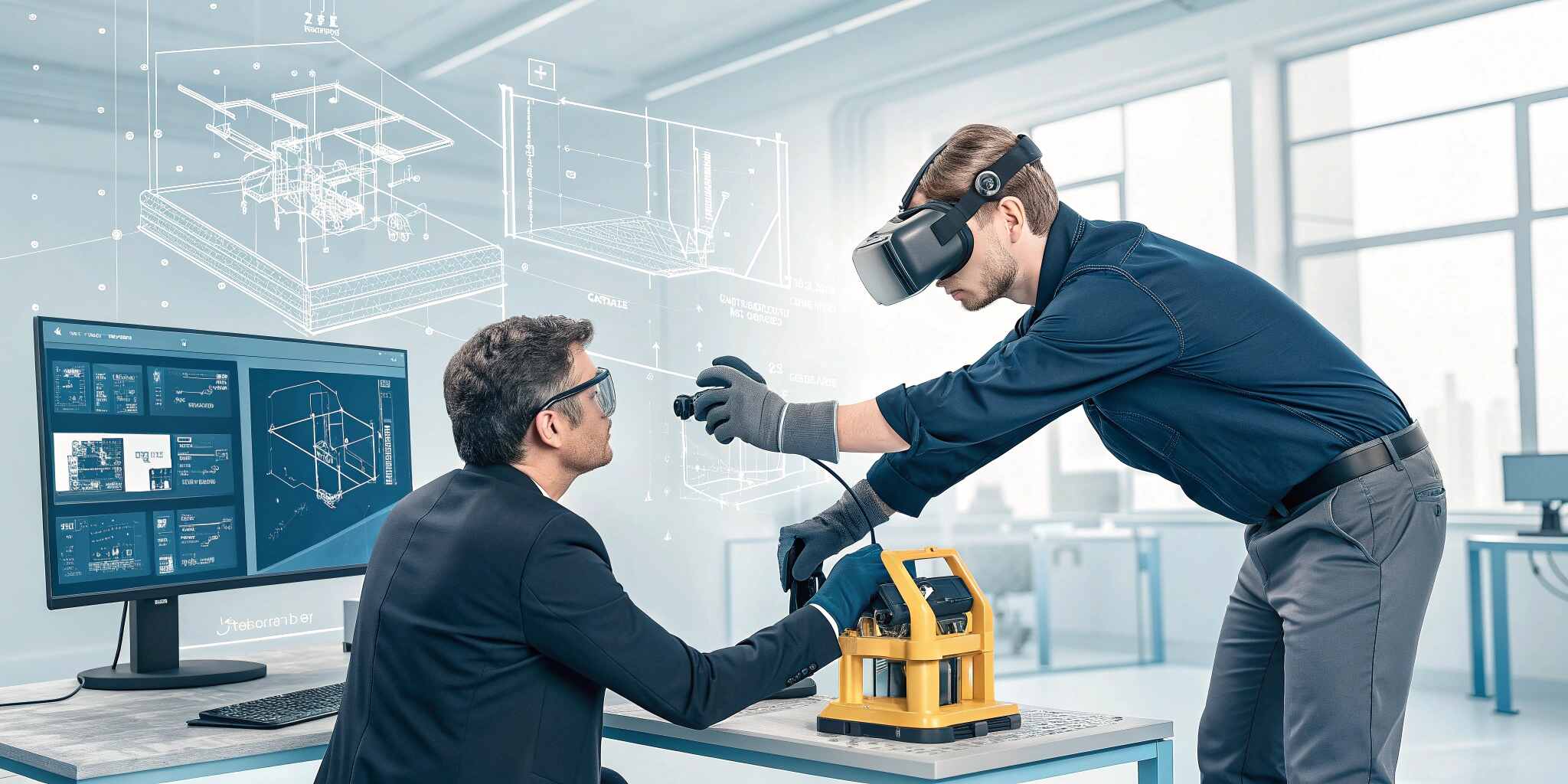
- Manufacturing: Workers practice operating machinery through VR simulations before handling real equipment.
- Aviation: Pilots train in lifelike VR flight simulators to enhance decision-making and emergency response.
- Retail and Customer Service: Employees practice handling customer interactions through MR scenarios.
- Corporate Onboarding: New hires explore virtual company tours and role-specific training modules.
These use cases demonstrate how XR bridges the gap between theoretical knowledge and real-world application.
4. Benefits of XR Training for Enterprises
Adopting XR brings measurable advantages:
- Enhanced Engagement: Interactive learning keeps employees motivated.
- Faster Skill Acquisition: Hands-on simulations speed up training processes.
- Improved Knowledge Retention: Immersive experiences lead to better long-term memory.
- Remote Accessibility: XR training modules can be accessed anytime, anywhere.
- Performance Analytics: XR platforms provide data on learner performance, helping organizations track progress.
5. Challenges in XR Adoption
Despite its benefits, enterprises face challenges when implementing XR training:
- High Initial Costs: Hardware like VR headsets and AR glasses can be expensive.
- Content Development: Creating immersive training modules requires specialized skills.
- Technical Barriers: Bandwidth, device compatibility, and IT integration can slow adoption.
- Employee Readiness: Some employees may resist or struggle with new technologies.
Organizations can overcome these barriers through phased implementation and partnerships with XR solution providers.
6. The Future of XR in Training
As XR technology matures, costs will decrease, making it more accessible. Emerging trends include:
- AI-Enhanced XR: Personalized learning experiences powered by artificial intelligence.
- Haptic Feedback Devices: Enabling trainees to feel physical sensations in simulations.
- 5G Integration: Delivering seamless XR experiences with low latency.
- Metaverse-Based Training: Virtual campuses and collaborative training environments.
The future of enterprise training lies in blending XR with other technologies to create holistic, data-driven learning ecosystems.
Conclusion
Extended Reality (XR) is more than a training tool—it’s a strategic investment in workforce development. By offering immersive, interactive, and scalable solutions, XR enables enterprises to bridge skill gaps, boost engagement, and prepare employees for real-world challenges. As organizations embrace digital transformation, XR will continue to play a critical role in shaping the future of learning.