The success of an online multiplayer game depends on more than engaging gameplay and impressive graphics. Behind every smooth gaming experience lies a robust server infrastructure capable of handling thousands—or even millions—of concurrent players. Any downtime, lag, or server crash can lead to frustrated players, negative reviews, and lost revenue.
This is where fault-tolerant game servers and high-availability (HA) systems become essential. These systems are designed to keep games running even when hardware, software, or network failures occur. By minimizing service interruptions and maintaining consistent performance, developers can deliver reliable gaming experiences that meet player expectations.
In this blog, we'll explore what fault-tolerant game servers are, why they matter, and the key technologies and best practices used to build highly available gaming infrastructures.
What Are Fault-Tolerant Game Servers?
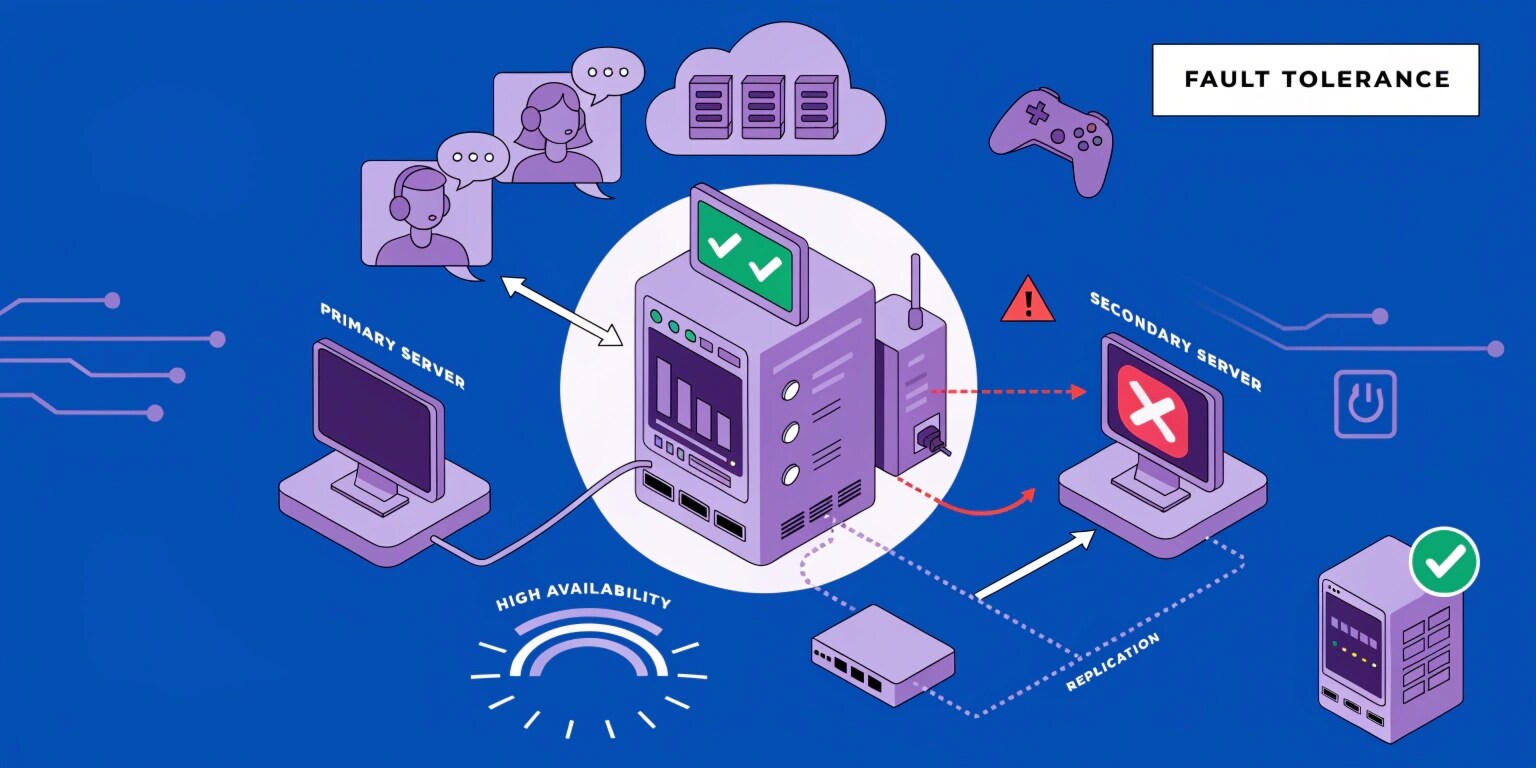
A fault-tolerant game server is a server architecture designed to continue operating even when one or more components fail. Instead of relying on a single server, fault-tolerant systems distribute workloads across multiple servers and automatically recover from failures.
High availability is closely related to fault tolerance. While fault tolerance focuses on surviving failures without disrupting gameplay, high availability aims to maximize uptime—often targeting 99.9%, 99.99%, or even 99.999% availability.
For multiplayer games, this means players can continue their sessions even if a server crashes, a data center experiences issues, or network traffic suddenly spikes.
Why High Availability Matters in Gaming
Online games are expected to be accessible 24/7. Even a few minutes of downtime can have significant consequences, including:
- Interrupted gameplay and lost player progress
- Reduced player trust and engagement
- Negative app store reviews
- Revenue loss from in-game purchases
- Increased customer support requests
- Damage to the game's reputation
For competitive esports titles and live-service games, maintaining uninterrupted service is especially critical, as tournaments and seasonal events depend on stable server performance.
Core Components of a Fault-Tolerant Architecture
1. Load Balancing
Load balancers distribute incoming player connections across multiple servers, preventing any single server from becoming overloaded.
Benefits include:
- Improved response times
- Better resource utilization
- Reduced server crashes
- Automatic traffic distribution
Popular load balancing solutions include NGINX, HAProxy, and cloud-native load balancers from AWS, Azure, and Google Cloud.
2. Redundant Game Servers
Instead of deploying a single game server, multiple identical instances run simultaneously.
If one server fails, players are redirected to another healthy server with minimal disruption. Redundancy eliminates single points of failure and improves overall reliability.
3. Automatic Failover
Automatic failover detects server failures and immediately switches player traffic to backup servers.
This process occurs without requiring manual intervention, ensuring uninterrupted gameplay.
Monitoring systems continuously check server health and trigger failover when necessary.
4. Distributed Databases
Player data—including inventories, achievements, matchmaking ratings, and game progress—must remain available even if database nodes fail.
Distributed databases replicate data across multiple locations, ensuring consistency and availability.
Common technologies include PostgreSQL replication, MongoDB clusters, Redis replication, and CockroachDB.
Auto Scaling for Peak Demand
Player activity fluctuates throughout the day, especially during:
- Game launches
- Seasonal updates
- Holiday events
- Esports tournaments
- Promotional campaigns
Auto scaling automatically adds or removes server instances based on demand.
Advantages include:
- Lower infrastructure costs
- Improved performance
- Reduced latency
- Better resource efficiency
Cloud platforms make auto scaling easier by dynamically provisioning resources as traffic changes.
Containerization and Orchestration
Modern game servers increasingly use containers to package applications with their dependencies.
Container technologies such as Docker simplify deployment, while orchestration platforms like Kubernetes automate:
- Scaling
- Load distribution
- Health monitoring
- Self-healing
- Rolling updates
If a container crashes, Kubernetes automatically creates a replacement without affecting the overall service.
Geographic Server Distribution
Players expect low latency regardless of their location.
Deploying servers across multiple geographic regions allows players to connect to the nearest server, reducing response times and improving gameplay.
Benefits include:
- Faster matchmaking
- Reduced lag
- Improved responsiveness
- Better disaster recovery
Global server distribution also ensures that regional outages have minimal impact on worldwide player access.
Monitoring and Observability
Continuous monitoring helps identify issues before they affect players.
Important metrics include:
- CPU usage
- Memory utilization
- Network latency
- Packet loss
- Active player count
- Matchmaking response time
- Database performance
- Error rates
Tools such as Prometheus, Grafana, ELK Stack, and cloud monitoring services provide real-time insights into server health.
Disaster Recovery Planning
Even highly available systems need disaster recovery strategies.
A comprehensive disaster recovery plan includes:
- Automated backups
- Database replication
- Cross-region deployment
- Infrastructure-as-Code
- Recovery testing
- Backup verification
These measures ensure rapid recovery from hardware failures, cyberattacks, or natural disasters.
Security Considerations
Fault-tolerant systems must also protect against security threats that can disrupt gameplay.
Key practices include:
- DDoS protection
- Secure authentication
- API rate limiting
- Encrypted communications
- Regular security updates
- Intrusion detection systems
- Access control policies
Security and availability work together to maintain reliable gaming services.
Best Practices for Building High-Availability Game Servers
To create resilient multiplayer infrastructures, developers should:
- Eliminate single points of failure.
- Use redundant server instances.
- Implement intelligent load balancing.
- Deploy across multiple availability zones or regions.
- Automate failover and recovery processes.
- Use container orchestration for scalability.
- Monitor infrastructure continuously.
- Test disaster recovery procedures regularly.
- Optimize databases for replication and fault tolerance.
- Secure infrastructure against cyber threats.
Adopting these practices improves uptime while reducing operational risks.
The Future of Fault-Tolerant Game Infrastructure
Emerging technologies are reshaping how game servers are built. Edge computing is reducing latency by processing game data closer to players, while AI-powered infrastructure monitoring predicts failures before they occur. Serverless components are simplifying backend operations, and advanced orchestration platforms are making deployments faster and more resilient.
As multiplayer games continue to grow in scale and complexity, high-availability architectures will become even more important. Developers who invest in fault-tolerant infrastructure can deliver smoother gameplay, faster updates, and more reliable online experiences that keep players engaged.
Conclusion
Fault-tolerant game servers are the backbone of successful online multiplayer games. By combining redundancy, load balancing, automatic failover, distributed databases, auto scaling, and continuous monitoring, developers can create high-availability systems that minimize downtime and maximize player satisfaction.
Whether you're developing a competitive esports title, a large-scale MMORPG, or a casual multiplayer game, building a resilient server infrastructure is a long-term investment in performance, reliability, and player trust. As gaming communities grow and expectations rise, fault-tolerant architectures will remain essential for delivering seamless experiences in the ever-evolving world of online gaming.