Introduction
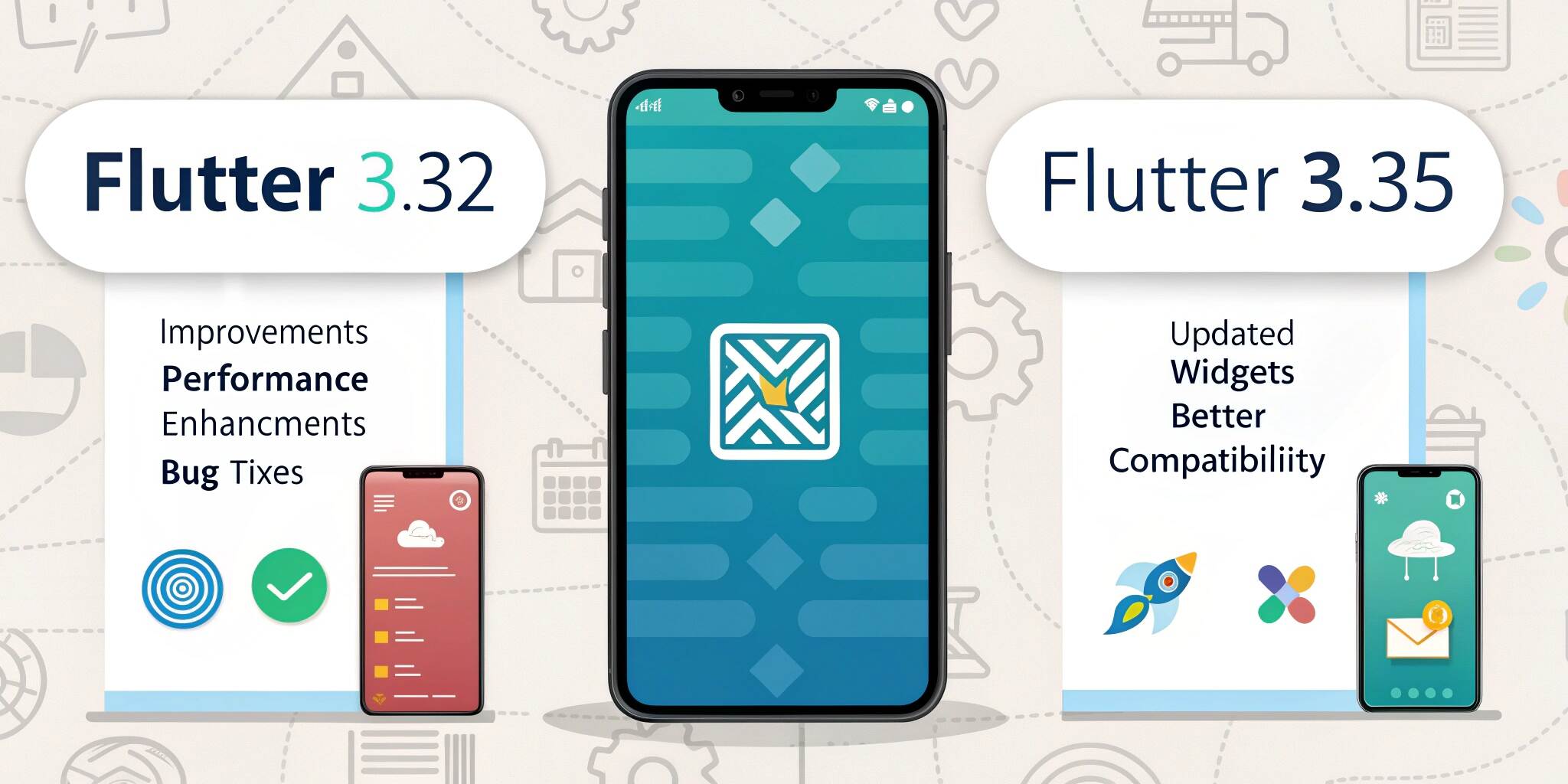
Flutter has become the go-to cross-platform framework for developers building apps for iOS, Android, web, and desktop. With every release, Google enhances its speed, UI capabilities, and developer experience. The release of Flutter 3.35 brings significant upgrades compared to Flutter 3.32, making it crucial for developers to understand the differences.
1. Performance Improvements
- Flutter 3.32: Stable with optimized rendering and reduced memory usage.
- Flutter 3.35: Introduces faster shader compilation, reducing jank on first app launch and delivering smoother animations.
2. UI Enhancements
- Flutter 3.32: Focused on maintaining Material 3 widget support with partial improvements.
- Flutter 3.35: Expands Material You integration, introducing more customizable UI widgets, adaptive color schemes, and refined typography support.
3. DevTools & Debugging
- Flutter 3.32: Provided basic debugging improvements and structured error messages.
- Flutter 3.35: Enhances DevTools performance monitoring, with deeper insights into widget rebuilds and memory profiling.
4. Web & Desktop Support
- Flutter 3.32: Stable for web apps but limited for complex animations and desktop responsiveness.
- Flutter 3.35: Strengthens web rendering with CanvasKit and introduces macOS & Linux UI consistency improvements, making Flutter more reliable for enterprise apps.
5. Toolchain & Compatibility
- Flutter 3.32: Required Dart 3.3 with compatibility updates.
- Flutter 3.35: Moves to Dart 3.4, offering more powerful async handling and stronger type safety.
Which One Should You Choose?
- If you are working on existing projects, Flutter 3.32 is still stable and reliable.
- For new projects or those demanding cutting-edge UI and performance, Flutter 3.35 is the clear winner with its Material You advancements, faster performance, and improved DevTools.
Conclusion
Flutter continues to evolve rapidly, ensuring developers can build scalable, high-performance, and visually stunning apps. The shift from Flutter 3.32 to 3.35 is not just a minor upgrade—it sets the stage for smoother animations, better design adaptability, and enhanced cross-platform support.