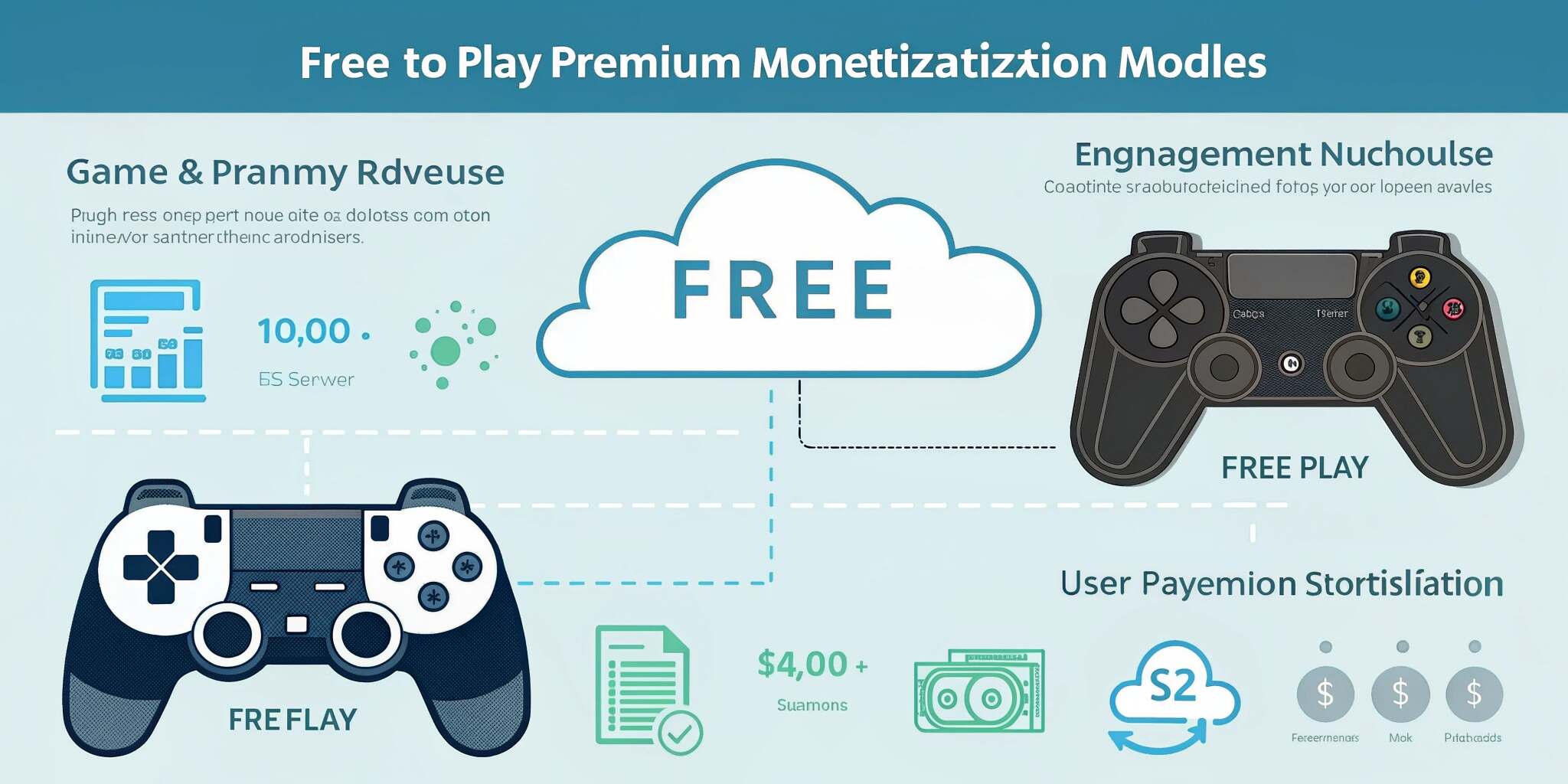
Game development is no longer just about building fun experiences—it’s also about sustainability. To survive and thrive in today’s competitive industry, developers must adopt the right monetization strategy. Two dominant models define the market: Free-to-Play (F2P) and Premium. While F2P offers accessibility and scalability, premium games promise upfront revenue and curated experiences. Understanding the trade-offs between these models is crucial for making the right business decision.
1. The Free-to-Play Model: Accessibility Meets Scalability
Free-to-play games have exploded in popularity, especially in the mobile market. Titles like Fortnite, Genshin Impact, and Clash of Clans demonstrate the massive reach this model can achieve.
Advantages of Free-to-Play:
- Lower Entry Barrier: Players can download and play without spending money, increasing user acquisition.
- Wider Reach: With no upfront cost, F2P games often achieve massive downloads and global adoption.
- Continuous Revenue: In-game purchases (cosmetics, power-ups, expansions) provide long-term revenue streams.
- Player Retention: Frequent updates, events, and seasonal content keep players engaged.
Challenges of Free-to-Play:
- Monetization Pressure: Developers must design engaging in-game economies without making the experience “pay-to-win.”
- High Competition: The F2P market is saturated, making visibility and differentiation difficult.
- Ongoing Development Costs: Constant updates and live-service management require long-term resources.
- Player Backlash Risk: Aggressive monetization tactics can harm reputation and retention.
F2P works best for games designed with strong engagement loops, frequent updates, and communities built around multiplayer or competitive experiences.
2. The Premium Model: Pay Once, Play Forever
Premium games represent the traditional monetization approach: players pay an upfront price and receive the full experience. Popular examples include The Witcher 3, Elden Ring, and many indie gems like Hollow Knight.
Advantages of Premium Games:
- Upfront Revenue: Developers earn money directly from sales, offering financial stability.
- Creative Integrity: Premium pricing supports story-driven, complete experiences without the pressure of in-game monetization.
- Perceived Value: Players associate premium titles with higher quality and polish.
- Simpler Business Model: No need for elaborate microtransaction systems or live-service strategies.
Challenges of Premium Games:
- High Entry Barrier: The upfront cost can deter players, especially in mobile markets.
- Limited Lifetime Value: Once purchased, monetization opportunities are restricted compared to ongoing F2P models.
- Marketing Dependence: Premium games rely heavily on launch success; if initial sales disappoint, recovery is difficult.
- Platform Competition: Competing against free alternatives can make premium pricing less appealing.
Premium models are ideal for single-player, narrative-driven, or niche games where creative depth and focused gameplay are valued over constant updates.
3. Audience Expectations and Market Trends
- Mobile Gaming: Dominated by F2P due to the casual player base and global accessibility.
- PC/Console Gaming: Premium still thrives, especially for AAA blockbusters and indie passion projects.
- Hybrid Models: Increasingly, developers blend both strategies, offering premium pricing with optional expansions, DLC, or cosmetic microtransactions.
Market trends suggest that F2P will continue to dominate in terms of player numbers, but premium games maintain their prestige and cultural value.
4. Choosing the Right Model: Key Considerations
When deciding between F2P and premium, developers should evaluate:
- Target Audience: Casual vs. core gamers.
- Game Design: Short, narrative-driven vs. long-term engagement loops.
- Platform: Mobile favors F2P; PC/console often supports premium.
- Financial Goals: Quick upfront sales vs. ongoing revenue streams.
- Development Resources: Can the team sustain frequent updates, or is a polished one-time release more feasible?
Conclusion: No One-Size-Fits-All Solution
The debate between free-to-play and premium is less about which model is “better” and more about which aligns with your game’s vision and audience. F2P thrives on accessibility, engagement, and scalability, while premium excels in delivering complete, high-value experiences. Increasingly, hybrid models that blend the best of both are emerging as sustainable strategies.
For developers, the key lies in understanding player expectations, aligning business goals with design, and adapting to evolving market dynamics. Whichever model you choose, success depends on striking the right balance between creativity and sustainability.