For many software agencies, growth depends on a steady flow of new clients. While referrals and inbound marketing can generate valuable opportunities, relying solely on them often results in unpredictable revenue. To achieve consistent business growth, agencies need a structured outbound sales process that proactively identifies potential clients, initiates conversations, nurtures relationships, and converts prospects into long-term customers.
A full-cycle outbound system provides a repeatable framework that covers every stage of the sales journey—from identifying ideal prospects to closing deals and maintaining client relationships. By combining strategic prospecting, personalized outreach, CRM management, automation, and performance tracking, software agencies can create a scalable client acquisition engine.
This article explores the components of a successful full-cycle outbound system and how agencies can use it to generate sustainable growth.
What Is a Full-Cycle Outbound System?
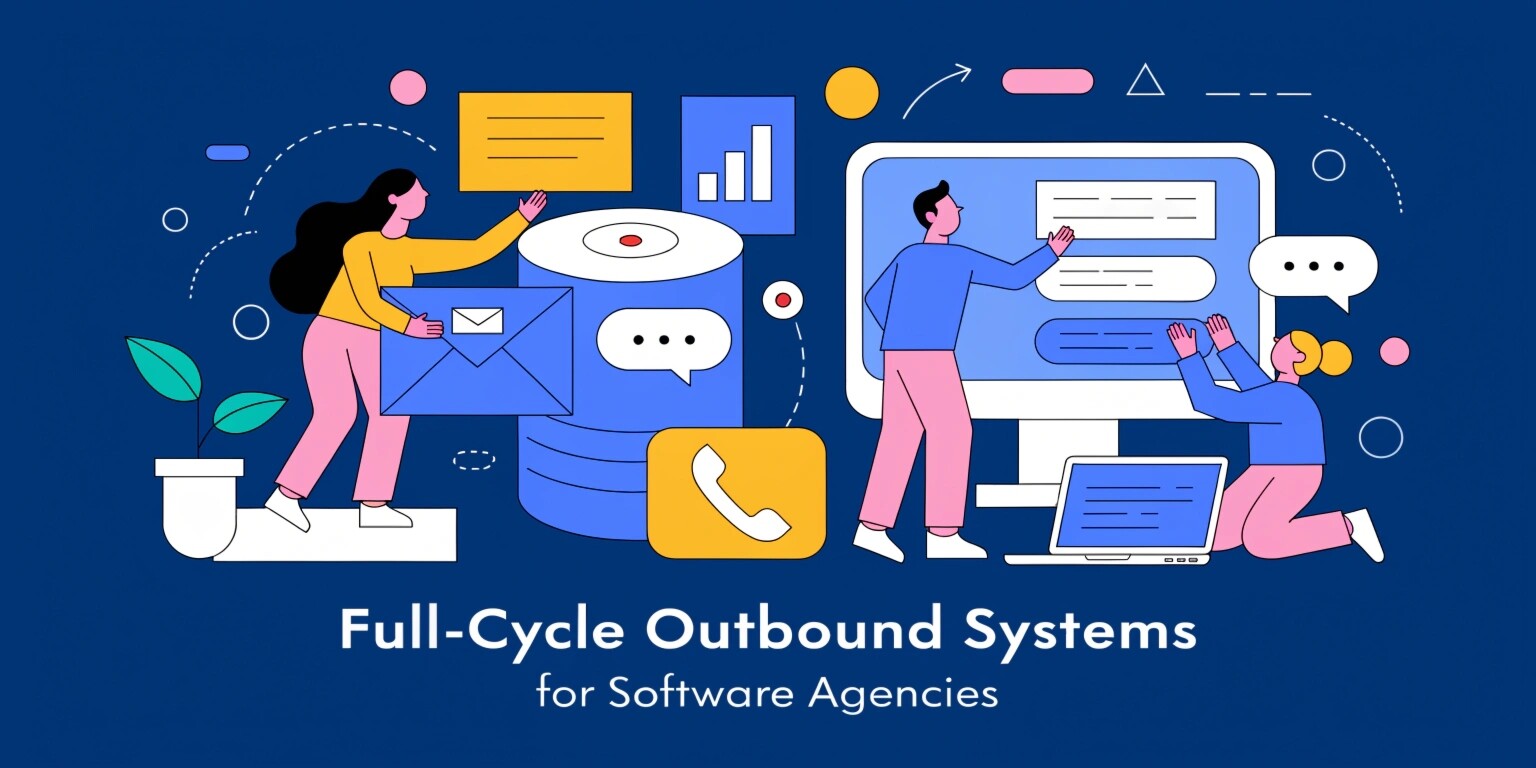
A full-cycle outbound system is a complete sales framework that manages every stage of outbound client acquisition. Instead of focusing only on cold emails or LinkedIn messages, it connects all activities into one coordinated process.
The typical stages include:
- Defining the Ideal Customer Profile (ICP)
- Building targeted prospect lists
- Researching potential clients
- Multi-channel outreach
- Lead qualification
- Meeting scheduling
- Proposal creation
- Negotiation
- Deal closing
- Client onboarding
- Relationship management
Each stage contributes to a predictable and measurable sales pipeline.
Step 1: Define Your Ideal Customer Profile (ICP)
Successful outbound campaigns begin with knowing exactly who you want to target.
Key factors include:
- Industry
- Company size
- Geographic location
- Annual revenue
- Technology stack
- Decision-maker roles
- Business challenges
- Growth stage
For software agencies, focusing on a niche—such as healthcare, fintech, eCommerce, or logistics—often results in higher conversion rates because messaging becomes more relevant and credible.
Step 2: Build High-Quality Prospect Lists
A targeted prospect list is the foundation of every outbound strategy.
Collect information such as:
- Company name
- Website
- Industry
- Employee count
- Revenue
- Decision-maker names
- Job titles
- Verified email addresses
- LinkedIn profiles
Prioritize data quality over quantity. Accurate contact information improves deliverability and response rates.
Step 3: Personalize Multi-Channel Outreach
Generic outreach rarely performs well. Personalization helps your agency stand out by addressing the prospect's specific needs and challenges.
Use multiple communication channels, including:
- Cold emails
- LinkedIn connection requests
- LinkedIn direct messages
- Phone calls
- Follow-up emails
- Personalized video messages
Tailor each message with insights about the prospect’s company, recent achievements, or industry trends to increase engagement.
Step 4: Automate Repetitive Tasks
Sales automation saves time while ensuring consistent follow-ups.
Automate activities such as:
- Email sequences
- Meeting reminders
- CRM updates
- Lead scoring
- Follow-up scheduling
- Task assignments
- Pipeline notifications
Automation allows sales teams to focus on relationship building rather than administrative work.
Step 5: Qualify Leads Effectively
Not every interested prospect is ready to buy.
Lead qualification helps determine:
- Budget availability
- Decision-making authority
- Business needs
- Project timeline
- Technical requirements
- Long-term potential
A structured qualification process ensures that sales efforts focus on high-value opportunities.
Step 6: Manage the Sales Pipeline
An organized CRM system provides complete visibility into every opportunity.
Track stages such as:
- New Lead
- Contacted
- Interested
- Discovery Meeting
- Proposal Sent
- Negotiation
- Won
- Lost
Keeping CRM records updated enables accurate forecasting and better sales management.
Step 7: Deliver High-Value Proposals
A proposal should clearly demonstrate how your agency solves the client's business problems.
Include:
- Project objectives
- Recommended solution
- Development timeline
- Technology stack
- Deliverables
- Pricing
- Case studies
- Support and maintenance
- Next steps
A well-structured proposal builds confidence and increases the likelihood of closing the deal.
Step 8: Onboard Clients Smoothly
Winning a project is only the beginning.
An effective onboarding process should include:
- Kickoff meetings
- Requirement gathering
- Project timelines
- Communication channels
- Team introductions
- Documentation
- Milestone planning
A professional onboarding experience strengthens client trust and sets the stage for successful project delivery.
Key Metrics to Measure Success
To optimize outbound performance, monitor essential KPIs such as:
- Emails sent
- Open rate
- Reply rate
- Positive response rate
- Meetings booked
- Lead-to-opportunity conversion
- Proposal acceptance rate
- Win rate
- Customer acquisition cost (CAC)
- Sales cycle length
- Revenue generated
Regular analysis helps identify bottlenecks and improve future campaigns.
Common Mistakes to Avoid
Many software agencies struggle with outbound sales because they:
- Send generic mass emails
- Target the wrong audience
- Ignore follow-ups
- Use outdated contact data
- Focus on quantity over quality
- Fail to track campaign performance
- Neglect CRM updates
- Offer unclear value propositions
Avoiding these mistakes significantly improves conversion rates.
The Role of AI in Outbound Sales
Artificial Intelligence is transforming outbound systems by enabling:
- Intelligent lead scoring
- Personalized email generation
- Predictive sales forecasting
- Automated meeting scheduling
- Conversation analysis
- CRM data enrichment
- Follow-up recommendations
- Performance optimization
AI helps agencies work more efficiently while maintaining a personalized approach to client engagement.
Best Practices for Building a Scalable Outbound System
To create a repeatable and scalable process:
- Standardize every stage of the sales cycle.
- Maintain a clean and updated CRM.
- Personalize outreach based on prospect research.
- Test subject lines, messaging, and follow-up sequences.
- Monitor KPIs and refine campaigns regularly.
- Align sales and marketing teams for consistent messaging.
- Use automation to improve efficiency without sacrificing personalization.
- Continuously train business development representatives on industry trends and communication skills.
Conclusion
A full-cycle outbound system transforms software agency sales from a reactive process into a proactive growth engine. By combining targeted prospecting, personalized outreach, automation, structured lead qualification, CRM management, and continuous performance analysis, agencies can consistently generate qualified opportunities and build a predictable sales pipeline.
In an increasingly competitive software market, agencies that invest in scalable outbound systems gain a significant advantage. A well-designed process not only improves lead generation and conversion rates but also strengthens client relationships, shortens sales cycles, and supports long-term business growth. With the right strategy and tools, outbound sales become a reliable driver of sustainable success.