Introduction: The Importance of Publishing in Game Development
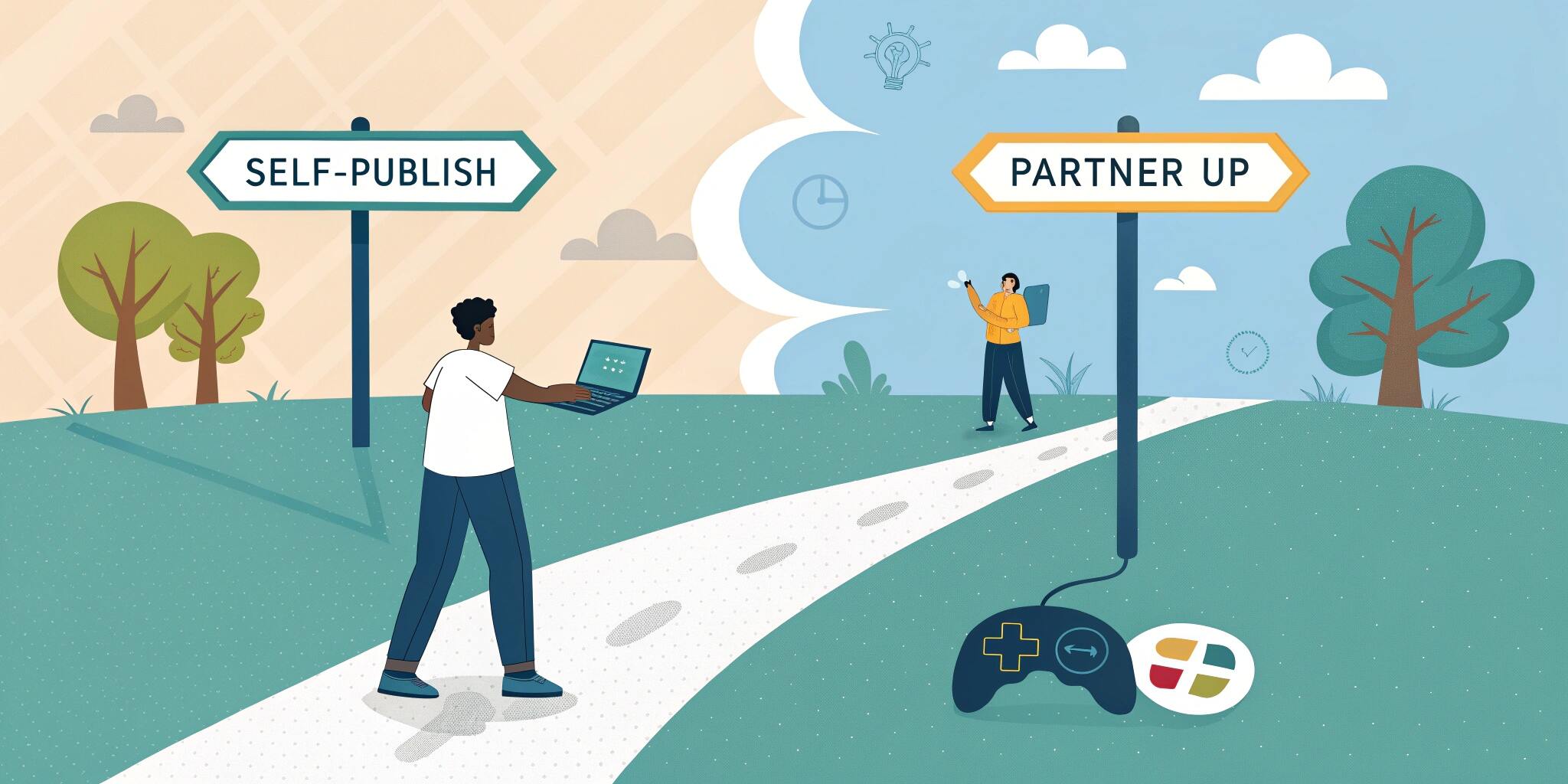
In today’s booming gaming industry, creating a game is only half the journey. The other half is ensuring it reaches players, generates revenue, and sustains long-term engagement. This is where publishing comes into play. For developers, the central question arises: should you self-publish or partner with a publisher?
Both routes offer distinct opportunities and challenges. Self-publishing provides autonomy and creative freedom, while partnering with a publisher offers financial backing, marketing muscle, and industry connections. Choosing the right strategy can make the difference between a breakout success and a game lost in obscurity.
1. Self-Publishing: Independence and Direct Connection with Players
Self-publishing means that the developer takes on all responsibilities related to launching, marketing, distributing, and maintaining the game. Platforms like Steam, Epic Games Store, Nintendo eShop, PlayStation Store, Xbox Marketplace, and mobile app stores have made this option more accessible.
Advantages of Self-Publishing
- Creative Control: Developers retain full authority over game design, monetization strategies, and updates. No external approval is required.
- Higher Revenue Share: Since no publisher is involved, profits (minus platform fees) remain largely with the developer.
- Direct Community Engagement: Building relationships with players through Discord, Reddit, and social media fosters loyalty and valuable feedback.
- Flexibility: Developers can experiment with pricing, distribution models, and release schedules without restrictions.
Challenges of Self-Publishing
- Marketing Burden: Standing out in crowded marketplaces is difficult without professional marketing expertise.
- Financial Risk: All expenses—from server costs to PR campaigns—fall on the developer.
- Limited Reach: Publishers often have access to media outlets, influencers, and global distribution networks that indies cannot easily tap into.
- Time Management: Balancing development and publishing tasks can overwhelm small teams.
Self-publishing tends to work best for smaller indie games, niche genres, or developers with established fan bases who can rely on community-driven growth.
2. Partnering with a Publisher: Resources and Amplified Reach
Working with a publisher means sharing responsibilities with a professional entity that specializes in marketing, distribution, funding, and player acquisition. Many successful titles—such as Cuphead (StudioMDHR with Microsoft) and Ori and the Blind Forest (Moon Studios with Microsoft)—owe part of their success to strong publishing partnerships.
Advantages of Partnering with a Publisher
- Marketing Expertise: Publishers have experienced teams that handle press releases, trailers, influencer outreach, and event showcases.
- Financial Support: Many publishers fund part or all of development costs, reducing financial pressure on developers.
- Global Distribution: Publishers can localize games for international audiences and secure platform-specific promotions.
- Technical & QA Support: Publishers often provide testing, certification, and compliance support.
- Reduced Risk: Developers can focus on building the game while the publisher manages the business side.
Challenges of Partnering with a Publisher
- Revenue Sharing: Publishers typically take a significant share of profits (ranging from 20% to 50% depending on agreements).
- Creative Influence: Some publishers may impose changes in design, monetization, or timelines to maximize commercial appeal.
- Contractual Obligations: Developers may face exclusivity clauses or long-term commitments.
- Loss of Independence: Developers must align their vision with the publisher’s business priorities.
For developers aiming at AAA-style polish, global reach, or competitive multiplayer titles, partnering with a publisher often becomes the most viable route.
3. Financial Considerations: Profits vs Stability
The financial model is one of the most critical factors in choosing between self-publishing and partnering:
- Self-Publishing: Developers keep most of the profits but also shoulder the risk of losing their investment if the game fails.
- Publisher Partnership: Developers get financial backing, but profit-sharing reduces long-term earnings.
For example, if a self-published indie game sells 100,000 copies at $20 each, after platform cuts (~30%), the developer might take home ~$1.4 million. With a publisher, the upfront funding might reduce risk, but profit shares could cut net earnings by half or more.
4. Marketing and Visibility: The Deciding Factor
Marketing can make or break a game. Even a brilliant title risks being overlooked without visibility.
- Self-Publishers: Must rely on grassroots marketing—streamers, community forums, TikTok campaigns, and organic buzz. Success stories like Among Us show that viral growth is possible, though unpredictable.
- Publishers: Can secure placements in gaming conventions, platform features, and influencer campaigns. Games like Hades benefited greatly from strong marketing push via Epic Games and later Nintendo.
Thus, marketing resources often determine whether partnering with a publisher is worth the trade-off.
5. Player Trust and Brand Building
- Self-Publishing: Allows developers to build their own brand identity, fostering direct trust with players. Indie studios like ConcernedApe (Stardew Valley) have become household names due to direct engagement.
- Publishers: Bring credibility and visibility. When a game carries the stamp of a well-known publisher, players may be more inclined to trust its quality and long-term support.
6. Hybrid Models: A Middle Ground
Not all developers choose strictly one path. Some adopt hybrid models, such as:
- Partial Publishing: Partnering with a publisher only for marketing or distribution while retaining creative control.
- Crowdfunding + Publishing: Using Kickstarter or Patreon to raise initial funds, then negotiating with publishers for later-stage support.
- Staggered Strategy: Self-publishing smaller projects while seeking publishers for larger, riskier ventures.
These flexible strategies allow developers to balance independence with professional support.
7. How to Decide: Key Questions for Developers
When facing the publishing decision, developers should ask:
- Do we have the budget for marketing and post-launch support?
- How strong is our existing community or fan base?
- Are we comfortable managing contracts, localization, and certification alone?
- Do we value creative control more than financial stability?
- What is our long-term studio vision: independence or rapid growth?
The answers often point toward the most suitable publishing model.
Conclusion: No One-Size-Fits-All Solution
The choice between self-publishing and partnering with a publisher is deeply personal and context-dependent. Self-publishing offers autonomy, creative freedom, and higher potential profits, but comes with risk and heavy responsibility. Partnering with a publisher reduces risk and expands reach but requires revenue sharing and sometimes creative compromises.
Ultimately, the best choice depends on your studio’s resources, ambitions, and tolerance for risk. Many of today’s most successful developers mix both strategies—self-publishing smaller projects to maintain independence while partnering on larger, more ambitious titles.
In a fast-evolving gaming industry, one thing is clear: publishing is as critical to success as development itself. Choosing wisely can transform a good game into a global hit.