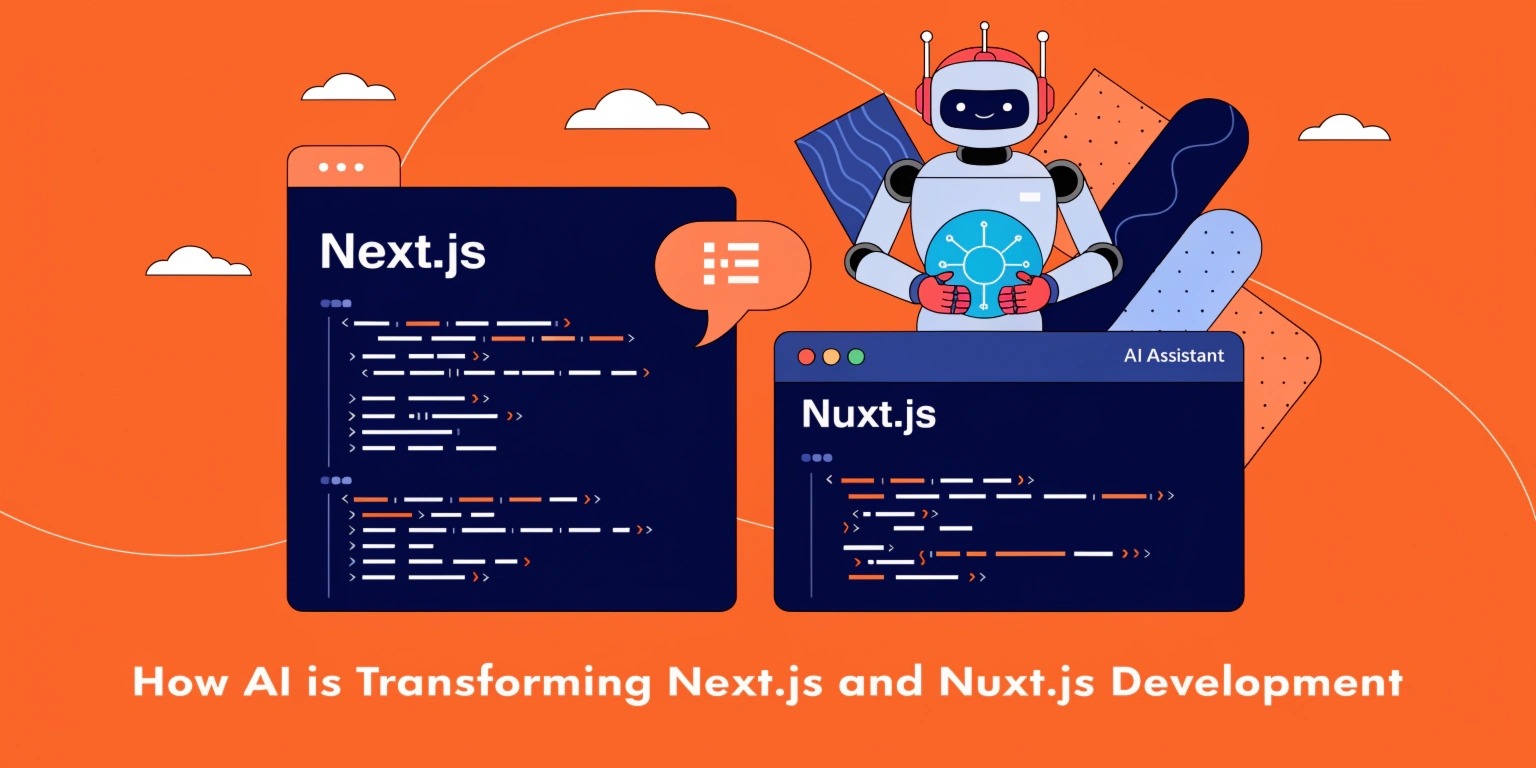
Artificial Intelligence (AI) is no longer limited to data science and machine learning applications. Today, AI is actively transforming software development workflows, helping developers write code faster, automate repetitive tasks, improve application performance, and deliver highly personalized user experiences.
Modern web frameworks such as Next.js and Nuxt.js are benefiting significantly from AI-driven innovations. These frameworks already provide powerful capabilities like server-side rendering (SSR), static site generation (SSG), API integration, and performance optimization. When combined with AI technologies, they enable developers to build smarter, faster, and more scalable web applications.
As businesses increasingly demand intelligent digital experiences, AI is becoming an essential component of modern frontend development.
Understanding Next.js and Nuxt.js
Before exploring AI's impact, it's important to understand these frameworks.
Next.js
Next.js is a React-based framework that offers:
- Server-Side Rendering (SSR)
- Static Site Generation (SSG)
- Incremental Static Regeneration (ISR)
- API Routes
- Performance optimization
- SEO-friendly architecture
It is widely used for enterprise websites, SaaS platforms, e-commerce stores, and content-driven applications.
Nuxt.js
Nuxt.js is built on Vue.js and provides:
- SSR support
- Static site generation
- Automatic routing
- Modular architecture
- Enhanced developer experience
Its simplicity and productivity make it popular among startups and development teams seeking rapid application delivery.
AI-Powered Code Generation
One of the most visible changes in modern development is AI-assisted coding.
Developers using Next.js and Nuxt.js can leverage AI tools to:
- Generate components
- Create API integrations
- Build page layouts
- Write utility functions
- Generate boilerplate code
This significantly reduces development time and allows teams to focus on solving business problems rather than repetitive coding tasks.
AI-powered coding assistants help improve productivity while maintaining code quality.
Faster Prototyping and Development
Rapid prototyping is critical in competitive digital markets.
AI tools enable developers to:
- Convert requirements into code
- Generate UI structures
- Create responsive layouts
- Suggest implementation approaches
For Next.js and Nuxt.js projects, this means teams can move from concept to functional prototype much faster than traditional development workflows.
Startups particularly benefit from accelerated product development cycles.
Intelligent Content Generation
Content-heavy applications increasingly rely on AI-generated content.
Examples include:
- Blog summaries
- Product descriptions
- FAQ generation
- Metadata creation
- SEO content recommendations
When integrated into Next.js and Nuxt.js applications, AI can automate content production while maintaining consistency and relevance.
This is particularly valuable for:
- E-commerce platforms
- Publishing websites
- Marketing portals
- Educational platforms
AI-assisted content workflows improve efficiency and scalability.
Enhanced Search and Recommendation Systems
Modern users expect personalized digital experiences.
AI-powered recommendation systems can be integrated into Next.js and Nuxt.js applications to provide:
- Product recommendations
- Content suggestions
- Personalized dashboards
- Behavioral insights
- Predictive search
These features improve:
- User engagement
- Session duration
- Conversion rates
- Customer satisfaction
By combining AI with modern frontend frameworks, businesses can deliver more intelligent user experiences.
Automated Testing and Quality Assurance
Testing remains one of the most time-consuming aspects of software development.
AI is helping automate:
- Unit testing
- Integration testing
- UI testing
- Bug detection
- Regression testing
For Next.js and Nuxt.js projects, AI-driven testing tools can identify issues earlier in the development cycle.
Benefits include:
- Faster releases
- Reduced bugs
- Improved reliability
- Lower maintenance costs
Development teams can achieve higher software quality with less manual effort.
Performance Optimization Through AI
Website performance directly impacts user experience and SEO rankings.
AI can analyze application behavior and recommend improvements such as:
- Code splitting strategies
- Asset optimization
- Rendering enhancements
- Resource prioritization
- Caching improvements
Both Next.js and Nuxt.js already provide strong performance features, and AI further enhances these capabilities through intelligent optimization recommendations.
This results in:
- Faster page loads
- Better Core Web Vitals
- Improved search rankings
- Enhanced user retention
AI-Powered Chatbots and Virtual Assistants
Customer support and engagement are increasingly driven by conversational interfaces.
Next.js and Nuxt.js applications can integrate AI-powered chatbots that provide:
- Instant support
- Product guidance
- Appointment scheduling
- Lead qualification
- Personalized recommendations
These systems operate around the clock and improve customer experiences while reducing support costs.
AI-driven conversations are becoming standard features across many industries.
Smarter SEO Optimization
Search engine visibility remains a priority for digital businesses.
AI can assist with:
- Keyword research
- Meta description generation
- Content optimization
- Internal linking suggestions
- Search trend analysis
Since Next.js and Nuxt.js are inherently SEO-friendly, AI tools further strengthen search optimization efforts.
Businesses can improve organic traffic while reducing manual SEO workloads.
Personalized User Experiences
Personalization is one of AI's most impactful applications.
AI systems analyze:
- User behavior
- Preferences
- Purchase history
- Browsing patterns
Applications built with Next.js and Nuxt.js can use these insights to dynamically adapt:
- Content
- Recommendations
- Layouts
- Marketing messages
This level of personalization improves engagement and drives business growth.
AI and Headless Architectures
Headless CMS solutions are increasingly popular among modern web developers.
AI integration within headless environments enables:
- Content automation
- Dynamic publishing workflows
- Smart content categorization
- Automated tagging
When combined with Next.js or Nuxt.js frontends, organizations can create highly scalable and intelligent digital platforms.
This approach is becoming common in enterprise web development.
Future Trends in AI-Driven Development
Several emerging trends will continue influencing Next.js and Nuxt.js development:
- AI-generated UI components
- Autonomous testing systems
- Predictive analytics integration
- Real-time personalization
- AI-powered code reviews
- Voice-enabled web applications
- Intelligent content management
These innovations will further streamline development and improve user experiences.
Challenges to Consider
While AI offers numerous advantages, developers must address:
- Data privacy concerns
- Model accuracy
- Ethical AI usage
- Integration complexity
- Infrastructure costs
Successful implementation requires balancing innovation with responsible development practices.
Conclusion
Artificial Intelligence is transforming Next.js and Nuxt.js development by enhancing productivity, automating workflows, improving performance, and enabling highly personalized user experiences. From intelligent code generation and automated testing to AI-powered recommendations and content creation, these technologies are reshaping modern web development.
As AI capabilities continue to advance, developers who embrace AI-driven workflows within Next.js and Nuxt.js ecosystems will be better positioned to build scalable, intelligent, and future-ready applications. The combination of modern web frameworks and artificial intelligence is creating exciting opportunities that will define the next generation of digital experiences.