Email remains one of the most effective communication channels for businesses, despite the rise of instant messaging, collaboration platforms, and social media. Organizations rely on email for customer support, marketing campaigns, internal communication, sales outreach, and transactional notifications. However, manually managing thousands of emails every day can be time-consuming and inefficient.
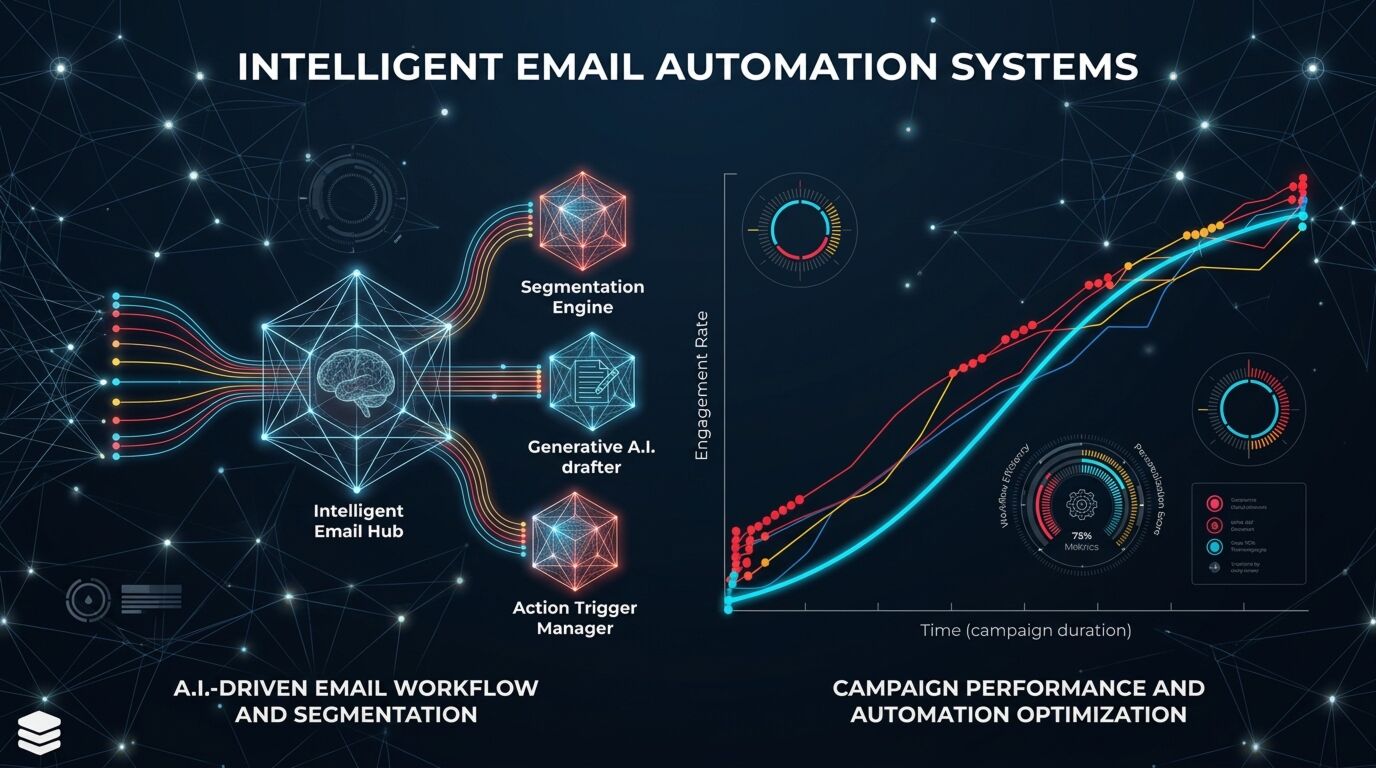
Intelligent Email Automation Systems combine artificial intelligence (AI), machine learning (ML), and workflow automation to simplify email management while delivering highly personalized and timely communication. These systems not only automate repetitive tasks but also analyze customer behavior, optimize content, and improve engagement through data-driven decision-making.
In this article, we'll explore how intelligent email automation works, its benefits, key features, implementation strategies, and real-world applications.
What Is an Intelligent Email Automation System?
An Intelligent Email Automation System is a software solution that uses AI algorithms and predefined workflows to automatically send, categorize, prioritize, and respond to emails. Unlike traditional automation tools that rely on static rules, intelligent systems continuously learn from user behavior and historical data to improve performance over time.
These systems can:
- Automatically reply to customer inquiries.
- Personalize email content.
- Schedule emails at optimal times.
- Segment audiences dynamically.
- Detect spam or phishing attempts.
- Analyze campaign performance.
- Recommend follow-up actions.
- Prioritize urgent communications.
By combining automation with intelligence, businesses can deliver faster, more relevant, and more effective communication.
Key Features of Intelligent Email Automation
AI-Powered Personalization
Modern automation platforms use customer data such as browsing history, purchase behavior, demographics, and previous interactions to generate personalized email content.
Instead of sending identical messages to every recipient, AI customizes:
- Subject lines
- Product recommendations
- Offers and discounts
- Greetings
- Call-to-action buttons
- Content layout
Personalized emails typically achieve higher open rates, click-through rates, and conversions.
Smart Email Classification
Machine learning models automatically categorize incoming emails into groups such as:
- Customer Support
- Sales Inquiry
- Billing
- Technical Issues
- Feedback
- Marketing Responses
This enables teams to prioritize tasks and reduce manual sorting.
Automated Response Generation
Natural Language Processing (NLP) enables AI systems to understand customer intent and draft relevant responses.
For frequently asked questions, such as shipping updates, password resets, or appointment confirmations, AI can provide immediate and accurate replies, reducing response times and improving customer satisfaction.
Workflow Automation
Intelligent systems trigger emails based on user actions or predefined business events.
Examples include:
- Welcome emails after account registration
- Order confirmations
- Payment reminders
- Subscription renewals
- Cart abandonment emails
- Event invitations
- Follow-up messages after customer support interactions
Automation ensures timely communication without manual intervention.
Benefits of Intelligent Email Automation
Increased Productivity
Employees spend less time handling repetitive email tasks, allowing them to focus on strategic work, customer relationships, and business growth.
Improved Customer Experience
Quick responses and personalized communication create a better customer experience and increase satisfaction.
Higher Marketing Performance
AI analyzes engagement metrics to determine:
- Best sending times
- Preferred content types
- Audience segmentation
- Optimal email frequency
These insights help businesses improve campaign effectiveness.
Better Lead Nurturing
Automated email sequences guide prospects through the sales funnel by delivering relevant information at each stage, increasing the likelihood of conversion.
Consistent Communication
Automation ensures that every customer receives consistent messaging, reducing errors and maintaining brand standards across all interactions.
AI Technologies Behind Email Automation
Several AI technologies power modern email automation systems:
- Machine Learning (ML): Learns from historical interactions to improve predictions and recommendations.
- Natural Language Processing (NLP): Understands and generates human-like email content.
- Predictive Analytics: Forecasts customer behavior and engagement.
- Recommendation Engines: Suggest personalized products or services.
- Sentiment Analysis: Detects customer emotions to prioritize urgent or dissatisfied users.
Together, these technologies enable more intelligent and adaptive communication.
Real-World Applications
Customer Support
AI-powered systems automatically acknowledge support requests, classify tickets, suggest solutions, and route complex issues to the appropriate team members.
E-commerce
Online retailers use intelligent email automation for:
- Order confirmations
- Shipping updates
- Product recommendations
- Loyalty rewards
- Abandoned cart recovery
- Re-engagement campaigns
Sales
Sales teams automate follow-ups, appointment reminders, proposal sharing, and lead nurturing while receiving AI-driven recommendations on the best time to contact prospects.
Human Resources
HR departments automate recruitment emails, interview scheduling, onboarding communications, policy updates, and employee engagement surveys.
Healthcare
Hospitals and clinics send automated appointment reminders, prescription notifications, follow-up care instructions, and wellness campaigns while maintaining compliance with privacy regulations.
Best Practices for Implementation
To maximize the value of intelligent email automation:
- Define clear communication objectives.
- Maintain clean and updated customer data.
- Segment audiences effectively.
- Personalize content wherever possible.
- Test subject lines and email variations using A/B testing.
- Monitor analytics and continuously optimize workflows.
- Ensure compliance with data privacy regulations such as GDPR or regional laws.
- Combine AI automation with human oversight for sensitive communications.
Common Challenges
Despite its advantages, businesses should address several challenges:
- Poor-quality customer data can reduce personalization accuracy.
- Over-automation may make communication feel impersonal.
- AI-generated responses require regular monitoring.
- Integration with existing CRM and business systems can be complex.
- Privacy and security must remain top priorities when handling customer information.
Careful planning and continuous optimization help overcome these challenges.
The Future of Intelligent Email Automation
As AI continues to evolve, email automation systems are becoming increasingly sophisticated. Future innovations are expected to include:
- Fully conversational AI email assistants.
- Hyper-personalized content generated in real time.
- Predictive customer journey automation.
- Voice-to-email and multilingual AI communication.
- Advanced emotional intelligence through sentiment-aware messaging.
- Seamless integration with chatbots, CRM platforms, and collaboration tools.
These advancements will make business communication more efficient, proactive, and customer-centric.
Conclusion
Intelligent Email Automation Systems are transforming the way businesses communicate by combining AI, machine learning, and workflow automation into a single, powerful solution. From personalized marketing campaigns and automated customer support to lead nurturing and internal communications, these systems help organizations improve efficiency, reduce manual effort, and deliver exceptional customer experiences.
By implementing intelligent email automation strategically, businesses can strengthen relationships, boost productivity, and make data-driven decisions that drive long-term growth. As AI technologies continue to advance, intelligent email systems will become an essential component of modern digital transformation and business communication strategies.