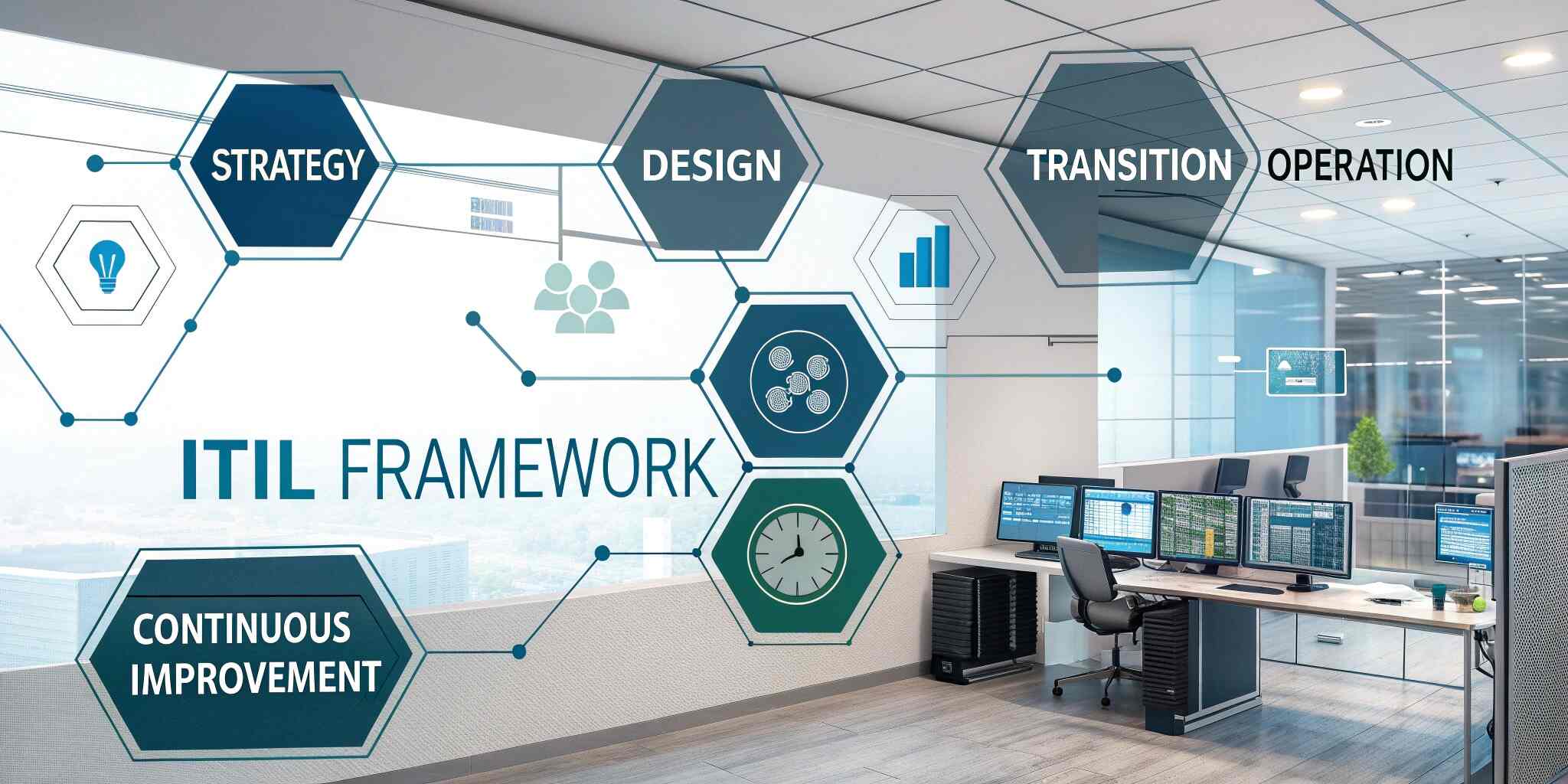
In today’s fast-paced digital environment, delivering consistent, high-quality IT services is crucial for organizational success. The ITIL (Information Technology Infrastructure Library) framework provides a structured approach to IT Service Management (ITSM), ensuring that IT services align with business needs while optimizing resources and minimizing risks. Recognized worldwide, ITIL offers a set of best practices designed to improve service delivery, enhance customer satisfaction, and foster continuous improvement.
At its core, ITIL is built on five key principles: Service Strategy, Service Design, Service Transition, Service Operation, and Continual Service Improvement. These stages collectively form the ITIL service lifecycle. Service Strategy focuses on defining the services an organization should offer and how they deliver value to customers. Service Design involves planning new or modified services, including processes, tools, and metrics. Service Transition ensures smooth deployment, managing changes effectively to avoid disruptions. Service Operation is concerned with day-to-day management and maintenance of services, ensuring stability and performance. Finally, Continual Service Improvement is an ongoing effort to analyze data,
identify areas for enhancement, and implement changes for better results.
Implementing ITIL starts with assessing current processes and identifying gaps in service delivery. Organizations often begin by training their IT teams and appointing ITIL-certified professionals to lead the process. The next step is to adopt ITIL processes in phases—starting with areas that will deliver the most immediate benefits. This phased approach allows for smoother adaptation and less resistance to change. Modern ITIL implementations also integrate automation tools to streamline workflows, reduce human errors, and improve response times.
The benefits of ITIL are substantial. It improves alignment between IT and business objectives, enhances service quality, reduces operational costs, and fosters a culture of accountability. By standardizing processes, ITIL also makes it easier to comply with regulations and industry standards. Additionally, its emphasis on continual improvement ensures that IT services remain agile and adaptable in an ever-changing technological landscape.
However, successful implementation requires executive buy-in, staff engagement, and a commitment to long-term process improvement. Simply adopting ITIL terminology is not enough—its principles must be embedded into the organization’s culture. Regular performance reviews, clear documentation, and effective communication are essential for sustaining improvements.
In conclusion, the ITIL framework is more than a set of guidelines—it’s a proven methodology for delivering IT services that are reliable, efficient, and customer-focused. When implemented effectively, ITIL transforms IT departments from reactive support teams into proactive value creators, helping organizations achieve both operational excellence and strategic growth.