Online multiplayer games face a constant battle against cheaters who exploit vulnerabilities to gain unfair advantages. As cheating techniques become more sophisticated—ranging from memory manipulation to kernel-level exploits—traditional anti-cheat methods are no longer sufficient.
This has led to the rise of kernel-level anti-cheat systems, which operate at the deepest level of the operating system to detect and prevent malicious activity.
What Are Kernel-Level Anti-Cheat Systems?
Kernel-level anti-cheat systems run in the operating system kernel, giving them high-level privileges and direct access to system resources.
Unlike user-mode anti-cheat solutions, kernel-level systems can:
- Monitor low-level system behavior
- Detect hidden processes and drivers
- Prevent unauthorized memory access
Popular implementations include systems used by games like Valorant (Riot Vanguard) and Fortnite (Easy Anti-Cheat).
Why Kernel-Level Protection is Necessary
1. Advanced Cheat Techniques
Modern cheats operate at the same privilege level as the OS kernel, making them invisible to user-mode detection.
2. Memory Manipulation
Cheaters modify game memory to alter gameplay, requiring deep system access to detect.
3. Driver-Based Exploits
Malicious drivers can bypass traditional anti-cheat systems.
Kernel-level anti-cheat solutions address these threats by operating at the same or higher privilege level.
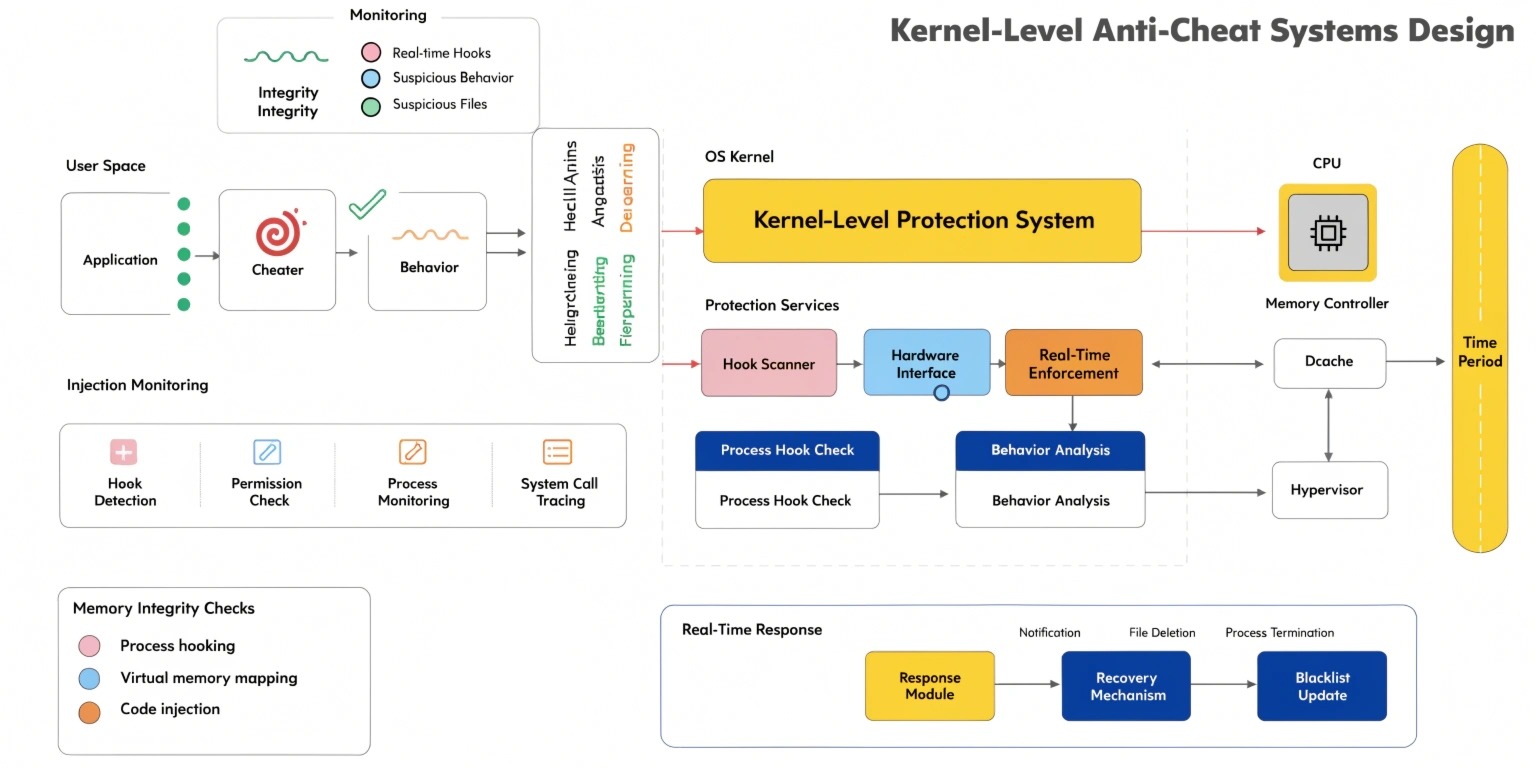
Core Components of Kernel-Level Anti-Cheat Systems
1. Kernel Driver
The core component is a kernel-mode driver that runs with elevated privileges and monitors system activity.
2. Memory Integrity Checks
The system scans memory for:
- Unauthorized modifications
- Code injections
- Suspicious patterns
3. Process and Thread Monitoring
Tracks running processes and detects hidden or malicious ones.
4. Hardware Interaction Monitoring
Detects abnormal behavior in hardware interactions, such as input spoofing or DMA attacks.
5. Communication Layer
Secure communication between kernel and user-mode components ensures proper coordination.
Detection Techniques
1. Signature-Based Detection
Identifies known cheat patterns and signatures.
2. Heuristic Analysis
Detects unusual behavior that may indicate cheating.
3. Behavior Monitoring
Analyzes player actions and system behavior in real time.
4. Integrity Verification
Ensures game files and memory remain unchanged.
Challenges in Kernel-Level Anti-Cheat Design
1. Privacy Concerns
Because kernel-level systems have deep access, users may worry about data privacy and security.
2. System Stability
Bugs in kernel drivers can crash the entire system (BSOD).
3. Compatibility Issues
Different hardware and OS configurations can cause conflicts.
4. False Positives
Incorrectly flagging legitimate users can damage trust.
Performance Considerations
Kernel-level anti-cheat systems must be optimized to avoid:
- High CPU usage
- Increased latency
- Reduced game performance
Efficient scanning, event-driven monitoring, and selective checks help maintain performance.
Best Practices for Designing Anti-Cheat Systems
1. Minimize Kernel Footprint
Keep kernel-level code lightweight and efficient.
2. Use Hybrid Approaches
Combine kernel-level and user-mode detection for better coverage.
3. Ensure Transparency
Clearly communicate what data is collected and why.
4. Regular Updates
Continuously update detection methods to counter new cheats.
5. Robust Testing
Thoroughly test across different systems to avoid crashes and compatibility issues.
Ethical and Legal Considerations
Developers must balance security with user rights:
- Respect user privacy
- Avoid unnecessary data collection
- Comply with regional regulations
Building trust is as important as preventing cheating.
Future Trends in Anti-Cheat Systems
- AI-based cheat detection
- Cloud-based analysis systems
- Hardware-level security integration
- Behavioral analytics for real-time detection
As cheating evolves, anti-cheat systems must become more intelligent and adaptive.
Conclusion
Kernel-level anti-cheat systems represent the forefront of game security, providing deep protection against sophisticated threats. While they offer significant advantages, they also introduce challenges related to privacy, stability, and complexity.
For game developers, the goal is to strike the right balance—building systems that are secure, efficient, and trustworthy. As the gaming industry continues to grow, robust anti-cheat solutions will remain essential in maintaining fair and competitive environments.