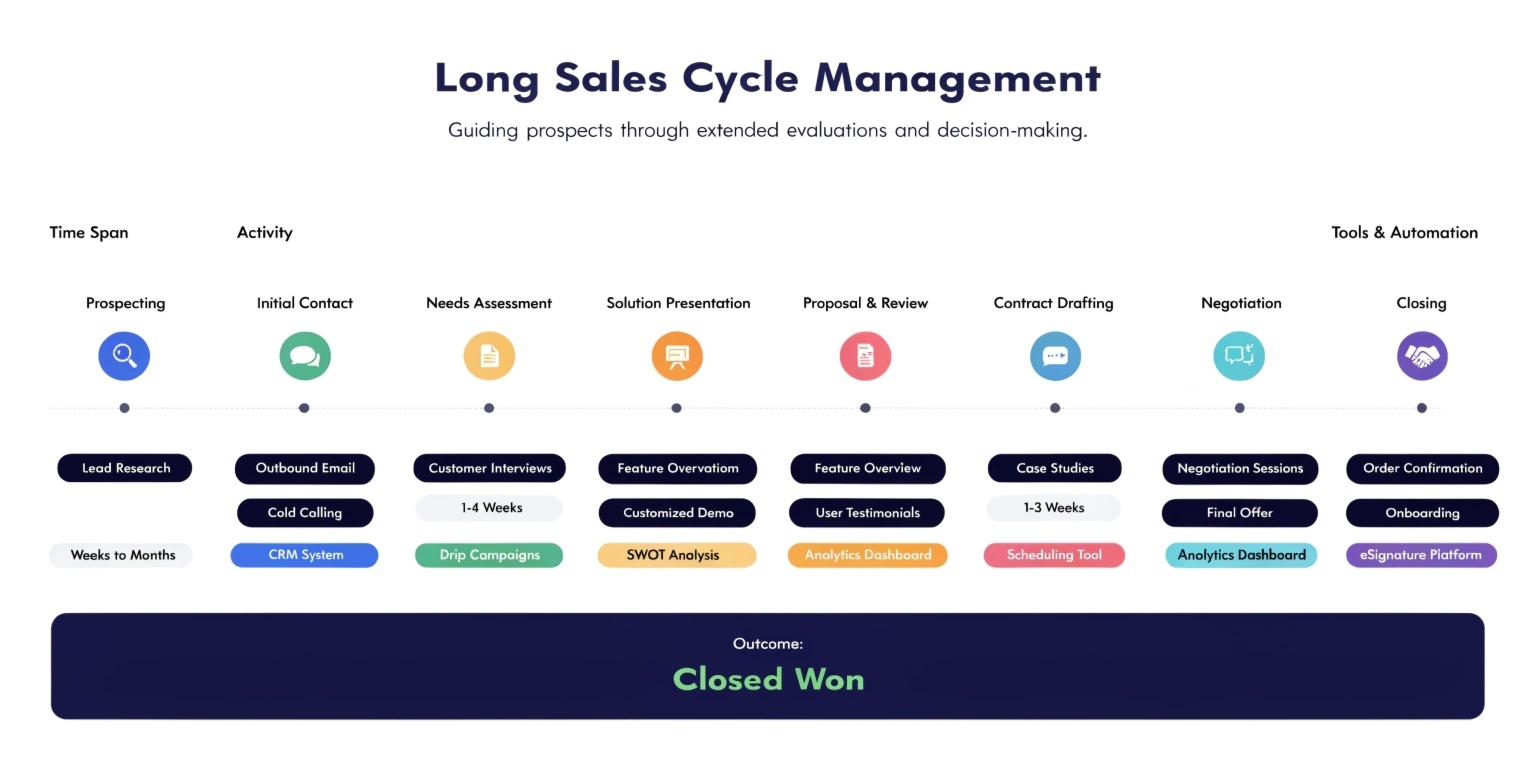
In the IT services and software development industry, sales cycles are rarely short. Unlike impulse purchases, IT solutions involve high investments, multiple stakeholders, and careful decision-making. This leads to long sales cycles, often spanning weeks or even months.
While long sales cycles are normal, poor management can result in lost opportunities, stalled deals, and inconsistent revenue. The key lies in understanding how to effectively manage and nurture prospects throughout the journey.
What is a Long Sales Cycle?
A long sales cycle refers to an extended period between the first interaction with a potential client and the final deal closure. It is common in:
- Enterprise software sales
- Custom software development projects
- IT consulting services
These deals require trust, clarity, and alignment before a decision is made.
Why Do Sales Cycles Become Long?
Understanding the reasons helps in managing them better:
- Multiple decision-makers involved
- High project costs and risks
- Unclear or evolving requirements
- Internal approvals and budgeting delays
- Lack of urgency from the client side
Recognizing these factors allows you to proactively address them.
Key Stages of a Long Sales Cycle
To manage effectively, break the cycle into stages:
- Lead Generation: Initial contact and interest
- Qualification: Assessing fit and budget
- Discovery & Requirement Gathering: Understanding needs
- Proposal & Negotiation: Sharing solutions and pricing
- Decision & Closure: Final approvals and agreement
Each stage requires a different approach and communication style.
Strategies to Manage Long Sales Cycles
1. Strong Lead Qualification
Not every lead is worth pursuing. Use frameworks like:
- Budget
- Authority
- Need
- Timeline
Focusing on qualified leads saves time and improves conversion rates.
2. Build Trust Early
Trust is the foundation of long sales cycles:
- Share case studies and past work
- Provide transparent communication
- Demonstrate expertise through insights
Clients are more likely to move forward when they trust your capability.
3. Consistent Lead Nurturing
Stay engaged without being pushy:
- Send follow-up emails
- Share relevant content (blogs, insights)
- Provide updates and suggestions
Regular touchpoints keep your brand top-of-mind.
4. Educate the Client
Many delays happen because clients are unsure:
- Explain technical concepts in simple terms
- Guide them through decision-making
- Highlight risks and solutions
Position yourself as a consultant rather than just a seller.
5. Set Clear Next Steps
After every interaction:
- Define what happens next
- Set timelines for responses
- Schedule follow-ups
This reduces uncertainty and keeps the process moving.
6. Use CRM and Tracking Tools
A structured system helps manage multiple leads:
- Track communication history
- Set reminders for follow-ups
- Monitor deal progress
This ensures no opportunity slips through the cracks.
7. Address Objections Proactively
Common objections include:
- Budget concerns
- Timeline issues
- Technical doubts
Handle them early by:
- Offering flexible solutions
- Providing alternative approaches
- Sharing proof of success
8. Create Urgency (Without Pressure)
Encourage decision-making by:
- Highlighting opportunity costs
- Offering limited-time incentives
- Showing market competition
The goal is to motivate, not pressure.
Common Mistakes to Avoid
- Ignoring follow-ups
- Overloading clients with information
- Failing to identify decision-makers
- Not documenting conversations
- Being too aggressive or too passive
Balancing persistence and patience is key.
Real-World Example
Imagine you’re selling a custom software solution to a mid-sized company:
- Initial interest is shown
- Multiple meetings happen over 2 months
- Stakeholders include CEO, CTO, and finance team
Without proper management, the deal may stall.
However, with structured follow-ups, clear proposals, and continuous engagement:
- You address each stakeholder’s concerns
- Build trust over time
- Guide them toward a confident decision
This significantly increases your chances of closing the deal.
How to Shorten the Sales Cycle
While some delays are unavoidable, you can reduce cycle time by:
- Pre-qualifying leads effectively
- Providing clear proposals quickly
- Reducing back-and-forth communication
- Using templates and automation
- Keeping communication concise and focused
Conclusion
Long sales cycles are a natural part of IT and B2B sales, but they don’t have to be unpredictable or inefficient. With the right strategies, you can manage leads effectively, build strong relationships, and close deals with confidence.
The secret lies in consistency, clarity, and trust. By mastering long sales cycle management, you not only improve conversions but also create lasting partnerships with clients.