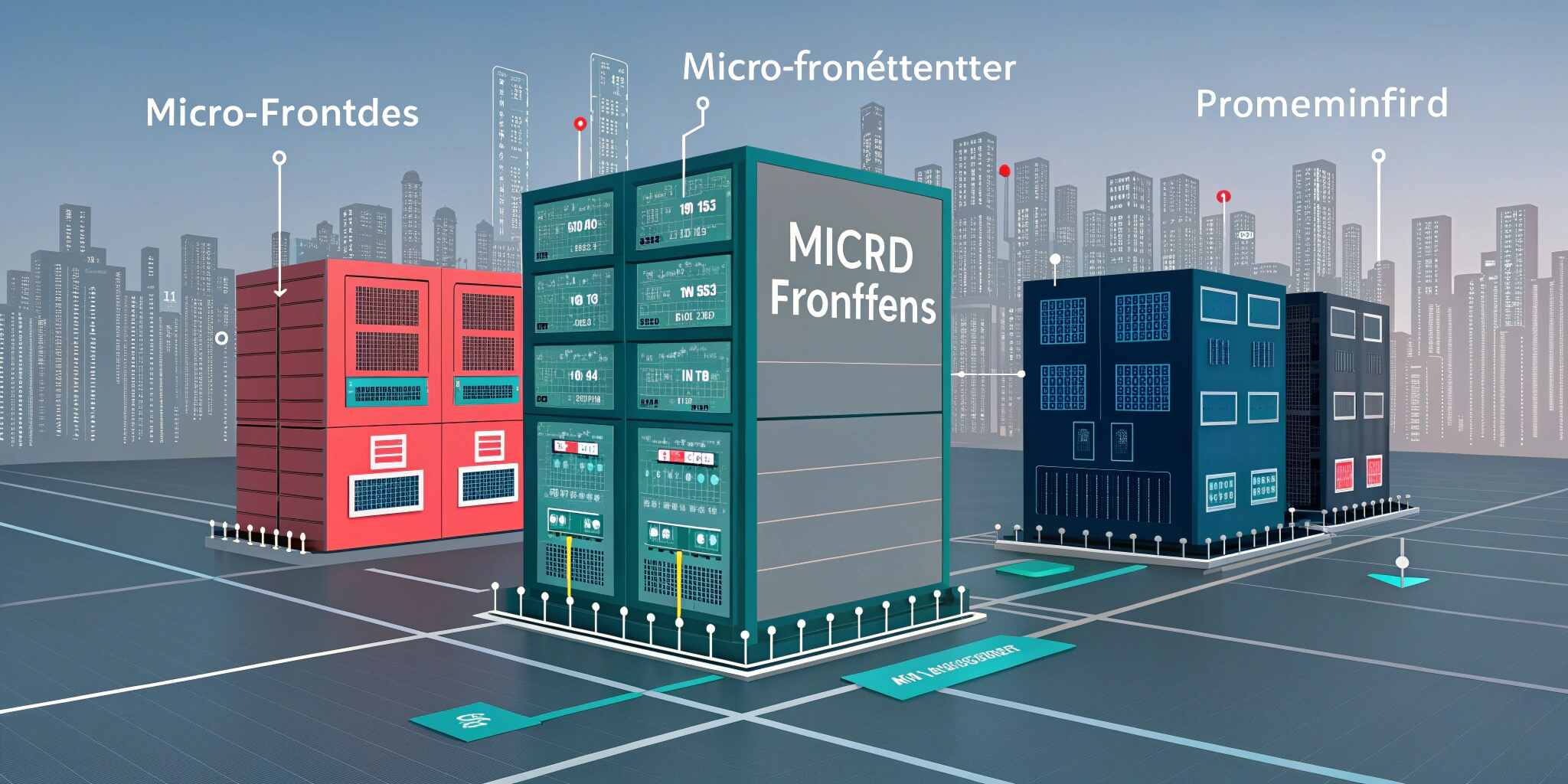
As modern web applications grow larger and more complex, traditional monolithic front-end architectures often struggle with scalability, performance, and maintainability. Similar to the role microservices play in backend development, Micro-Frontends architecture introduces a modular and distributed approach to developing and managing user interfaces for large-scale enterprise web systems. Instead of building a single massive codebase, Micro-Frontends break the UI into smaller, independently developed and deployable parts that work together seamlessly within one unified product.
At its core, Micro-Frontends architecture enables different teams to own different sections of the front-end application. For example, an e-commerce platform might allow separate teams to independently manage the product catalog, payments, checkout, and user profile modules. Each team selects its own tech stack (such as React, Angular, Vue, or Svelte), versioning strategy, and deployment pipeline without impacting the others.
This independence significantly accelerates development and problem resolution since teams no longer need to coordinate major releases or navigate dependency conflicts within a large shared repository.
One of the biggest advantages of Micro-Frontends is independent deployment and continuous delivery. Each frontend component can be deployed separately, resulting in smaller and more frequent releases. As a result, businesses reduce deployment risks, avoid full application downtime, and quickly roll out updates or fixes—dramatically improving agility and user satisfaction. Combined with modern CI/CD pipelines, Micro-Frontends offer high efficiency for large engineering teams working across distributed environments.
From a technical perspective, Micro-Frontends can be implemented using various approaches, including Webpack Module Federation, server-side composition, client-side composition, and edge-side rendering. Webpack Module Federation has become particularly popular because it enables real-time sharing of code between applications without version conflicts, allowing dynamic loading of remote modules at runtime. This approach makes integration cleaner and reduces duplication issues across teams.
Micro-Frontends also enhance performance and scalability by segmenting workloads. Rather than loading a giant bundle at runtime, users download smaller pieces only when necessary. This results in faster initial rendering times and optimized resource loading. It also aligns perfectly with progressive enhancement, lazy loading, and real-time content updates—key requirements for high-traffic applications like streaming platforms, fintech dashboards, multivendor marketplaces, and enterprise SaaS systems.
However, Micro-Frontends do come with challenges. Increased architectural complexity, potential CSS and JavaScript conflicts, and the risk of inconsistent UI/UX require strong governance. Organizations must enforce shared design systems and standard UI components, ensure API alignment, and adopt tools such as Storybook, Tailwind, or Material UI to maintain a cohesive experience. Another consideration is infrastructure complexity: composing multiple services into one interface requires robust orchestration strategies and well-structured build and deployment pipelines.
Despite these challenges, Micro-Frontends are rapidly being adopted by companies such as Amazon, Spotify, Netflix, and IKEA due to their ability to support distributed teams, global deployment strategies, and fast product evolution. The architecture aligns perfectly with modern engineering trends like containerization, edge computing, Jamstack, and serverless platforms, making it a sustainable and forward-looking approach to enterprise web development.
As digital innovation accelerates, businesses demand products that evolve quickly, scale continuously, and adapt to user needs without sacrificing stability or performance. Micro-Frontends meet these expectations by enabling development autonomy, architectural flexibility, and higher long-term maintainability. By adopting clear communication protocols, shared design standards, and effective tooling, organizations can unlock the full power of Micro-Frontends and build advanced, future-ready web applications.