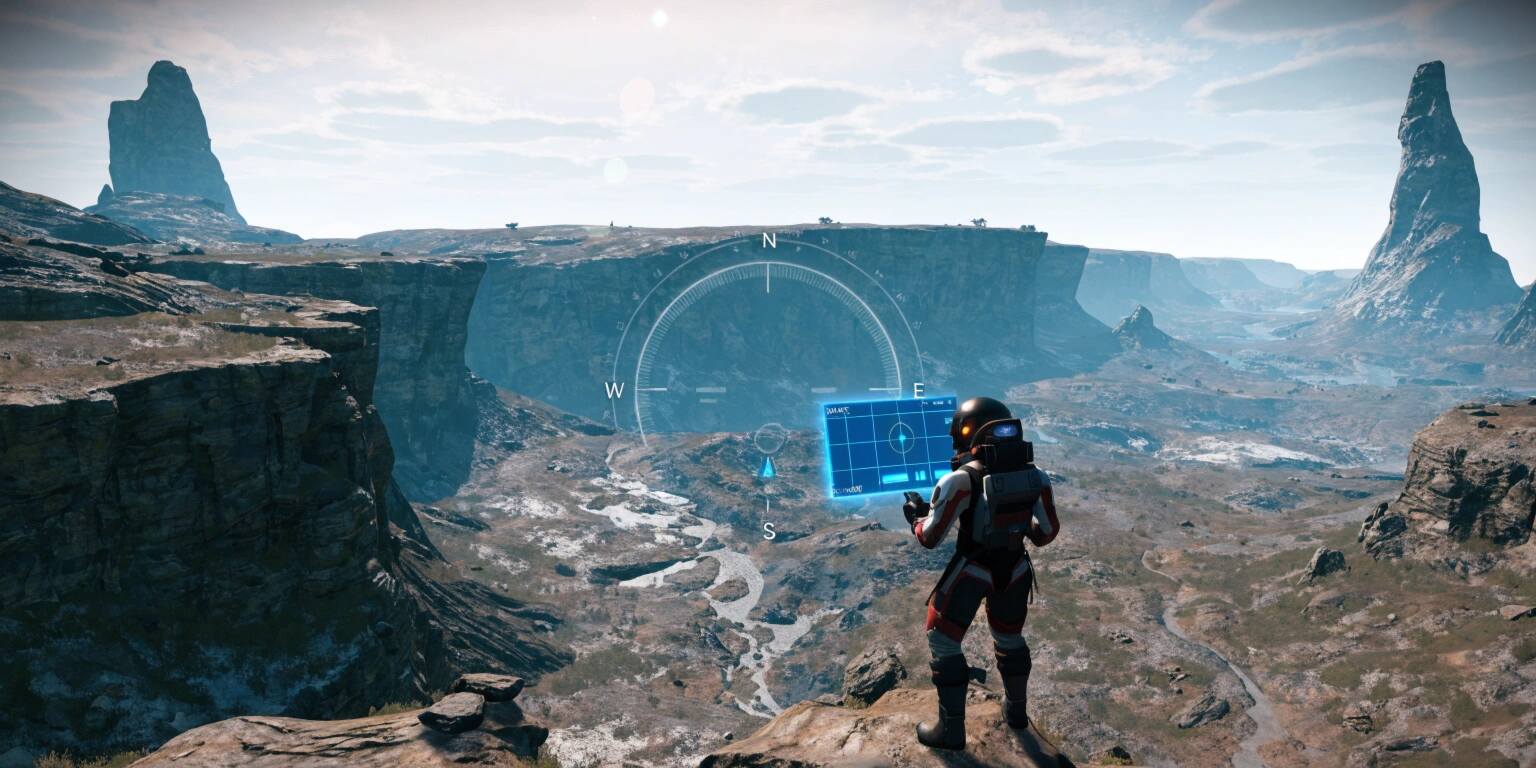
Navigation Systems for Massive Open Worlds: Designing Scalable AI Pathfinding for Modern Games
Introduction
Massive open-world games have transformed player expectations by offering expansive environments filled with dynamic characters, interactive ecosystems, and seamless exploration. From sprawling cities and dense forests to deserts, oceans, and procedurally generated landscapes, these worlds require sophisticated navigation systems to ensure non-player characters (NPCs) move intelligently and efficiently.
Unlike smaller, level-based games, open worlds present unique challenges. AI agents must navigate enormous maps, adapt to changing terrain, avoid dynamic obstacles, and react to player actions—all while maintaining smooth performance. Traditional pathfinding techniques alone are often insufficient due to the scale and complexity of these environments.
Modern navigation systems combine navigation meshes (NavMeshes), hierarchical pathfinding, dynamic updates, world streaming, and procedural generation to deliver realistic AI behavior without overwhelming CPU or memory resources. This article explores the architecture, techniques, and best practices behind navigation systems for massive open-world games.
Why Navigation Systems Matter
Navigation systems determine how AI-controlled characters move through the game world.
They enable NPCs to:
- Travel efficiently between locations
- Avoid obstacles
- Chase or flee from players
- Patrol predefined routes
- Explore dynamic environments
- Interact naturally with the world
- Respond to gameplay events
A well-designed navigation system enhances realism and gameplay while supporting thousands of simultaneous AI agents.
Core Components of a Navigation System
Modern navigation systems consist of several interconnected components.
Navigation Mesh (NavMesh)
A NavMesh divides walkable areas into connected polygons.
Advantages include:
- Efficient pathfinding
- Reduced search complexity
- Smooth movement
- Support for uneven terrain
- Flexible route calculation
NavMeshes are more efficient than traditional grid-based systems for large, complex environments.
Pathfinding Algorithms
Once the NavMesh is created, pathfinding algorithms calculate the optimal route.
Common algorithms include:
- A* Search
- Dijkstra's Algorithm
- Theta*
- Jump Point Search (JPS)
- Hierarchical A*
Each algorithm balances accuracy, computation time, and scalability depending on the game's requirements.
Hierarchical Pathfinding
Searching an entire open world for every movement request is computationally expensive.
Hierarchical pathfinding solves this by dividing the world into regions.
The process typically involves:
- Finding a route between large regions.
- Planning local paths within each region.
- Refining movement near the destination.
This layered approach significantly reduces search time and supports massive game worlds.
Dynamic Obstacle Avoidance
Open-world environments constantly change.
Examples include:
- Moving vehicles
- Crowds
- Wildlife
- Player-built structures
- Falling objects
- Temporary barriers
Navigation systems must update routes in real time without requiring complete path recalculations.
Techniques include:
- Local avoidance algorithms
- Steering behaviors
- Dynamic NavMesh updates
- Collision prediction
These methods keep AI movement responsive and believable.
Navigation in Procedurally Generated Worlds
Procedural generation introduces additional complexity because the environment may not exist before gameplay begins.
Navigation systems often generate:
- Runtime NavMeshes
- Procedural navigation graphs
- Terrain-aware navigation data
- Adaptive waypoint networks
This enables AI to navigate newly created environments without manual authoring.
World Streaming and Navigation
Massive open worlds frequently use world streaming to load and unload map sections dynamically.
Navigation systems must synchronize with streamed content by:
- Loading navigation data on demand
- Unloading unused regions
- Maintaining path continuity
- Updating AI destinations
- Managing cross-region navigation
Efficient streaming minimizes memory usage while preserving seamless exploration.
Multi-Agent Navigation
Open-world games often feature hundreds or thousands of simultaneous NPCs.
Effective crowd navigation requires:
- Collision avoidance
- Shared path optimization
- Flow field navigation
- Group movement
- Priority systems
- Lane formation
These techniques prevent congestion and improve the realism of large crowds.
Performance Optimization
Navigation calculations can become a major performance bottleneck.
Optimization strategies include:
- Path caching
- Incremental pathfinding
- Asynchronous computation
- Multi-threaded processing
- Level-of-detail (LOD) AI
- Selective navigation updates
- Hierarchical data structures
Optimizing navigation ensures smooth gameplay even in densely populated environments.
AI Decision Integration
Navigation systems work closely with higher-level AI behaviors.
Examples include:
- Behavior Trees
- Utility AI
- Goal-Oriented Action Planning (GOAP)
- Finite State Machines (FSM)
These systems determine where an NPC wants to go, while the navigation system determines how to get there efficiently.
Common Challenges
Developers face several technical challenges when designing navigation systems for open worlds.
These include:
- Extremely large maps
- Dynamic terrain changes
- Memory limitations
- CPU-intensive pathfinding
- Complex vertical environments
- Multiplayer synchronization
- Procedural world generation
Addressing these challenges requires careful architectural planning and continuous optimization.
Best Practices
To build scalable navigation systems:
- Use NavMeshes instead of dense navigation grids where appropriate.
- Implement hierarchical pathfinding for large environments.
- Update navigation data dynamically rather than rebuilding entire maps.
- Stream navigation data alongside world assets.
- Cache frequently used paths.
- Offload heavy calculations to background threads.
- Optimize AI updates based on player proximity.
- Continuously profile navigation performance during development.
Following these practices improves both responsiveness and scalability.
Future Trends
Navigation technology continues to evolve alongside advances in artificial intelligence.
Emerging innovations include:
- Machine learning-assisted pathfinding
- AI-generated navigation meshes
- Predictive obstacle avoidance
- Cloud-assisted navigation processing
- Reinforcement learning for NPC movement
- Adaptive navigation based on player behavior
- Massive crowd simulation
- Autonomous procedural world exploration
These technologies will enable increasingly intelligent and immersive open-world experiences.
Conclusion
Navigation systems are a fundamental component of massive open-world games, enabling NPCs to move intelligently through expansive, dynamic environments while maintaining high performance. By combining navigation meshes, hierarchical pathfinding, world streaming, dynamic obstacle avoidance, and multi-agent coordination, developers can create realistic AI behaviors that scale to thousands of simultaneous characters.
As game worlds continue to grow in size and complexity, modern navigation architectures will play an even greater role in delivering seamless exploration and believable NPC interactions. By adopting efficient algorithms, scalable data structures, and emerging AI-driven techniques, game developers can build navigation systems that enhance immersion and support the next generation of open-world experiences.