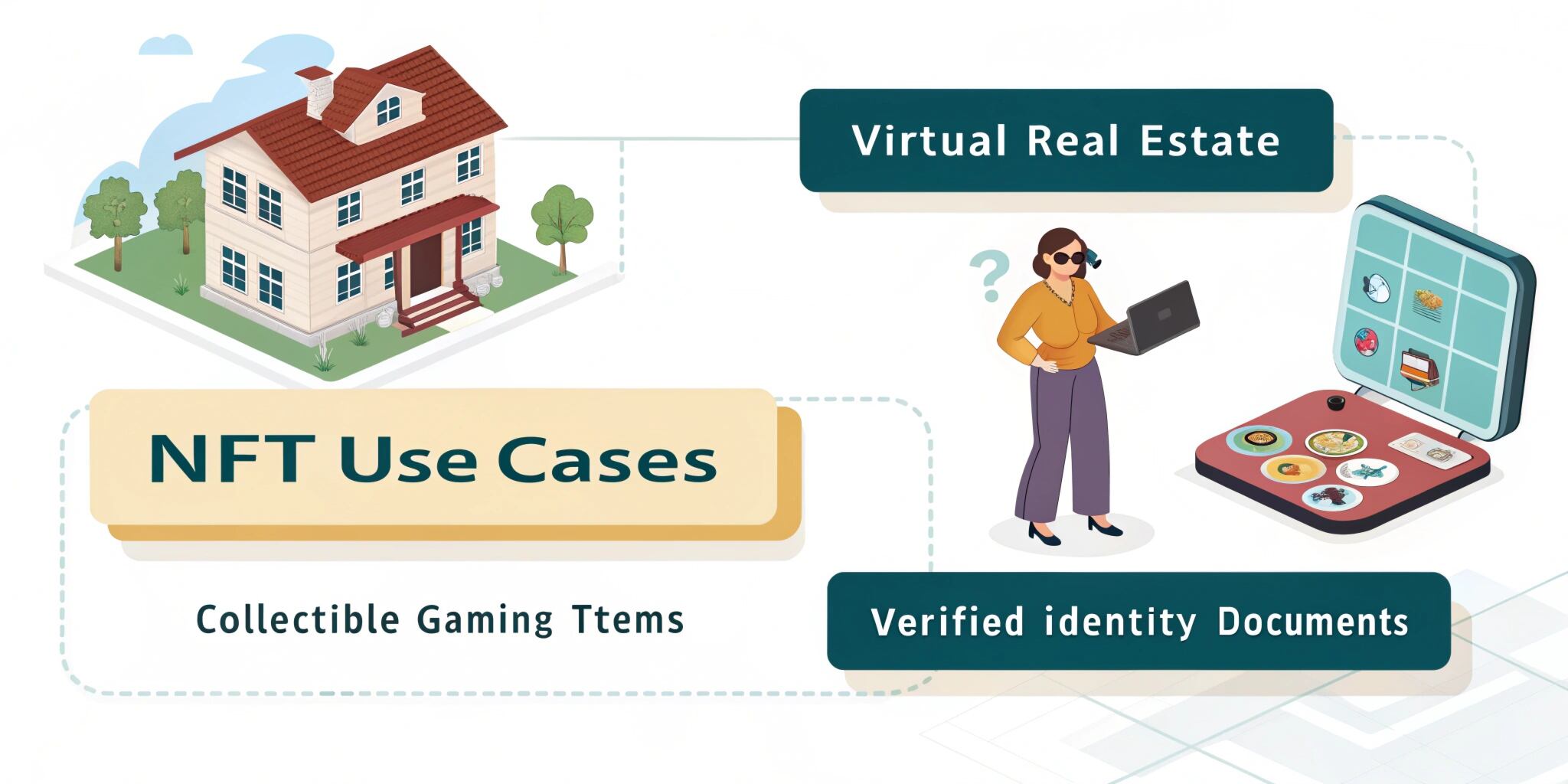
Non-fungible tokens (NFTs) first gained mainstream attention through digital art and collectibles, but their real potential extends far beyond artistic expression. At their core, NFTs are unique, verifiable digital assets stored on blockchain networks, making them ideal for representing ownership, authenticity, and rights in digital and physical environments. As blockchain adoption matures, NFTs are increasingly being used across industries to solve real-world problems related to trust, transparency, and digital asset management.
One of the most prominent NFT use cases beyond art is in gaming and virtual worlds. In modern blockchain-based games, NFTs represent in-game assets such as characters, weapons, skins, and virtual land. Unlike traditional games where assets are locked within a single platform, NFT-based assets can be owned by players, traded freely, and even transferred across compatible games or metaverse environments. This creates true digital ownership and enables play-to-earn economies, where players can generate real-world value through gameplay.
NFTs are also transforming the real estate sector, particularly in virtual and fractional ownership models. Virtual real estate platforms use NFTs to represent ownership of digital land and properties within metaverse spaces. In the physical world, NFTs can tokenize property deeds, allowing for fractional ownership, faster transactions, and improved transparency. By linking real-world assets to blockchain-based NFTs, property records become more secure, tamper-proof, and accessible.
Another rapidly growing application of NFTs is in digital identity and credentials. NFTs can represent verifiable identities, certifications, academic degrees, and professional licenses. Unlike traditional identity systems that rely on centralized authorities, NFT-based identities are decentralized and user-controlled. This allows individuals to prove credentials without exposing unnecessary personal data, improving privacy and reducing identity fraud. Enterprises and educational institutions are increasingly exploring NFTs for credential verification and secure access management.
In supply chain and logistics, NFTs offer enhanced traceability and authenticity verification. Each product or shipment can be linked to an NFT that records its origin, manufacturing details, ownership history, and movement across the supply chain. This is especially valuable for industries such as luxury goods, pharmaceuticals, and food, where counterfeit prevention and transparency are critical. NFTs help businesses and consumers verify authenticity instantly through blockchain records.
NFTs are also reshaping ticketing and event management. NFT-based tickets reduce fraud by eliminating duplicate or fake tickets, as each NFT is unique and traceable. Event organizers can embed smart contract logic into NFT tickets to control resale rules, royalties, and access permissions. Additionally, NFT tickets can serve as digital memorabilia, offering long-term value to attendees beyond the event itself.
Intellectual property and content rights management is another area where NFTs are gaining traction. Creators, musicians, writers, and software developers can tokenize their work as NFTs to establish ownership and automate royalty payments. Smart contracts ensure that creators receive a share of revenue whenever their NFT-linked content is resold or reused, reducing reliance on intermediaries and improving monetization transparency.
Enterprises are also exploring NFTs for internal operations and data management. NFTs can represent access rights, software licenses, digital certificates, or confidential documents. By using NFTs, organizations can improve auditability, streamline asset management, and enforce access controls through blockchain-based verification.
As Web3 ecosystems continue to evolve, NFTs are becoming foundational building blocks for decentralized applications and digital economies. While challenges such as scalability, regulation, and environmental concerns still exist, innovation in blockchain infrastructure is rapidly addressing these issues. The future of NFTs lies not in speculation, but in practical utility across industries that require trust, transparency, and digital ownership.
In conclusion, NFTs are far more than digital art collectibles. They are versatile digital assets capable of transforming gaming, real estate, identity management, supply chains, ticketing, and enterprise systems. As adoption grows, NFTs will play a critical role in shaping the next generation of digital experiences and decentralized business models.