Choosing the right backend technology is one of the most critical decisions in software development. The backend controls database operations, authentication, APIs, business logic, and server performance. A poor choice can cause scalability issues, slow performance, and higher maintenance costs.
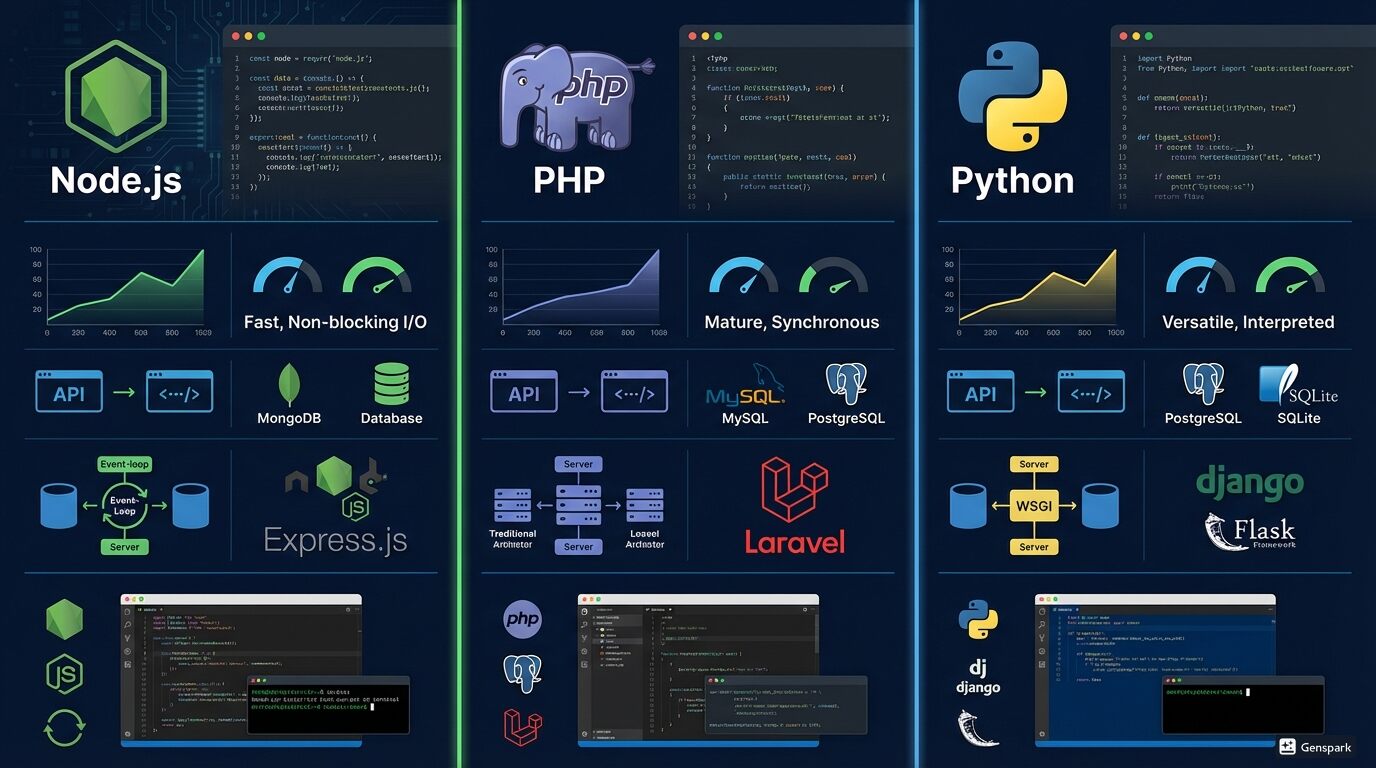
Three of the most popular backend technologies today are Node.js, PHP, and Python. Each has strong communities, frameworks, and real-world success stories. However, they are designed for different purposes. This article compares them in detail to help you choose the right one for your project.
What is a Backend?
The backend is the server-side part of a web application. It handles:
- Database communication
- User authentication
- API responses
- Business logic
- Data processing
Whenever a user logs in, places an order, or uploads a file, the backend processes that request.
1. Node.js
Node.js is not a programming language — it is a runtime environment that allows JavaScript to run on the server.
Key Features
- Event-driven architecture
- Non-blocking I/O
- High concurrency handling
- Same language for frontend and backend (JavaScript)
Popular Frameworks
- Express.js
- NestJS
- Fastify
Advantages
- Extremely fast for real-time apps
- Ideal for APIs and chat systems
- Large npm package ecosystem
- Great for microservices architecture
Disadvantages
- Not ideal for heavy CPU processing
- Callback complexity (though modern async/await helps)
Best Use Cases
- Chat applications (WhatsApp-like apps)
- Real-time dashboards
- Streaming platforms
- REST APIs
2. PHP
PHP is one of the oldest and most widely used server-side languages for web development. A large percentage of websites on the internet still run on PHP.
Key Features
- Simple syntax
- Built specifically for web development
- Strong hosting support (cheap hosting available)
Popular Frameworks
- Laravel
- CodeIgniter
- Symfony
Advantages
- Easy to learn
- Cost-effective hosting
- Perfect for CMS systems
- Massive community support
Disadvantages
- Slower compared to Node.js
- Not ideal for real-time applications
- Less modern architecture compared to newer stacks
Best Use Cases
- Business websites
- Blogs
- CMS platforms (like WordPress)
- Small to medium web applications
3. Python
Python is a general-purpose programming language known for readability and simplicity. It is extremely popular in both web development and artificial intelligence.
Key Frameworks
- Django
- Flask
- FastAPI
Advantages
- Clean and readable code
- Strong security features (Django)
- Best for AI/ML integration
- Excellent for data processing
Disadvantages
- Slower execution speed
- Higher server resource usage
- Not ideal for high-concurrency real-time apps
Best Use Cases
- AI-based applications
- Data analytics platforms
- SaaS products
- Enterprise applications
Performance Comparison
FeatureNode.jsPHPPythonSpeedVery FastMediumMedium-SlowReal-time AppsExcellentPoorModerateScalabilityHighModerateHigh (with architecture)Learning CurveModerateEasyEasyHosting CostMediumCheapMediumAI/ML SupportLowNoneExcellent
Scalability
- Node.js: Best for high traffic and concurrent users.
- PHP: Works well for traditional websites but needs optimization at scale.
- Python: Highly scalable when used with proper architecture (microservices, caching).
Security
All three are secure if implemented properly. However:
- Django (Python) has built-in security protections.
- Laravel (PHP) provides strong authentication features.
- Node.js security depends heavily on developer practices.
Which One Should You Choose?
Choose Node.js if:
You are building real-time applications, APIs, or scalable startups.
Choose PHP if:
You need a business website, CMS, or budget-friendly solution.
Choose Python if:
You plan AI, data analytics, automation, or complex systems.
Conclusion
There is no “best” backend language — only the right language for the right project.
- Node.js excels in speed and real-time systems
- PHP dominates traditional websites and CMS
- Python leads in AI, automation, and enterprise logic
Before selecting a technology, always consider:
- Project type
- Budget
- Scalability
- Future expansion
The correct backend choice saves development cost, improves performance, and ensures long-term project success.