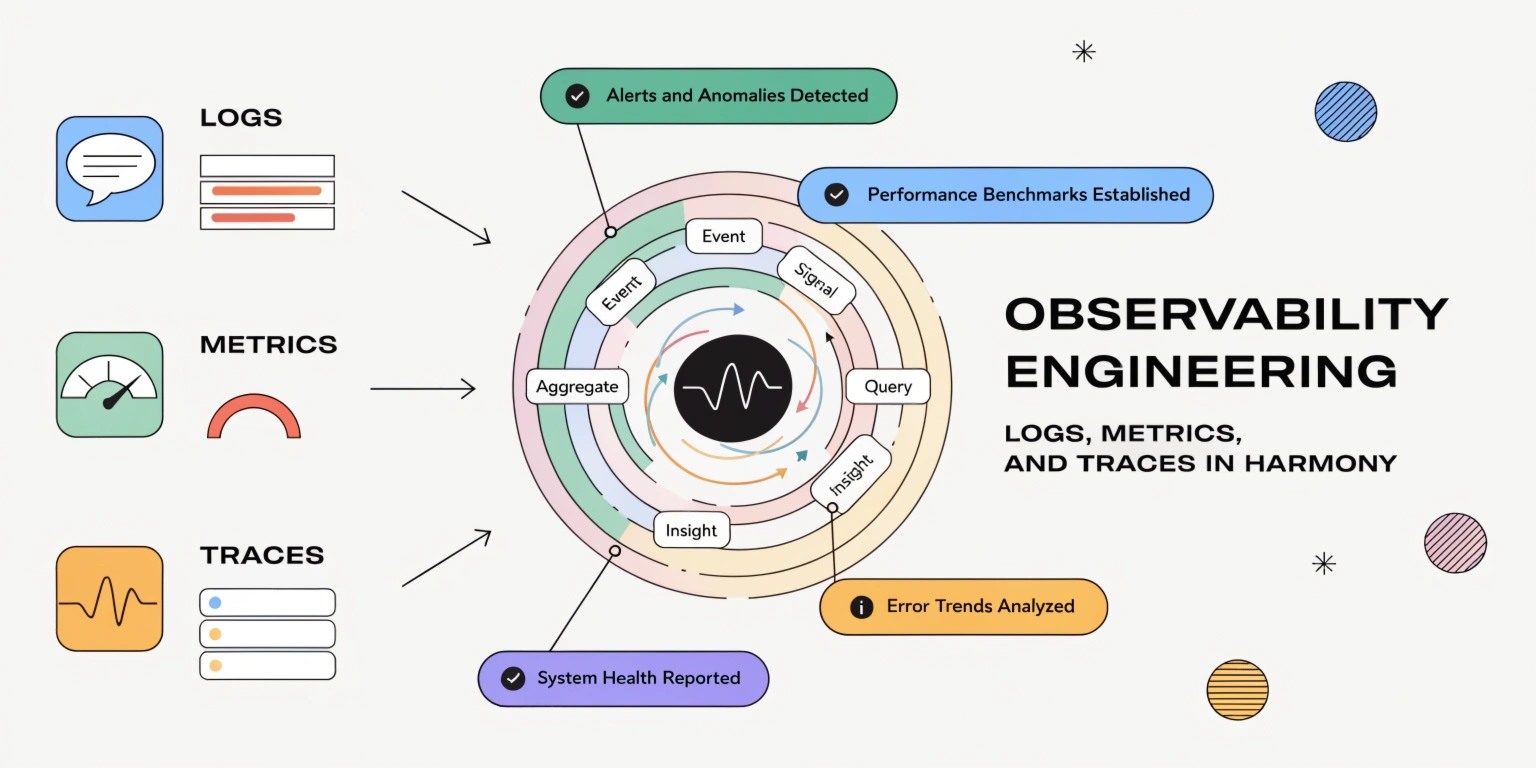
In today’s fast-paced digital landscape, applications are becoming increasingly complex, often built on distributed architectures such as microservices and cloud-native platforms. As systems grow in complexity, traditional monitoring approaches are no longer sufficient to understand system behavior or diagnose issues effectively. This is where observability engineering comes into play, offering a more comprehensive way to gain insights into application performance and reliability.
Observability is the ability to understand the internal state of a system based on the data it produces. It goes beyond simple monitoring by enabling teams to ask questions about their systems without needing to predict every possible failure in advance. The foundation of observability lies in three core pillars: logs, metrics, and traces. When used together, these elements provide a complete picture of how a system operates.
Logs are detailed records of events that occur within a system. They capture specific actions, errors, and system messages, providing granular information about what happened at a particular point in time. Logs are essential for debugging because they offer context and help developers trace the root cause of issues. However, logs alone can be overwhelming due to their volume and lack of structure, making it difficult to extract meaningful insights without proper tools and strategies.
Metrics, on the other hand, are numerical representations of system performance over time. They provide aggregated data such as CPU usage, memory consumption, request rates, and error counts. Metrics are highly useful for identifying trends, setting alerts, and monitoring the overall health of a system. Unlike logs, metrics are lightweight and easy to visualize, making them ideal for dashboards and real-time monitoring. However, they lack the detailed context needed for deep troubleshooting.
Traces complete the observability trio by showing how requests flow through different parts of a system. In distributed architectures, a single user request may pass through multiple services, databases, and APIs. Tracing captures this journey, allowing teams to understand dependencies, identify bottlenecks, and pinpoint performance issues. Traces provide a high-level view of system interactions while also enabling drill-down into specific operations.
The true power of observability engineering lies in the integration of logs, metrics, and traces. When these three components are combined, they create a unified system that offers both breadth and depth of insight. For example, a spike in metrics may indicate a performance issue, traces can help identify which service is causing the problem, and logs can provide detailed information about the error. This interconnected approach allows teams to diagnose and resolve issues more efficiently.
Implementing observability requires more than just collecting data; it involves designing systems that generate meaningful and actionable information. This includes standardizing logging formats, defining relevant metrics, and instrumenting applications for tracing. It also requires the use of tools and platforms that can aggregate, visualize, and analyze data effectively. A well-designed observability strategy ensures that teams can quickly detect anomalies and respond to incidents before they impact users.
Another important aspect of observability is its role in proactive system management. Instead of reacting to issues after they occur, teams can use observability data to predict potential problems and optimize performance. This shift from reactive to proactive operations is crucial for maintaining high availability and delivering a seamless user experience.
Despite its benefits, observability engineering comes with challenges. Managing large volumes of data can be costly and complex. Teams must balance the need for detailed insights with storage and processing constraints. Additionally, implementing observability requires a cultural shift, as teams need to adopt new practices and tools.
In conclusion, observability engineering is an essential practice for modern software development. By bringing together logs, metrics, and traces, it provides a holistic view of system behavior, enabling teams to monitor, troubleshoot, and optimize applications effectively. As systems continue to evolve, investing in observability will be key to ensuring reliability, performance, and user satisfaction.