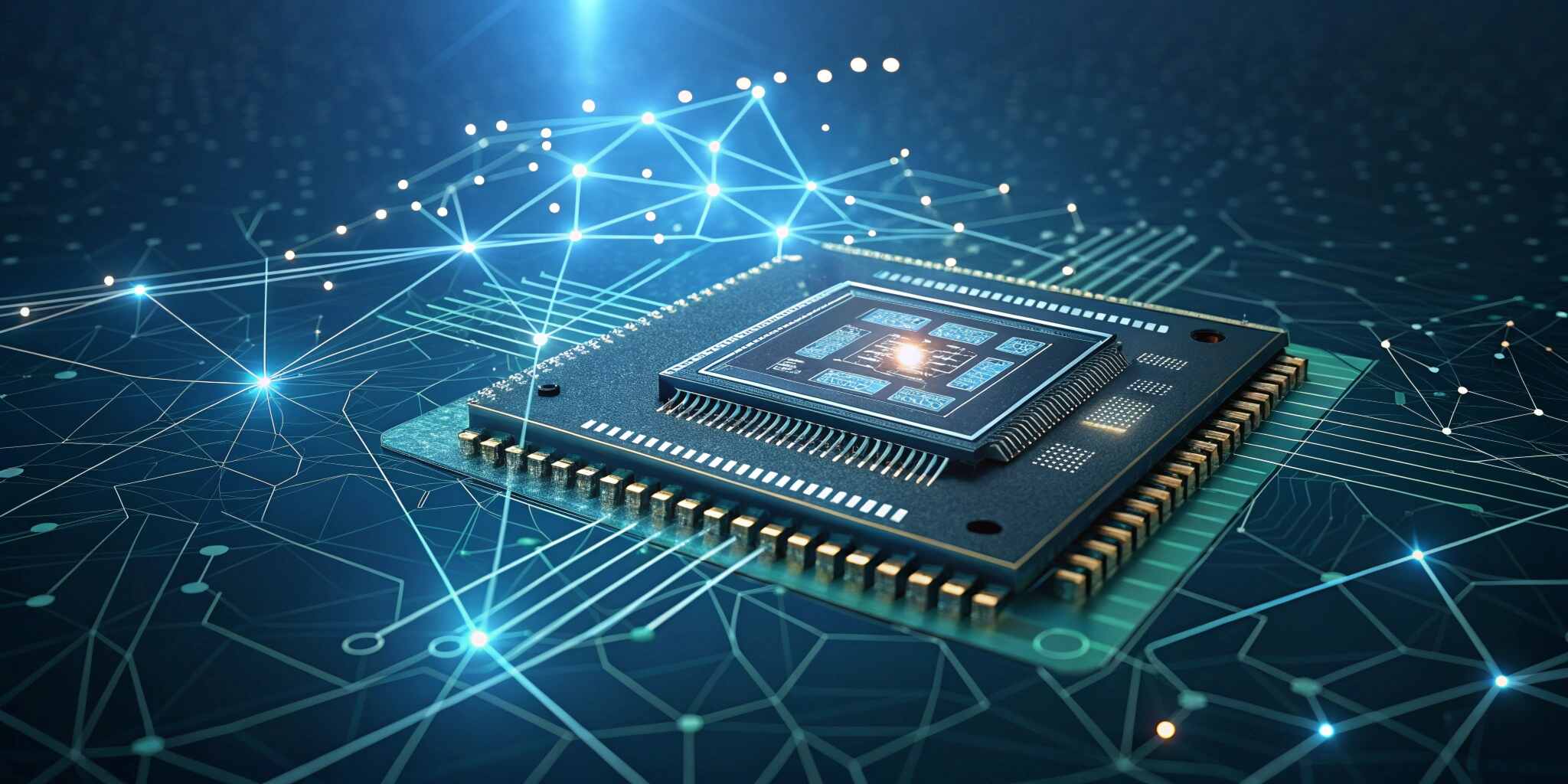
The explosive growth of artificial intelligence has driven demand for faster and more efficient computing infrastructure. Traditional silicon-based processors, including GPUs and TPUs, are reaching physical and thermal limits when training massive deep learning models such as large language models (LLMs) and transformer architectures. As AI scales beyond trillions of parameters, the world is rapidly moving toward alternative acceleration technologies—one of the most promising being optical computing.
Optical computing uses light instead of electricity to perform data processing, enabling calculations to move at the speed of photons rather than electrons. By leveraging photonic circuits, optical processors can perform matrix multiplications—the core of neural networks—extremely fast and with minimal energy. This innovation positions optical computing as a breakthrough solution to the AI hardware bottleneck.
What Is Optical Computing?
Optical computing, also known as photonic computing, is based on the principle that light waves can encode information and process data using optical components such as lasers, waveguides, and modulators. Unlike electronic circuits that generate heat and require expensive cooling systems, photonic circuits transmit and manipulate data without physical resistance.
This architecture is particularly ideal for AI workloads because neural network operations rely heavily on linear algebra calculations, which optical devices can perform in parallel with ultra-high speed.
Why Optical Computing Matters for AI
1. Extreme Processing Speed
Photons travel faster than electrons and can process multiple data streams simultaneously. Optical AI processors can deliver significant performance improvements compared to the fastest GPUs.
2. Reduced Energy Consumption
Training modern AI models consumes enormous power. Photonic chips can cut energy use by up to 90%, making AI scaling more sustainable.
3. High Parallelism
Optical systems perform massively parallel operations naturally, accelerating deep learning computation, especially matrix multiplications.
4. Lower Heat Generation
Minimal heat output reduces the need for advanced cooling setups and data center energy waste.
5. Potential to Break Silicon Limits
As Moore’s Law slows, optical computing offers a path forward beyond transistor scaling.
Real-World Applications and Industry Adoption
Optical computing is gaining momentum in both enterprise and research ecosystems:
- Generative AI Model Training: Accelerates large-scale model training for LLMs, diffusion models, and multimodal AI systems.
- High-Performance Computing (HPC): Enhances scientific simulation and data-intensive workflows.
- Edge AI Devices: Enables low-power, high-speed inference for robotics, drones, and autonomous vehicles.
- Telecom and Networking: Improves bandwidth and latency for data transfer and 5G edge computing.
- Biotechnology & Medical Imaging: Boosts real-time analysis speeds for diagnostics and computational biology.
Companies leading the optical computing revolution include startups developing photonic AI chips and cloud providers exploring hybrid GPU-photonic clusters.
Challenges and Limitations
Despite breakthroughs, optical computing faces hurdles such as:
- Manufacturing complexity and high production cost
- Difficulty integrating optical and electronic components on single chips
- Lack of mature development frameworks and programming tools
- Limited availability of commercial-scale deployments
However, rapid technological progress in silicon photonics, waveguide integration, and calibration systems is accelerating real-world viability.
The Future of AI with Optical Computing
Over the next decade, AI infrastructure will likely evolve into a hybrid architecture combining photonic accelerators for linear algebra with digital processors for logic operations. As demand for advanced AI models continues to surge, optical computing may become a mainstream solution powering future datacenters, enabling breakthroughs previously constrained by hardware limitations.
In a world driven by intelligence, speed is everything—and optical computing may be the technology that pushes AI beyond its current limits.