Every software agency eventually faces the same question:
Should we chase clients, or should clients come to us?
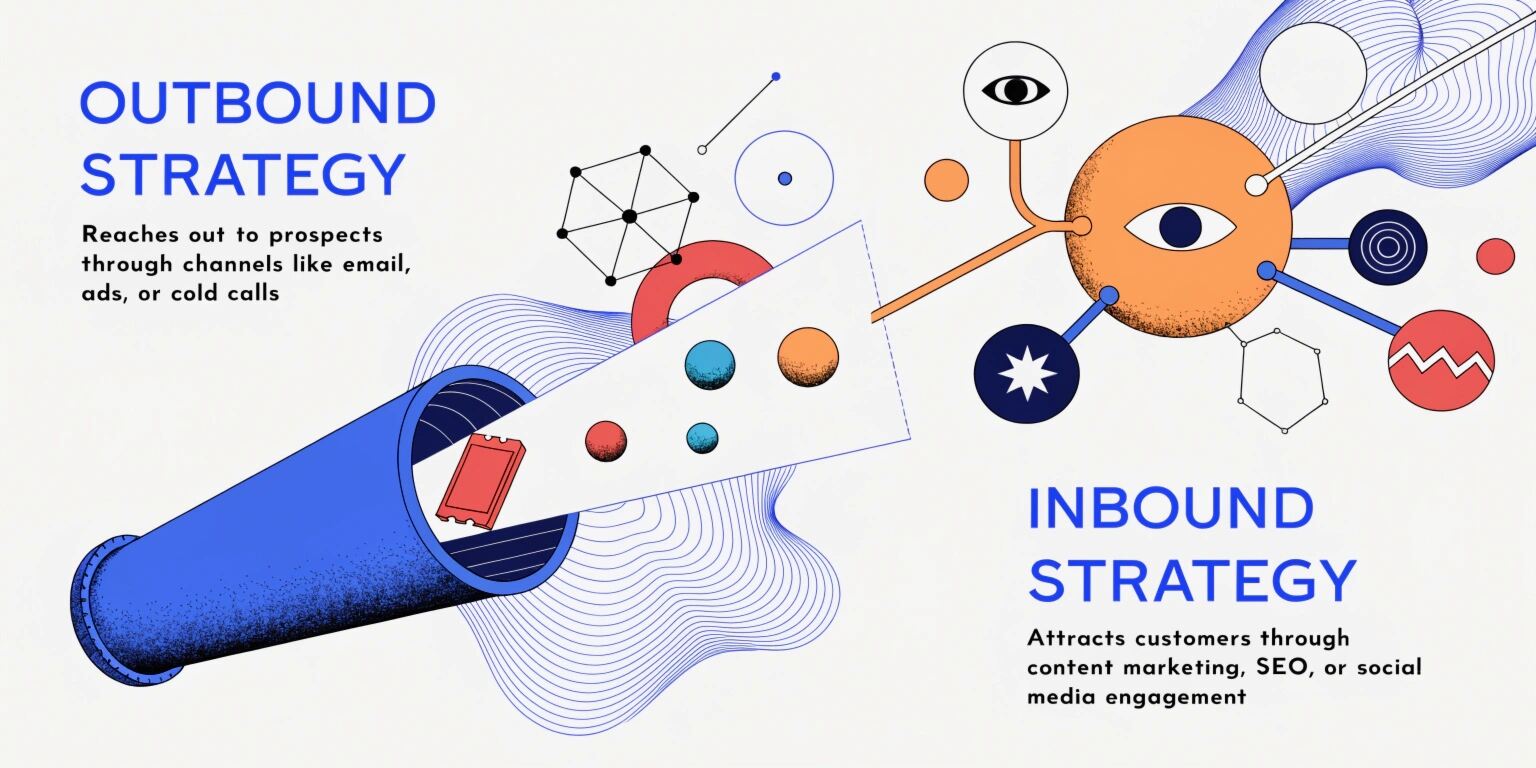
This is the fundamental difference between outbound and inbound strategies. Both approaches generate leads, but they operate differently, require different investments, and produce different long-term outcomes.
For software agencies offering web development, mobile apps, SaaS, AI solutions, or enterprise systems, choosing the right growth model can significantly impact revenue stability and scalability.
Let’s break it down clearly.
What is Outbound Strategy?
Outbound strategy means actively reaching out to potential clients.
You initiate the conversation.
Common Outbound Channels:
- Cold emails
- LinkedIn outreach
- Cold calling
- Paid ads
- Upwork/Freelance platforms
- Direct sales team efforts
In outbound, you identify target companies and pitch your services.
Advantages of Outbound for Software Agencies
1. Faster Results
Outbound can generate leads within weeks. A well-targeted email campaign can produce meetings quickly.
2. Control Over Target Market
You choose:
- industry
- geography
- company size
- decision makers
This makes it easier to target high-ticket enterprise clients.
3. Predictable Pipeline (If Done Properly)
With consistent outreach volume, you can forecast meetings and proposals.
Limitations of Outbound
- Requires continuous effort
- Lower response rates
- Can damage brand if spammy
- Higher rejection frequency
- Depends heavily on sales team performance
Outbound works best when agencies need immediate cash flow or are early-stage.
What is Inbound Strategy?
Inbound strategy focuses on attracting clients through value.
Instead of pitching, you educate and build authority.
Common Inbound Channels:
- SEO blogs
- Case studies
- LinkedIn content
- YouTube videos
- Webinars
- Whitepapers
- Email newsletters
Prospects discover your expertise and contact you.
Advantages of Inbound for Software Agencies
1. Higher Lead Quality
Inbound leads are warmer. They already trust your expertise.
2. Long-Term Asset Creation
A blog post can generate traffic for years. Content compounds over time.
3. Brand Authority
Inbound builds positioning as an expert, not just a vendor.
4. Lower Sales Resistance
When clients approach you, closing becomes easier.
Limitations of Inbound
- Takes time (3–6 months minimum)
- Requires content consistency
- Needs SEO and marketing expertise
- Harder to control exact timing of leads
Inbound is ideal for agencies planning long-term positioning.
Cost Comparison
FactorOutboundInboundSpeedFastSlow initiallySustainabilityLowHighBrand AuthorityModerateHighLead QualityMediumHighEffort TypeSales-heavyMarketing-heavy
Outbound is transactional.
Inbound is strategic.
Which Strategy Works Better for Software Agencies?
The real answer is: both — but at different stages.
Early-Stage Agency
- Needs revenue quickly
- Limited portfolio
- Smaller marketing budget
Outbound works better here.
Cold outreach + freelance platforms help close first few clients.
Growth-Stage Agency
- Has case studies
- Clear niche
- Stable cash flow
Inbound becomes powerful.
SEO blogs, thought leadership, and LinkedIn positioning bring high-ticket clients.
Mature Agency
- Specialized in SaaS, AI, fintech, healthcare, etc.
- Strong brand
Hybrid model works best.
Outbound targets enterprise accounts.
Inbound builds authority and steady demand.
Strategic Combination Approach
The most successful agencies follow a layered model:
- Use outbound for immediate pipeline.
- Build inbound assets simultaneously.
- Use case studies from outbound clients as inbound content.
- Retarget website visitors with paid ads.
- Nurture leads with email marketing.
Outbound feeds revenue.
Inbound feeds reputation.
Practical Example
Imagine a mobile app development agency:
Outbound:
- Sends 500 cold emails/month
- Books 10 meetings
- Closes 2 deals
Inbound:
- Publishes 4 SEO blogs/month
- Ranks for “Fintech app development company”
- Gets 5 high-intent inquiries
Outbound brings volume.
Inbound brings authority.
Together, they stabilize revenue.
Common Mistakes
- Relying only on outbound
- Waiting for inbound without content consistency
- Not tracking metrics
- Ignoring niche positioning
- Spreading efforts across too many channels
Growth requires focus.
Key Metrics to Track
Outbound:
- Email open rate
- Response rate
- Meeting conversion
- Cost per acquisition
Inbound:
- Organic traffic
- Conversion rate
- Content engagement
- Lead quality score
Without tracking, strategy becomes guesswork.
Final Thoughts
Outbound and inbound are not competitors — they are complementary tools.
Outbound gives speed.
Inbound gives sustainability.
Software agencies that rely solely on outbound risk burnout and inconsistent pipelines. Agencies that rely only on inbound risk slow growth.
The smartest approach is phased integration.
In the end, the goal is not just client acquisition — it is predictable, scalable, and authority-driven growth.
Choose the right mix based on your stage, resources, and long-term vision.