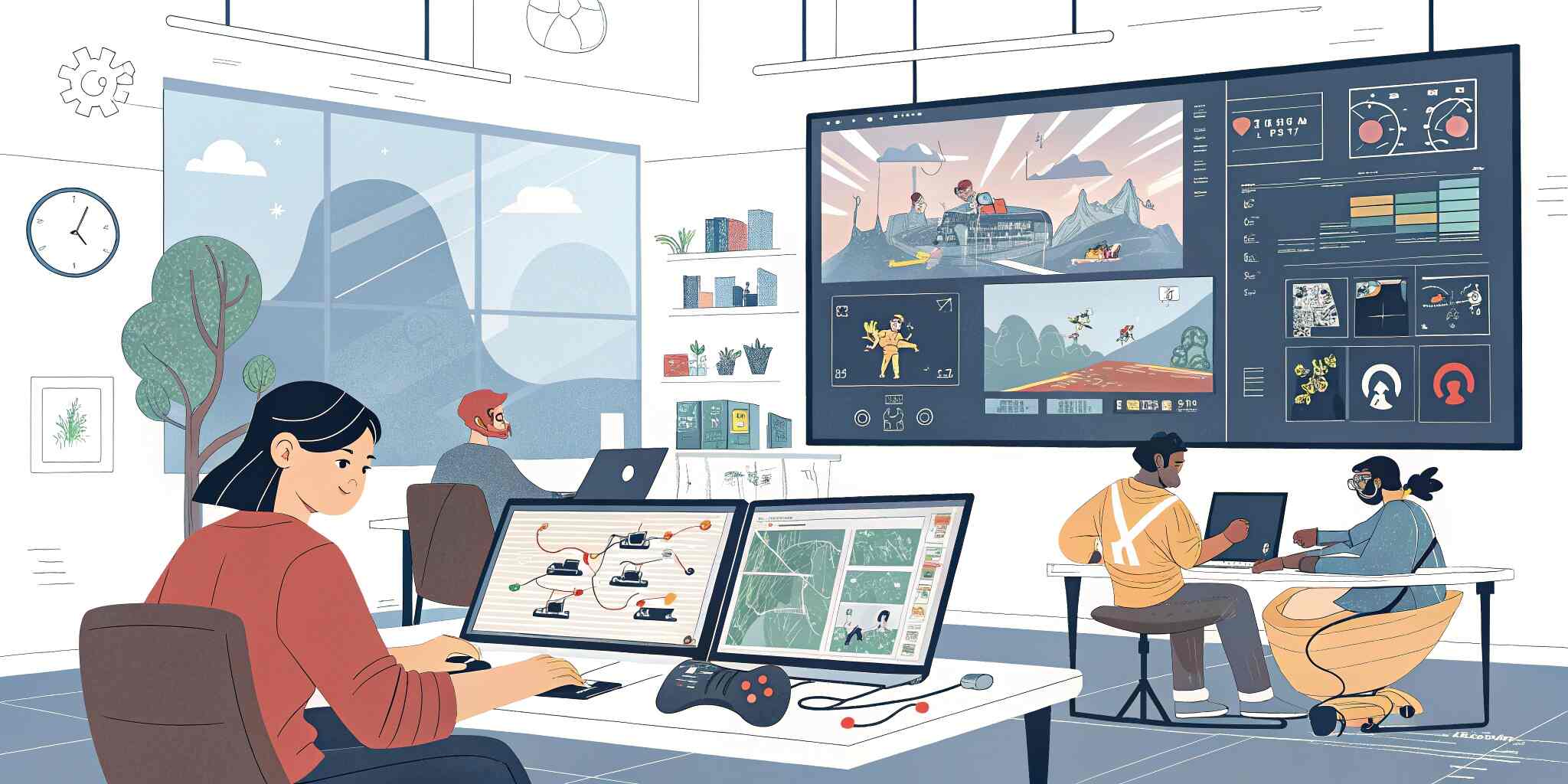
The scale of open-world games has rapidly expanded from small sandbox maps to entire planets. Games like No Man’s Sky, Starfield, and procedural survival games generate massive terrains that span thousands of square kilometers. However, while rendering and streaming technologies continue to evolve, one critical challenge persists: how do AI characters navigate worlds that are practically endless?
Traditional A* search and grid-based navmeshes struggle with exponential growth in nodes. Pathfinding that once took milliseconds now can take seconds — unacceptable for real-time gameplay. The solution pushing game AI forward is Hierarchical Graph Pathfinding — a multilayer navigation strategy that scales with environment size while preserving responsiveness.
Why Traditional Pathfinding Fails at Scale
Conventional navmeshes work well for compact levels, but at planetary scale they face:
ChallengeImpactExcessive graph sizeHigh memory usageLong search timesPoor gameplay responsivenessEntire map loaded for navigationStreaming bottlenecksNo abstractionDifficult to support long-distance path planning
When an NPC must travel 200 km across a continent, a flat algorithm like A* must evaluate millions of nodes. Hierarchical methods restructure this problem to be solved step-by-step using abstractions.
Hierarchical Graph Pathfinding: How It Works
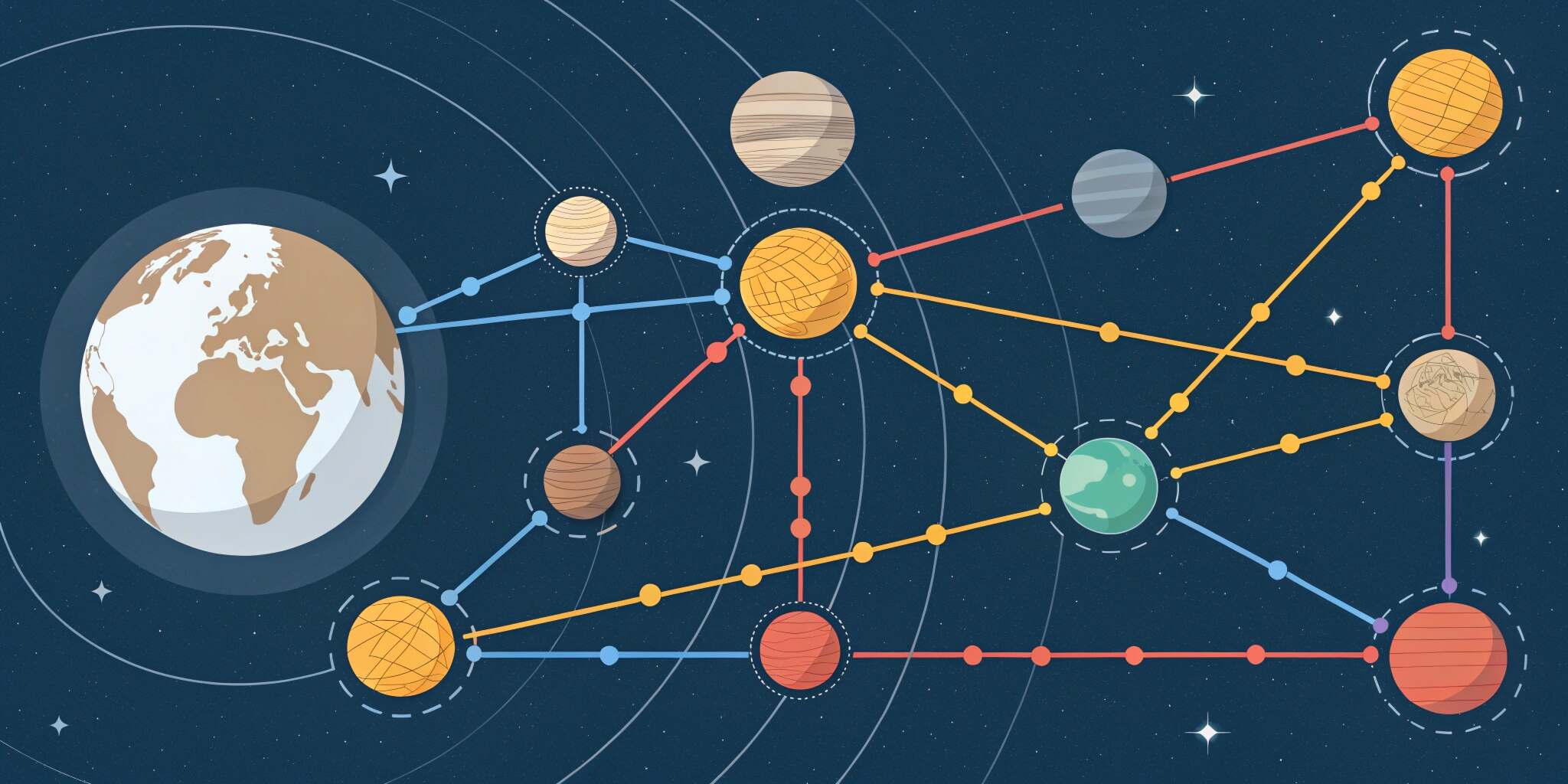
Hierarchical models break the world into multiple navigation layers:
- Local Zone Graph
- Fine-grained navmesh
- Handles obstacles, real-time local movement
- Regional Graph
- Clusters several zones
- Faster mid-distance planning
- Global Graph
- Represents continents, planets, or star systems
- Approximate long-distance routes first
A typical path follows this process:
- Long-range path decided in global graph (fast)
- Path refined in regional graph
- Exact local navigation resolved near the character
This reduces search depth drastically, keeping processing time consistent even as worlds grow larger.
Techniques Enhancing Planetary Navigation
TechniqueAdvantageDynamic Graph StreamingLoads only necessary navigation chunksGPU-accelerated pathfindingMassively parallel node evaluationProcedural Graph GenerationInfinite worlds without baked dataCost-aware multi-modal routingVehicle, flight, climbing modes
Navigation chunks are streamed similarly to terrain LOD — allowing players and NPCs to explore freely without overwhelming memory.
Handling Dynamic Worlds
Real planetary environments are never static:
✔ Player builds structures
✔ Weather can flood routes
✔ Enemies destroy terrain
Hierarchical graphs support dynamic edge updates, adjusting connectivity without recalculating the whole mesh. Localized recalculations ensure NPCs remain intelligent and reactive.
Pathfinding = Immersion
Navigation choices define player experience:
- NPCs taking realistic roads instead of straight-line teleportation
- Wildlife migrating across continents
- Factions launching large-scale coordinated movements
- Multiplayer players tracking and intercepting enemies naturally
Hierarchical pathfinding allows world simulation at grand scale, enriching gameplay narrative.
Where the Future Is Headed
Game engines are evolving toward:
🚀 Real-time planetary navigation on GPUs
🤖 Integration with ML-based movement prediction
🌍 Cross-planet & interstellar pathfinding in space games
🧠 LLM-driven agent decisions layered on navigation graphs
As AI becomes more emotionally aware and goal-driven, navigation systems must support living, breathing civilizations in ever-expanding virtual worlds.
Key Benefits
- Fast long-distance path computation
- Efficient memory usage for massive terrains
- Adaptive to real-time environment changes
- Better crowd simulation and AI autonomy
Hierarchical graph systems ensure navigation remains a feature, not a bottleneck, as game worlds reach planetary — even galactic — scale.