Main Content :
Introduction
For years, software architects followed a simple rule: choose one database and stick to it. Whether it was a relational database like MySQL or PostgreSQL, the idea was to centralize all application data in a single system.
However, modern applications are no longer simple. With microservices, cloud-native development, real-time analytics, and AI-driven features, one database solution often cannot efficiently handle every requirement. This is where polyglot persistence comes into play.
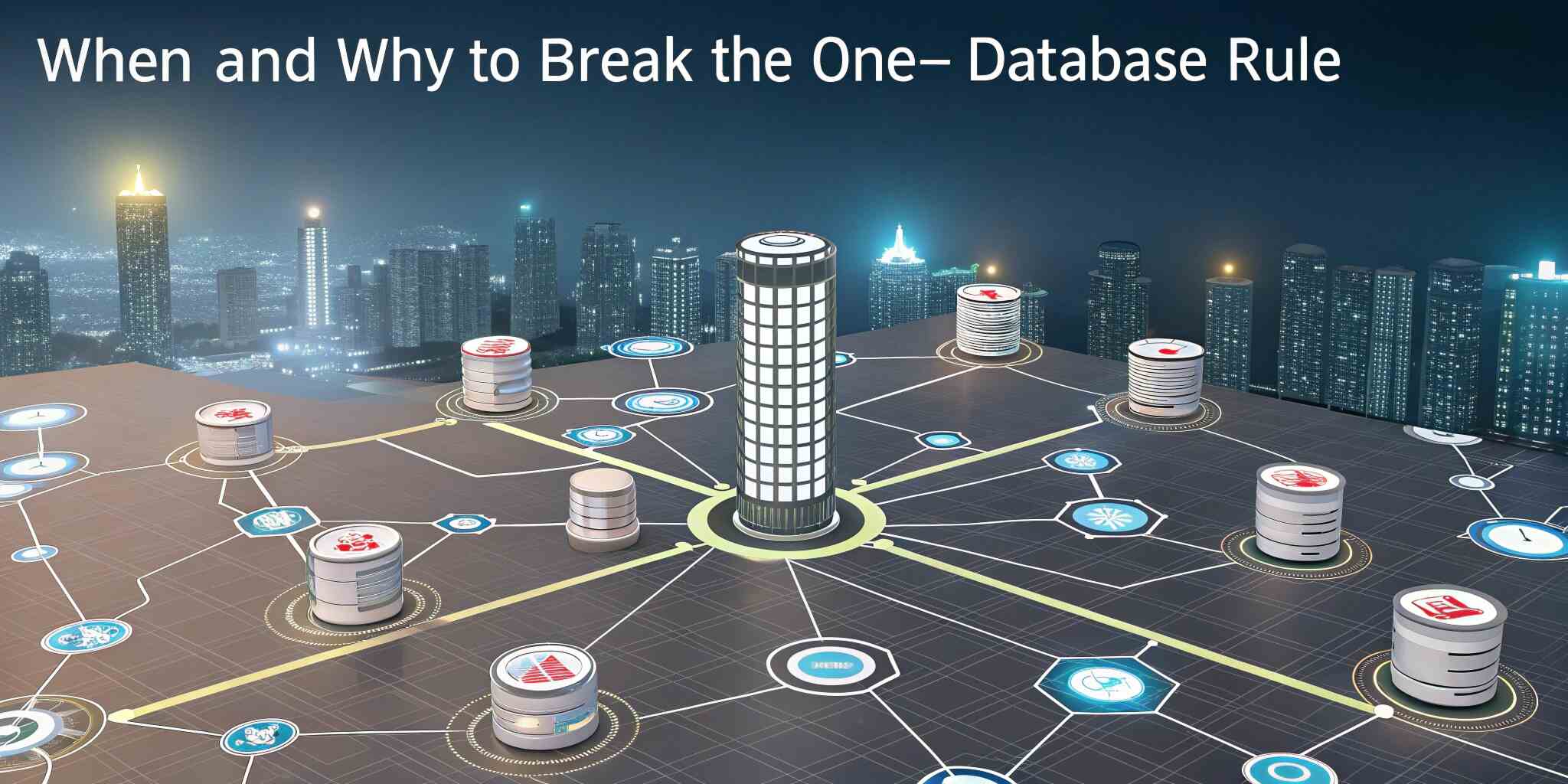
Polyglot persistence is the concept of using multiple data storage technologies within a single application, choosing the best database for each specific need rather than forcing one solution to handle everything.
Why the One-Database Rule Exists
Traditionally, organizations preferred a single database because:
- It simplified management and maintenance
- Reduced operational complexity
- Ensured consistent data models
- Lowered infrastructure costs
- Required fewer specialized skills
Relational databases dominated because they provided strong consistency, ACID compliance, and structured query capabilities.
But as applications grew in scale and complexity, limitations began to appear.
What Is Polyglot Persistence?
Polyglot persistence means using different types of databases for different components of your system. For example:
- A relational database for transactional data
- A NoSQL document store for flexible content
- A graph database for relationships
- A time-series database for analytics
- A caching system for performance
Instead of forcing relational tables to store everything, architects select technologies optimized for specific workloads.
When Should You Break the Rule?
Polyglot persistence is not always necessary. It becomes valuable in specific situations.
1. When Performance Requirements Differ
If your application handles:
- High-volume transactional data
- Real-time messaging
- Complex relationship queries
- Large-scale analytics
A single database may struggle to optimize all workloads efficiently.
Example:
- Use PostgreSQL for financial transactions.
- Use Elasticsearch for fast search capabilities.
- Use Redis for caching sessions.
Each database serves a purpose.
2. In Microservices Architecture
Microservices architecture promotes loosely coupled services. Each service can own its database.
For example:
- User Service → Relational database
- Product Catalog → Document database
- Recommendation Engine → Graph database
This improves independence, scalability, and deployment flexibility.
3. Handling Unstructured or Semi-Structured Data
Modern applications store:
- JSON documents
- Images
- Logs
- User-generated content
Relational databases can store such data, but not efficiently at scale. Document stores like MongoDB or object storage systems may perform better.
4. Big Data and Analytics Needs
Analytics workloads require:
- Large-scale aggregation
- Fast read-heavy operations
- Distributed processing
Instead of overloading your primary database, using a separate analytics database improves performance and reliability.
Benefits of Polyglot Persistence
1. Optimized Performance
Each database is used for what it does best.
2. Better Scalability
You can scale components independently.
3. Improved Flexibility
Teams can adopt technologies suited to specific problems.
4. Resilience
If one database faces issues, others remain unaffected.
5. Faster Innovation
Teams can experiment with new storage solutions without affecting the entire system.
Challenges and Risks
Breaking the rule comes with trade-offs:
- Increased operational complexity
- Multiple backup strategies
- Data synchronization challenges
- More monitoring requirements
- Higher infrastructure costs
Without proper architecture planning, polyglot persistence can create chaos instead of flexibility.
Best Practices
If you decide to adopt polyglot persistence:
- Start with clear use cases.
- Avoid introducing multiple databases without justification.
- Maintain clear data ownership boundaries.
- Implement strong monitoring and observability.
- Document architecture decisions thoroughly.
Remember: complexity should serve business value.
Real-World Example Scenario
Consider an e-commerce platform:
- Orders → Relational database (ACID compliance)
- Product search → Search engine database
- User sessions → In-memory cache
- Recommendations → Graph database
- Analytics dashboard → Data warehouse
This separation ensures each system performs optimally.
Conclusion
Polyglot persistence challenges the traditional one-database mindset. In modern distributed systems, flexibility and performance often outweigh simplicity.
However, breaking the rule should be intentional, not trendy. Start simple. Adopt multiple databases only when scaling demands it.
The goal is not to use many databases. The goal is to use the right database for the right job.
When implemented strategically, polyglot persistence becomes a powerful tool for building scalable, high-performance applications in today’s complex digital landscape.