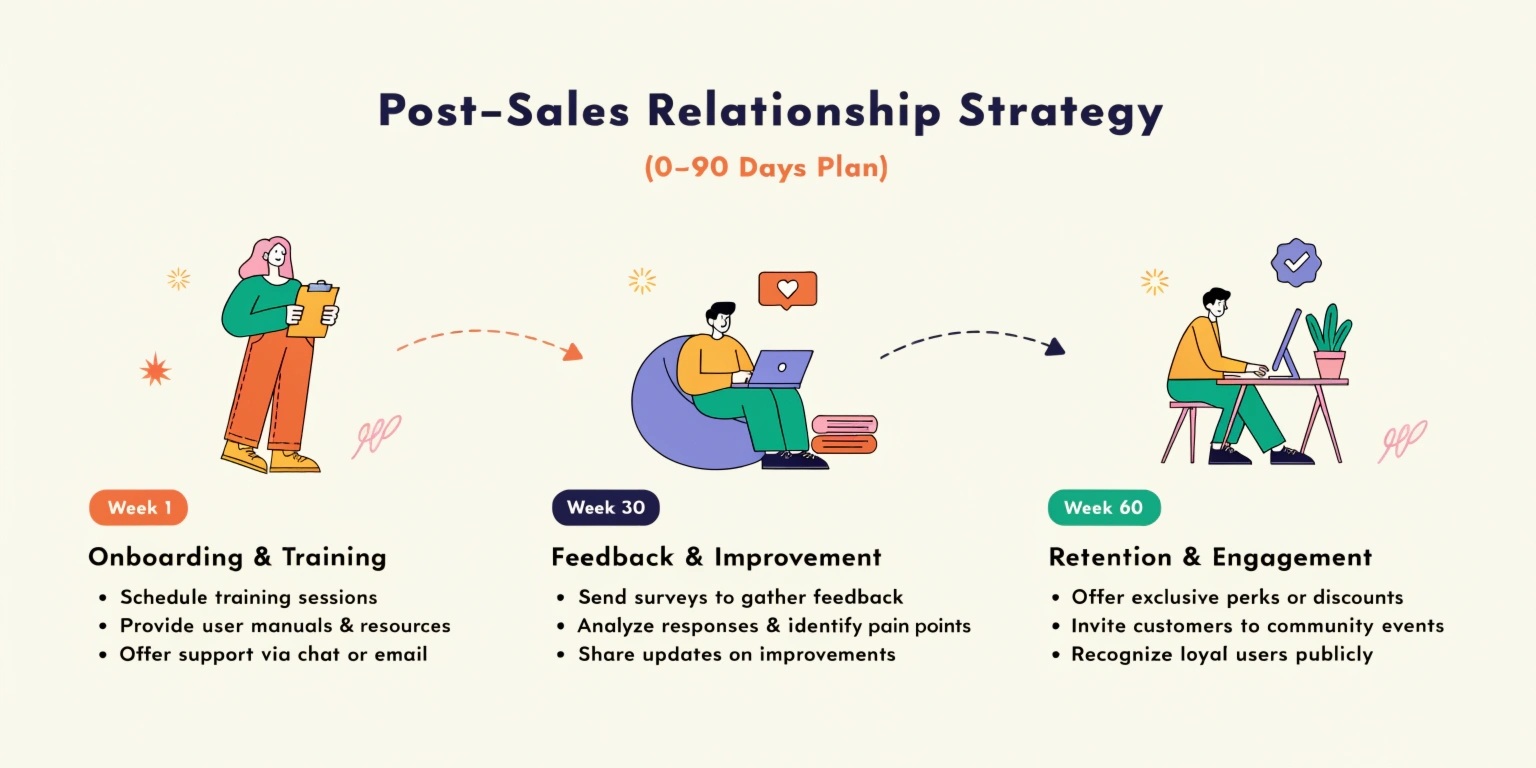
Closing a software development deal is a significant achievement, but it marks the beginning—not the end—of the client relationship. Many software agencies focus heavily on lead generation and sales while overlooking the importance of post-sales engagement. Without a structured relationship strategy, clients may feel unsupported, leading to dissatisfaction, poor retention, and missed opportunities for upselling or referrals.
A well-defined 0–90 days post-sales relationship plan ensures clients receive consistent communication, clear expectations, and measurable value from the start. This period is critical because first impressions during project execution often determine whether a client becomes a long-term partner or a one-time customer.
This guide outlines a practical post-sales strategy that software agencies can use to improve customer satisfaction, strengthen relationships, and maximize lifetime value.
Why the First 90 Days Matter
The first three months establish the foundation of trust between the client and the agency. During this period, clients evaluate:
- Communication quality
- Project organization
- Team responsiveness
- Technical expertise
- Delivery consistency
- Transparency
- Problem-solving capabilities
Positive experiences during these early stages significantly improve retention and increase the likelihood of future collaborations.
Days 0–30: Client Onboarding and Trust Building
The first month should focus on creating a smooth onboarding experience and aligning expectations.
Kickoff Meeting
Conduct a project kickoff meeting involving key stakeholders from both teams. Discuss:
- Business objectives
- Project scope
- Timelines
- Deliverables
- Success metrics
- Communication channels
- Roles and responsibilities
This ensures everyone starts with a shared understanding of the project.
Documentation
Provide essential documents, including:
- Project roadmap
- Timeline
- Communication plan
- Technical documentation
- Access credentials
- Meeting schedules
Organized documentation reduces confusion and improves collaboration.
Introduce the Team
Clients appreciate knowing who is responsible for different aspects of the project. Introduce:
- Project Manager
- Developers
- Designers
- QA Engineers
- Business Analyst
- Customer Success Manager
This builds familiarity and confidence.
Establish Communication
Define communication expectations such as:
- Weekly progress meetings
- Daily updates (if required)
- Response time commitments
- Preferred communication tools
- Escalation procedures
Consistency is essential for building trust.
Days 31–60: Deliver Early Value
Once onboarding is complete, the focus shifts toward demonstrating measurable progress.
Share Progress Regularly
Provide updates that include:
- Completed milestones
- Upcoming tasks
- Risks and challenges
- Timeline adjustments
- Budget status
Transparent reporting reassures clients that the project is moving forward.
Gather Client Feedback
Schedule regular feedback sessions to understand:
- Client satisfaction
- Pain points
- Improvement suggestions
- New requirements
- Business priorities
Addressing concerns early prevents larger issues later.
Demonstrate Business Impact
Instead of discussing only technical progress, highlight business outcomes such as:
- Improved efficiency
- Cost savings
- Faster processes
- Better user experience
- Increased scalability
Clients value results more than technical details.
Days 61–90: Strengthen the Partnership
By the third month, the relationship should evolve from vendor-client to strategic partnership.
Conduct a Performance Review
Review project performance against agreed objectives.
Discuss:
- Completed milestones
- KPIs achieved
- Remaining tasks
- Lessons learned
- Client satisfaction
This creates transparency and demonstrates accountability.
Identify Growth Opportunities
As trust grows, explore additional ways to support the client.
Potential opportunities include:
- Mobile application development
- Website enhancements
- AI-powered features
- Cloud migration
- Performance optimization
- Maintenance and support
- Security audits
- Digital marketing services
These discussions should focus on solving business challenges rather than making aggressive sales pitches.
Request Testimonials and Referrals
Satisfied clients are often willing to:
- Write testimonials
- Participate in case studies
- Refer other businesses
- Provide online reviews
Positive social proof strengthens your agency's reputation and supports future sales efforts.
Best Practices for Post-Sales Relationship Management
Successful software agencies consistently follow these practices:
Maintain Proactive Communication
Don't wait for clients to report problems.
Instead:
- Share regular updates.
- Notify them of risks early.
- Offer recommendations.
- Celebrate milestones.
Proactive communication demonstrates professionalism.
Assign a Dedicated Customer Success Manager
Having a single point of contact simplifies communication and ensures accountability.
The Customer Success Manager should:
- Monitor client satisfaction
- Coordinate internal teams
- Resolve issues
- Schedule reviews
- Identify expansion opportunities
Monitor Customer Health
Track indicators such as:
- Meeting participation
- Feature adoption
- Support requests
- Feedback scores
- Project engagement
- Response times
Customer health monitoring helps identify at-risk accounts before problems escalate.
Use CRM for Relationship Tracking
A CRM system helps manage:
- Client interactions
- Meeting notes
- Follow-up reminders
- Renewal dates
- Support history
- Upselling opportunities
Centralized information improves service quality across teams.
Key Metrics to Measure Success
Evaluate your post-sales strategy using metrics like:
- Customer Satisfaction Score (CSAT)
- Net Promoter Score (NPS)
- Client retention rate
- Renewal rate
- Customer Lifetime Value (CLV)
- Average response time
- Project milestone completion
- Upsell conversion rate
- Referral rate
- Support ticket resolution time
These KPIs provide insight into relationship quality and long-term success.
Common Mistakes to Avoid
Avoid these common post-sales pitfalls:
- Disappearing after project kickoff
- Poor communication
- Delayed responses
- Ignoring feedback
- Lack of documentation
- Overpromising and underdelivering
- Treating every client the same
- Focusing only on new sales instead of customer success
Strong post-sales relationships require continuous attention and genuine commitment.
The Role of Automation and AI
Modern customer success platforms use AI to enhance post-sales management through:
- Automated follow-up reminders
- Customer health scoring
- Predictive churn analysis
- Personalized communication
- Meeting scheduling
- Feedback analysis
- Renewal alerts
- Upsell recommendations
Automation reduces administrative work while ensuring no important client interaction is overlooked.
Conclusion
The first 90 days after closing a deal are among the most influential stages in the client journey. A structured post-sales relationship strategy helps software agencies build trust, deliver consistent value, and establish lasting partnerships. By focusing on smooth onboarding, transparent communication, measurable outcomes, and proactive customer success, agencies can improve retention, encourage referrals, and uncover new growth opportunities.
In today's competitive technology landscape, exceptional post-sales service is more than a support function—it is a strategic advantage. Agencies that invest in long-term client relationships are better positioned to achieve sustainable growth, higher customer lifetime value, and a reputation for reliability and excellence.