Introduction
The digital landscape has evolved significantly over the past decade, with businesses collecting vast amounts of user data through mobile and web applications. However, simply gathering data is no longer enough. Organizations now seek actionable insights that can predict future outcomes and user behavior. This is where predictive analytics plays a critical role.
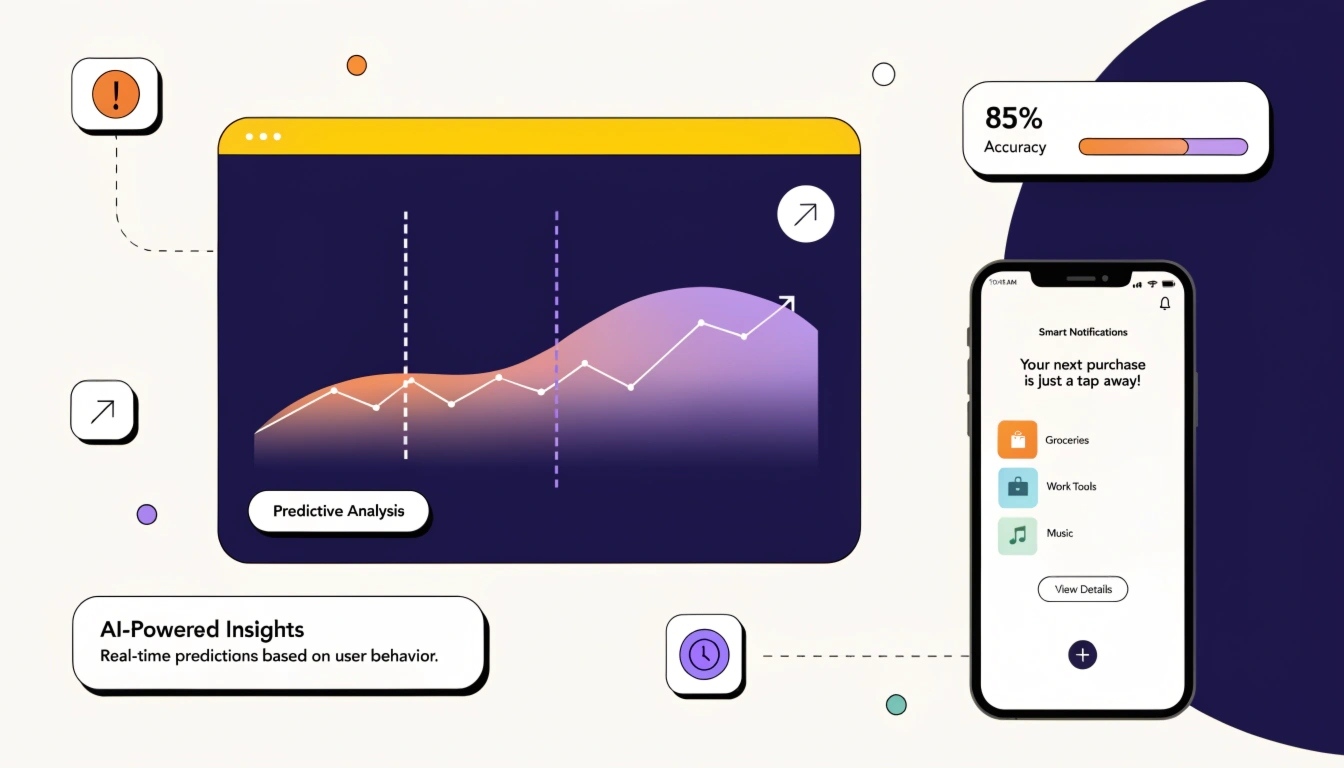
Predictive analytics combines historical data, statistical algorithms, artificial intelligence, and machine learning techniques to forecast future events and trends. By analyzing patterns within user interactions, businesses can make proactive decisions that improve customer satisfaction and increase profitability.
Today, predictive analytics has become a core component of modern mobile and web application development, helping organizations deliver intelligent and personalized experiences.
What is Predictive Analytics?
Predictive analytics is the process of using historical and real-time data to predict future outcomes. It involves collecting data, identifying patterns, building predictive models, and generating forecasts that support business decision-making.
Modern predictive analytics solutions utilize technologies such as:
- Machine Learning
- Artificial Intelligence
- Data Mining
- Statistical Modeling
- Big Data Processing
- Natural Language Processing
These technologies enable applications to continuously learn from user interactions and improve prediction accuracy over time.
Importance of Predictive Analytics in Mobile & Web Applications
As competition increases across digital platforms, businesses need smarter ways to engage users and improve retention. Predictive analytics provides valuable insights that help organizations:
- Understand customer behavior
- Deliver personalized content
- Reduce customer churn
- Increase conversion rates
- Improve operational efficiency
- Optimize marketing campaigns
- Enhance customer satisfaction
Applications powered by predictive analytics can anticipate user needs before users explicitly express them.
Key Applications of Predictive Analytics
1. Personalized Recommendations
One of the most common applications of predictive analytics is recommendation systems.
Streaming platforms, eCommerce websites, and mobile applications analyze user activity, preferences, search history, and purchasing behavior to recommend relevant products, services, or content.
Benefits include:
- Higher engagement
- Increased sales
- Better user satisfaction
- Improved retention rates
2. Customer Churn Prediction
Businesses invest significant resources in acquiring new customers. Predictive analytics helps identify users who are likely to stop using an application.
By analyzing factors such as:
- Login frequency
- Session duration
- Purchase behavior
- Support requests
Businesses can proactively engage at-risk users with targeted offers and retention strategies.
3. Fraud Detection and Security
Financial applications and eCommerce platforms use predictive models to identify suspicious activities before fraud occurs.
Predictive systems can detect:
- Unusual transaction patterns
- Account takeovers
- Payment fraud
- Security breaches
This helps organizations reduce financial losses and improve customer trust.
4. Dynamic Content Personalization
Modern applications leverage predictive analytics to customize user experiences in real time.
Examples include:
- Personalized homepages
- Customized notifications
- Targeted advertisements
- Smart content suggestions
Personalized experiences significantly increase engagement and conversion rates.
5. Demand Forecasting
Businesses can predict future demand by analyzing market trends, seasonal patterns, and customer behavior.
This allows organizations to:
- Optimize inventory management
- Improve resource allocation
- Reduce operational costs
- Enhance supply chain efficiency
Benefits of Predictive Analytics
Improved User Experience
Predictive insights help applications deliver more relevant content and services, creating seamless user experiences.
Better Business Decisions
Data-driven forecasts enable organizations to make informed strategic decisions based on evidence rather than assumptions.
Increased Revenue
Personalized recommendations and targeted marketing campaigns improve conversion rates and customer lifetime value.
Enhanced Operational Efficiency
Businesses can optimize processes, reduce waste, and allocate resources more effectively through predictive forecasting.
Competitive Advantage
Organizations that leverage predictive analytics gain deeper customer insights and can respond faster to market changes.
Challenges in Implementing Predictive Analytics
Despite its benefits, predictive analytics implementation presents several challenges:
Data Quality Issues
Inaccurate, incomplete, or outdated data can negatively impact prediction accuracy.
Privacy and Security Concerns
Applications must comply with regulations such as GDPR and other data protection standards when handling user information.
Integration Complexity
Integrating predictive analytics into existing mobile and web platforms often requires advanced infrastructure and technical expertise.
Model Maintenance
Predictive models must be continuously updated and retrained to maintain effectiveness as user behavior evolves.
Future of Predictive Analytics
The future of predictive analytics is closely tied to advancements in artificial intelligence and machine learning.
Emerging trends include:
- Real-time predictive analytics
- Edge AI for mobile devices
- Hyper-personalization
- Predictive customer support
- Automated decision-making systems
- Generative AI integration
- Intelligent business automation
As computing power and data availability continue to increase, predictive analytics will become more accurate, accessible, and impactful across industries.
Conclusion
Predictive analytics is no longer a luxury feature but a strategic necessity for modern mobile and web applications. By transforming raw data into actionable insights, businesses can anticipate customer needs, improve engagement, reduce churn, and make smarter decisions.
Organizations that invest in predictive analytics today position themselves for long-term growth, innovation, and competitive advantage. As AI and machine learning technologies continue to evolve, predictive analytics will remain a driving force behind intelligent, user-centric digital experiences.