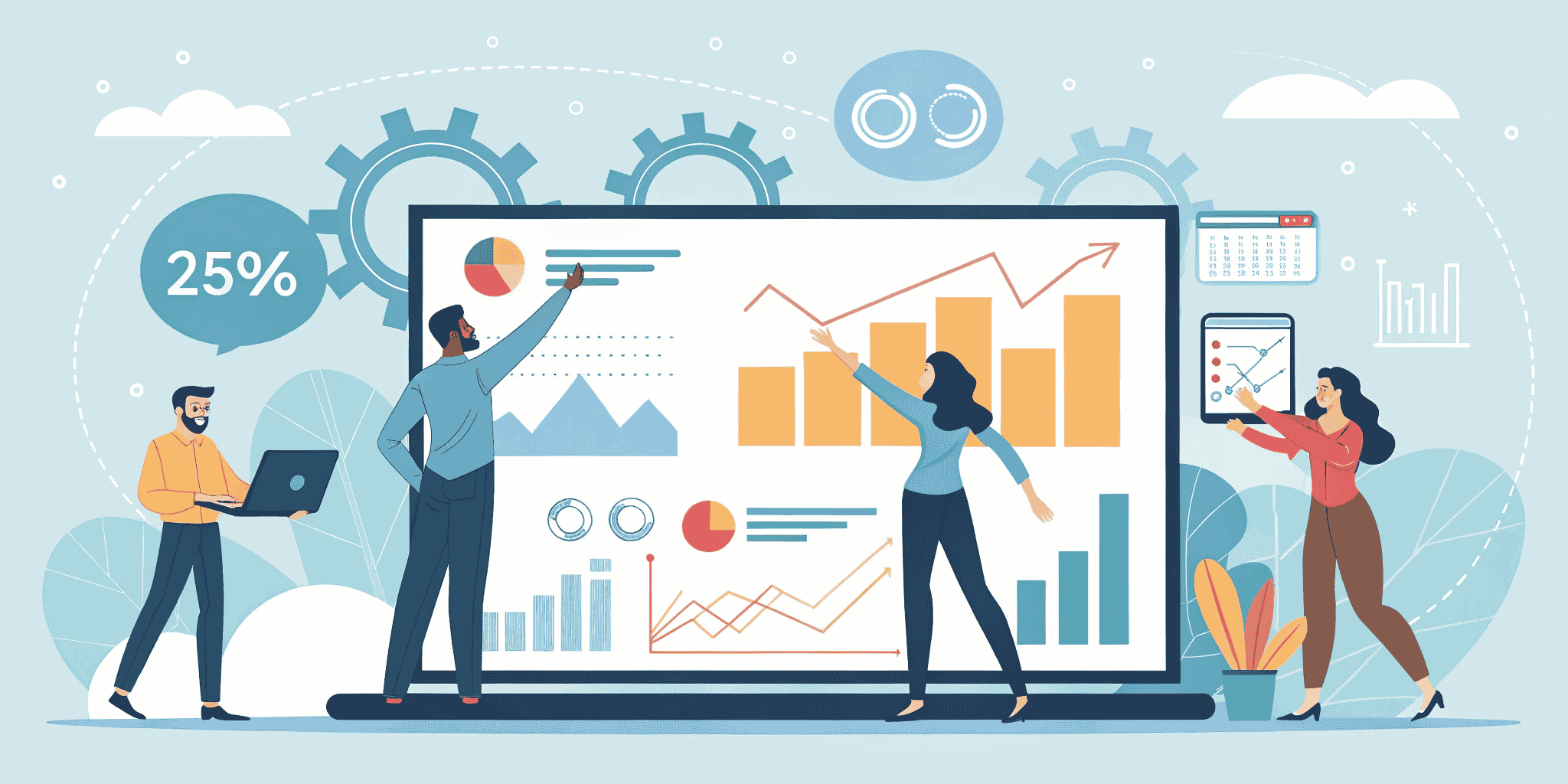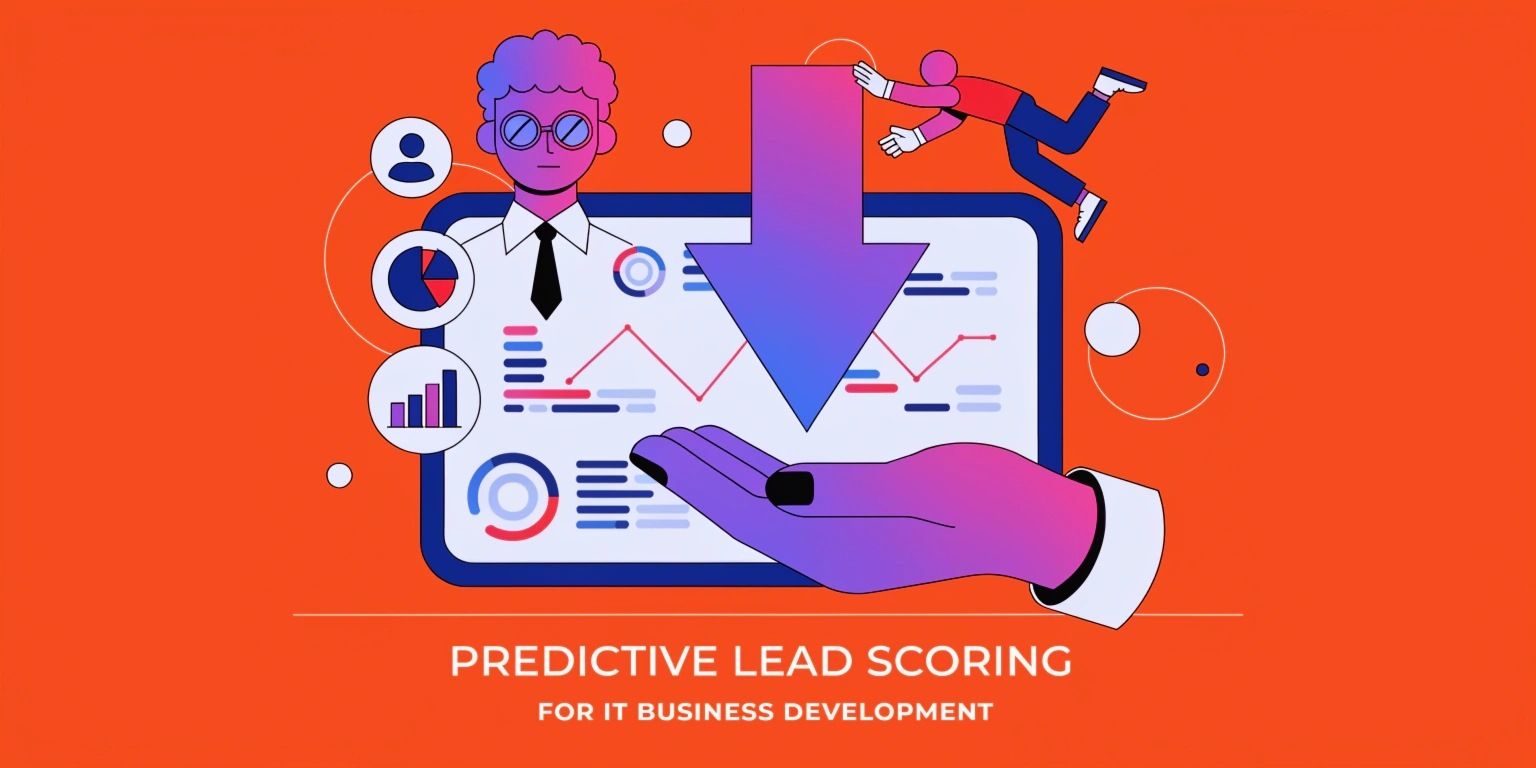
Business development in the IT industry has become increasingly competitive. Every day, sales teams interact with hundreds of prospects through websites, LinkedIn, email campaigns, webinars, referrals, and digital marketing channels. However, not every lead has the same potential to become a customer.
Traditional lead qualification methods often rely on manual judgment, generic scoring systems, or basic demographic information. While these methods provide some direction, they frequently result in wasted effort on low-quality leads while high-value opportunities remain overlooked.
Predictive Lead Scoring transforms this process by using Artificial Intelligence (AI), Machine Learning (ML), and historical customer data to identify which leads are most likely to convert into paying customers.
Instead of guessing which prospect deserves immediate attention, IT businesses can make data-driven decisions that significantly improve conversion rates and sales productivity.
What is Predictive Lead Scoring?
Predictive Lead Scoring is an AI-powered process that evaluates incoming leads based on historical customer behavior, engagement patterns, firmographic data, demographic information, and purchasing signals.
The system assigns a numerical score indicating the likelihood that a lead will convert.
For example:
- Lead A downloads three whitepapers, visits pricing pages, and requests a demo.
- Lead B only opens one marketing email.
The AI model analyzes thousands of similar customer journeys and predicts that Lead A has a much higher probability of becoming a client.
Sales teams can then prioritize Lead A for immediate follow-up.
How AI Predictive Lead Scoring Works
Modern predictive scoring platforms analyze hundreds of variables simultaneously.
Common data points include:
- Company size
- Industry
- Annual revenue
- Geographic location
- Website behavior
- Number of page visits
- Product pages viewed
- Time spent on site
- Email engagement
- Webinar participation
- CRM interactions
- Previous communication history
- Social media activity
- Downloaded resources
- Proposal requests
- Existing technology stack
Machine learning continuously improves scoring accuracy as more customer data becomes available.
Benefits for IT Business Development Teams
1. Better Lead Prioritization
Sales representatives spend more time engaging with prospects that are statistically more likely to convert.
This increases productivity while reducing time spent on cold leads.
2. Higher Conversion Rates
AI identifies buying intent earlier than traditional methods.
This enables faster engagement before competitors reach the same prospect.
3. Reduced Sales Cycle
Predictive scoring helps sales teams contact prospects at the optimal time.
High-intent leads often move through the sales funnel much faster.
4. Improved Marketing ROI
Marketing teams understand which campaigns generate the highest-quality leads.
Budgets can then be allocated toward the most successful channels.
5. Better Customer Targeting
AI identifies common characteristics among existing customers.
Business development teams can focus on acquiring similar organizations.
Machine Learning Models Behind Lead Scoring
Several machine learning algorithms power predictive lead scoring systems:
- Logistic Regression
- Decision Trees
- Random Forest
- Gradient Boosting
- XGBoost
- Neural Networks
- Support Vector Machines
Each algorithm analyzes customer behavior differently, and organizations often compare multiple models to determine which provides the highest prediction accuracy.
Data Sources Used for Lead Scoring
Successful predictive scoring combines data from multiple systems.
These include:
- CRM software
- Marketing automation platforms
- Website analytics
- Email marketing tools
- Customer support systems
- Social media platforms
- LinkedIn engagement
- Third-party intent data
- Sales call records
- Product usage analytics
The more high-quality data available, the more accurate predictions become.
Real-World Example
Imagine an IT services company offering custom software development.
Without predictive scoring:
The sales team manually contacts every lead equally.
Result:
- Low conversion rates
- High operational costs
- Longer response times
With predictive lead scoring:
AI detects that manufacturing companies with over 200 employees who visited the pricing page twice and downloaded a case study have an 82% conversion probability.
Sales immediately prioritizes these prospects.
The result is:
- Higher close rates
- Shorter sales cycles
- Increased revenue
- Better customer satisfaction
Integration with CRM Systems
Predictive lead scoring works best when integrated directly into CRM platforms.
Popular integrations include:
- Salesforce
- HubSpot
- Microsoft Dynamics 365
- Zoho CRM
- Pipedrive
- Freshsales
Sales representatives instantly see lead scores inside their dashboards, enabling informed decisions without switching between multiple tools.
Challenges of Predictive Lead Scoring
Despite its benefits, organizations should be aware of common challenges.
Poor Data Quality
Incomplete or outdated CRM data reduces prediction accuracy.
Limited Historical Data
New businesses may lack sufficient customer history for effective model training.
Bias in Training Data
If historical sales patterns contain bias, AI models may unintentionally favor certain industries or customer profiles.
Model Maintenance
Machine learning models require regular retraining to adapt to changing customer behaviors and market trends.
Best Practices for Implementation
To maximize success:
- Maintain clean CRM data.
- Continuously monitor prediction accuracy.
- Retrain models regularly.
- Align marketing and sales teams.
- Track conversion metrics.
- Use behavioral data alongside demographic information.
- Combine AI insights with human expertise.
- Review scoring thresholds quarterly.
The Future of Predictive Lead Scoring
Emerging AI technologies are making predictive scoring even more sophisticated.
Future systems will incorporate:
- Real-time buying intent signals
- Conversational AI interactions
- Voice analytics
- Sentiment analysis
- Customer journey prediction
- Hyper-personalized recommendations
- Generative AI insights
- Autonomous sales assistants
These innovations will enable IT business development teams to identify opportunities faster than ever while delivering personalized customer experiences.
Conclusion
Predictive Lead Scoring has become an essential tool for modern IT business development. By combining AI, machine learning, and customer intelligence, organizations can prioritize high-value prospects, improve marketing effectiveness, and significantly increase conversion rates.
Rather than relying on intuition, businesses can use data-driven insights to make smarter sales decisions, optimize resource allocation, and stay ahead in an increasingly competitive technology market. As AI continues to evolve, predictive lead scoring will remain a key driver of sustainable business growth and long-term customer acquisition success.