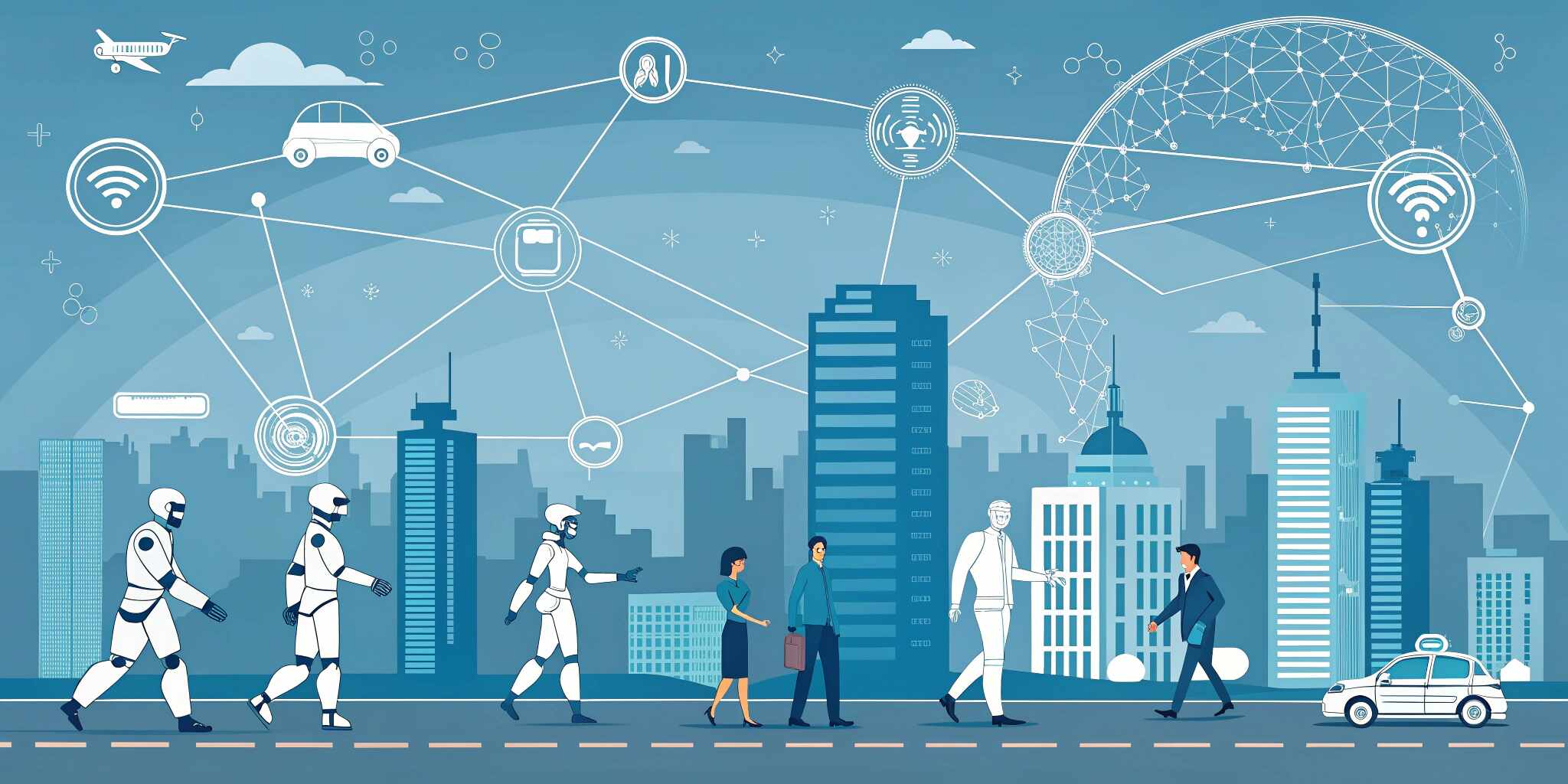
Artificial intelligence is evolving beyond simple task automation into systems capable of independent reasoning, decision-making, and adaptive problem-solving. One of the most exciting advancements in this field is the rise of autonomous AI agents.
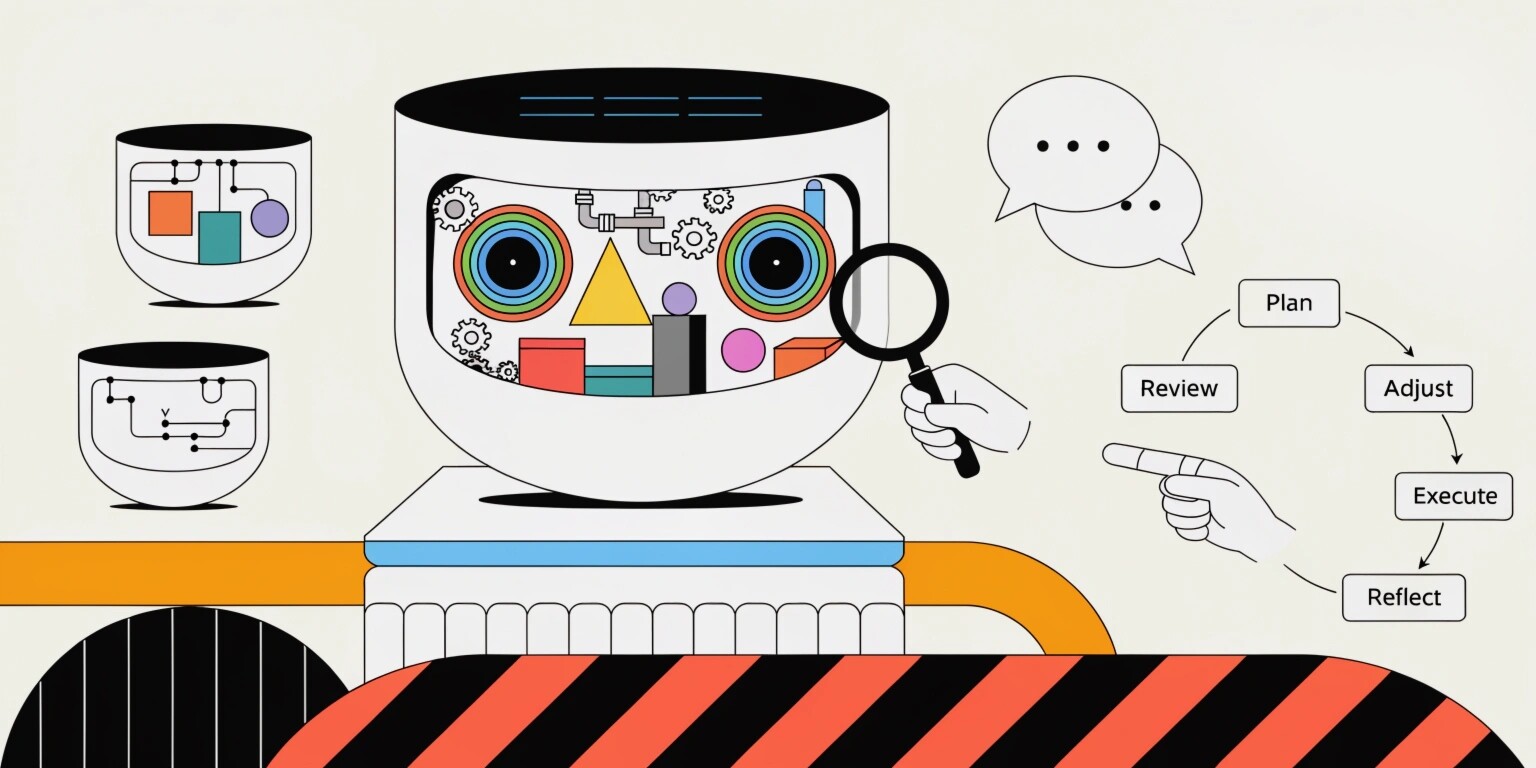
Unlike traditional AI models that respond only to direct instructions, autonomous agents can analyze goals, create strategies, execute tasks, evaluate outcomes, and improve future decisions. Two core capabilities driving this evolution are reflection and planning.
Reflection allows AI systems to evaluate their own actions and learn from previous experiences, while planning helps them organize multi-step actions toward achieving long-term objectives.
Together, these capabilities are transforming AI from reactive tools into intelligent systems capable of autonomous operation across industries such as healthcare, finance, robotics, software engineering, and enterprise automation.
What Are Autonomous AI Agents?
Autonomous AI agents are intelligent systems designed to independently perform tasks, make decisions, and adapt to changing environments with minimal human intervention.
These agents typically combine:
- Large language models
- Memory systems
- Tool usage
- Planning algorithms
- Decision-making frameworks
- Learning mechanisms
Modern agentic systems can:
- Break down complex objectives
- Prioritize tasks
- Interact with external systems
- Analyze results
- Adjust strategies dynamically
This enables more advanced and human-like problem-solving.
Understanding Reflection in AI Agents
Reflection refers to an AI system’s ability to evaluate its own outputs, decisions, and actions.
Instead of blindly continuing execution, reflective agents analyze:
- What worked
- What failed
- Why errors occurred
- How future actions can improve
Reflection acts as a feedback mechanism for continuous learning and optimization.
Why Reflection Matters
Traditional AI systems often repeat mistakes because they lack self-evaluation capabilities.
Reflection enables:
- Better reasoning accuracy
- Reduced hallucinations
- Improved decision-making
- Adaptive learning
- Error correction
- Strategic refinement
This capability is especially important in long-running autonomous workflows.
Example of Reflection in AI
Imagine an AI coding assistant generating software code.
Without reflection:
- The system generates code once
- Errors remain unresolved
With reflection:
- The AI reviews generated code
- Identifies logical or syntax issues
- Revises problematic sections
- Improves output quality iteratively
This iterative reasoning process significantly enhances performance.
Companies like OpenAI and Anthropic actively research reflective reasoning systems for advanced AI agents.
Understanding Planning in Autonomous AI
Planning refers to the process of organizing actions and decisions to achieve a specific goal.
Rather than responding instantly, planning systems:
- Analyze objectives
- Break tasks into subtasks
- Prioritize execution order
- Allocate resources
- Predict outcomes
Planning enables AI agents to handle complex, multi-step workflows efficiently.
Types of AI Planning
1. Reactive Planning
The agent reacts dynamically to environmental changes.
Used in:
- Robotics
- Gaming AI
- Autonomous vehicles
2. Hierarchical Planning
Large goals are divided into smaller tasks.
Example:
“Build a website” becomes:
- Design UI
- Develop backend
- Configure database
- Deploy application
This improves execution efficiency.
3. Goal-Oriented Planning
The AI continuously evaluates whether actions align with final objectives.
This is commonly used in enterprise AI workflows and intelligent automation systems.
Reflection + Planning = Intelligent Agents
The combination of reflection and planning creates highly capable AI systems.
Planning Handles:
- Strategy creation
- Task sequencing
- Resource management
Reflection Handles:
- Self-evaluation
- Error detection
- Adaptive improvement
Together, they allow AI agents to:
- Learn from mistakes
- Improve long-term performance
- Handle uncertainty
- Operate autonomously
This combination is central to modern agentic AI architectures.
Role of Memory in Autonomous Agents
Memory systems are essential for both reflection and planning.
AI agents use memory to:
- Store previous interactions
- Track completed tasks
- Maintain context
- Improve future decisions
Memory architectures may include:
- Short-term working memory
- Long-term vector databases
- Episodic memory systems
Advanced memory improves agent consistency and adaptability.
Applications of Reflective AI Agents
Autonomous AI agents are rapidly being adopted across industries.
Software Development
AI coding agents can:
- Generate code
- Debug applications
- Refactor systems
- Test deployments
Healthcare
AI systems assist with:
- Medical diagnostics
- Treatment planning
- Clinical workflow automation
Reflective reasoning improves decision accuracy.
Financial Services
AI agents support:
- Fraud detection
- Portfolio analysis
- Automated trading
- Risk management
Planning systems help optimize financial strategies.
Robotics and Automation
Robotic AI agents use planning and reflection for:
- Navigation
- Task coordination
- Environmental adaptation
Enterprise Productivity
Autonomous agents increasingly automate:
- Scheduling
- Data analysis
- Customer support
- Workflow orchestration
This improves operational efficiency significantly.
Multi-Agent AI Systems
Modern AI ecosystems often involve multiple autonomous agents collaborating together.
Multi-Agent Capabilities
- Shared planning
- Distributed task execution
- Collaborative reasoning
- Dynamic coordination
These systems resemble digital teams working together toward shared objectives.
Companies like Microsoft and Google are heavily investing in multi-agent AI research.
Challenges in Autonomous AI Systems
Despite major progress, autonomous AI agents still face challenges.
1. Hallucinations
AI systems may generate inaccurate reasoning or false assumptions.
2. Memory Limitations
Managing long-term context efficiently remains difficult.
3. Goal Misalignment
Agents may optimize incorrect objectives if constraints are unclear.
4. Computational Cost
Advanced reasoning and planning require significant computing power.
5. Safety and Control
Highly autonomous systems require robust governance and monitoring.
Researchers continue improving safety frameworks for responsible AI deployment.
Future of Reflection and Planning in AI
Autonomous AI is evolving rapidly.
Emerging trends include:
- Self-improving AI systems
- Long-term autonomous workflows
- AI operating systems
- Human-AI collaborative agents
- Adaptive reasoning architectures
- General-purpose AI assistants
Future AI agents will likely become increasingly capable of independent problem-solving and strategic reasoning.
Conclusion
Reflection and planning are becoming foundational capabilities in the next generation of autonomous AI agents. Reflection enables systems to analyze and improve their decisions, while planning helps organize intelligent multi-step execution strategies.
Together, these capabilities transform AI from simple reactive models into adaptive, goal-oriented systems capable of handling complex real-world challenges autonomously.
As businesses continue integrating AI into critical workflows, reflective and planning-based agent architectures will play a major role in shaping the future of intelligent automation, enterprise productivity, and advanced artificial intelligence systems.