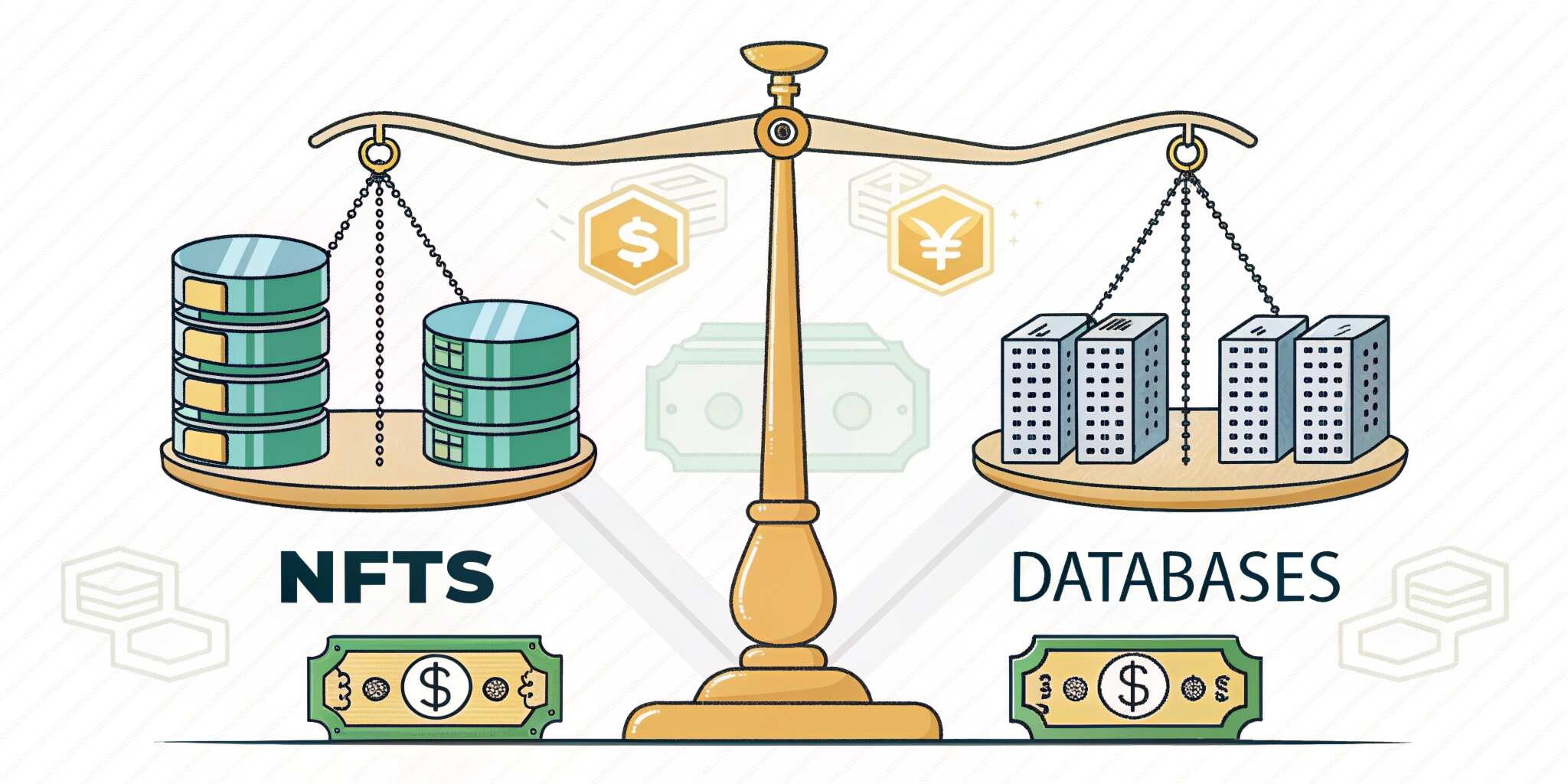
As blockchain adoption in gaming slows and studios reassess long-term sustainability, many developers are questioning whether NFTs are worth their cost. While NFTs introduce concepts like decentralized ownership and external marketplaces, they also bring significant financial and technical overhead. In contrast, traditional database-driven systems have powered successful games for decades. Comparing the two from a cost perspective reveals why many studios are choosing centralized databases over NFT-based architectures.
Infrastructure costs represent one of the most immediate differences. Traditional databases rely on cloud providers offering predictable pricing, elastic scaling, and mature tooling. Storage, reads, and writes are inexpensive, and performance scales linearly with player demand. NFT systems depend on blockchain networks where transaction fees vary based on congestion, token value, and network conditions. Even so-called low-fee blockchains introduce unpredictable operational expenses, especially when minting, transferring, or updating large volumes of assets. Over time, these fluctuating costs complicate budgeting and increase financial risk.
Development costs further widen the gap. Designing a database-backed inventory or asset system is a standard engineering task supported by decades of best practices, frameworks, and experienced developers. Changes can be implemented quickly, tested safely, and rolled back if necessary. NFT systems require specialized blockchain expertise, smart contract development, wallet integration, and security audits. Because smart contracts are immutable, mistakes become permanent, forcing teams to spend additional time on verification, external audits, and contingency planning. This increases both development timelines and staffing costs.
Operational and maintenance costs are another critical factor. Traditional databases allow developers to rebalance items, patch exploits, or remove problematic content instantly. These actions are essential for maintaining game balance and responding to player behavior. NFT-based assets complicate this process because ownership is recorded on-chain. Adjusting or removing assets often requires metadata workarounds or contract upgrades, both of which add technical debt and long-term maintenance obligations. Monitoring blockchain networks, maintaining nodes, and supporting wallets further increase operational overhead.
Performance-related costs also favor traditional databases. Centralized systems operate at millisecond-level latency, which is essential for real-time gameplay. Blockchain transactions are inherently slower and asynchronous, often taking seconds or minutes to finalize. To compensate, developers must build additional off-chain synchronization layers, cache systems, and reconciliation logic. These layers add server costs, engineering complexity, and extensive testing requirements to ensure gameplay remains responsive and consistent.
Customer support and risk management introduce hidden costs in NFT systems. With traditional databases, support teams can restore lost items, reverse fraudulent activity, and resolve disputes efficiently. NFT transactions are irreversible by design, meaning lost wallets or mistaken transfers often result in permanent asset loss. This not only increases player frustration but also raises legal, reputational, and support-related expenses for studios. The inability to intervene becomes a liability rather than a feature.
From a scalability standpoint, traditional databases offer clear advantages. They can support millions of concurrent players and billions of assets with proven reliability. Scaling NFT systems to similar levels requires complex hybrid architectures that combine blockchain verification with centralized servers, effectively negating much of the decentralization benefit while retaining its costs. This hybrid approach often delivers the worst of both worlds: higher complexity without proportional value.
Ultimately, the cost comparison reveals a clear pattern. NFTs introduce additional expenses at every layer of development, from infrastructure and engineering to maintenance and player support. While they offer unique advantages in niche scenarios such as open marketplaces or cross-platform ownership, these benefits rarely outweigh the financial and technical trade-offs for most games.
In conclusion, replacing NFTs with traditional databases is not a step backward but a practical decision grounded in cost efficiency, performance reliability, and design flexibility. For the majority of game developers focused on delivering balanced gameplay, scalable systems, and long-term sustainability, centralized databases remain the most economical and controllable solution.