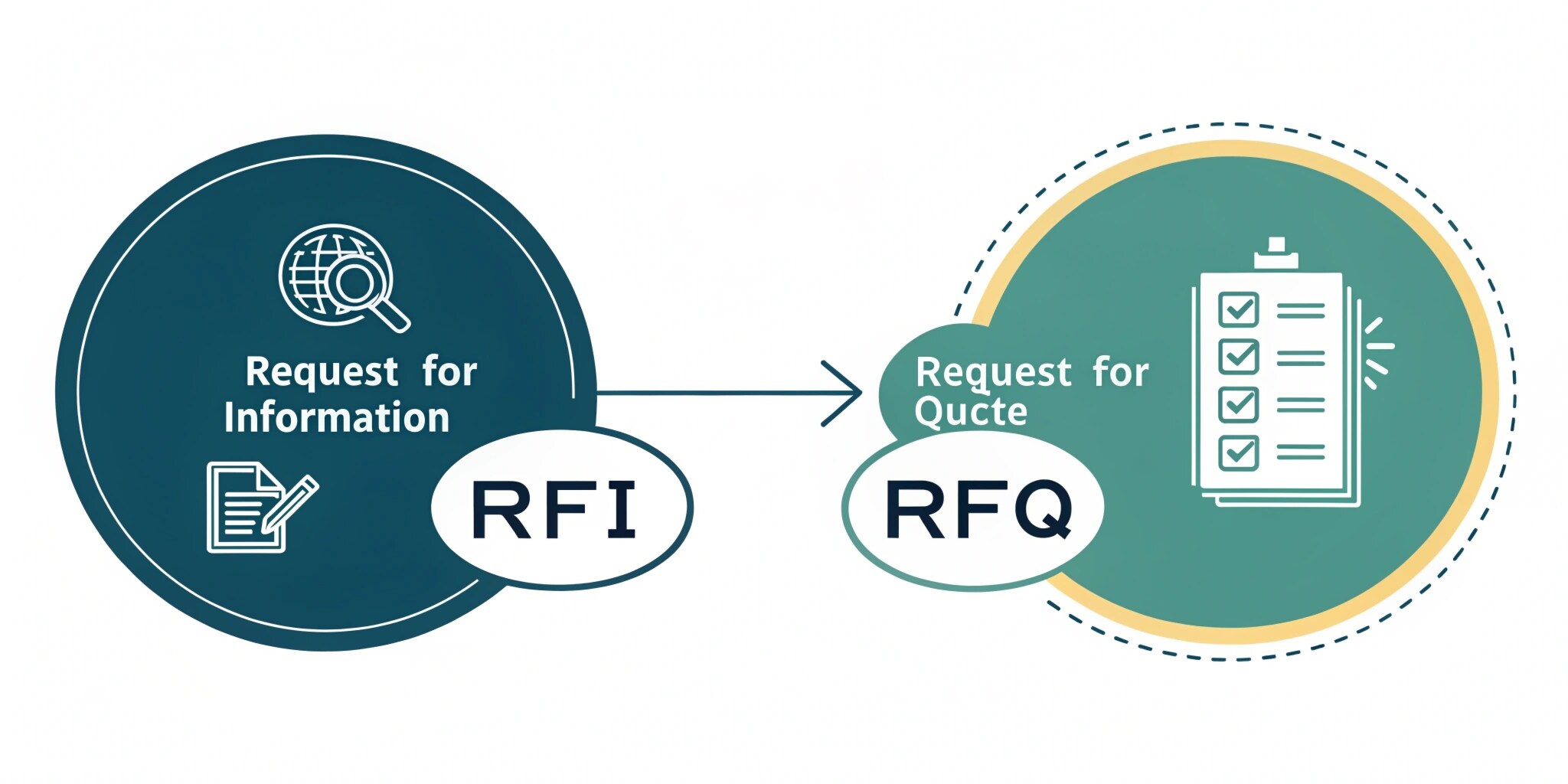
In every organization — especially IT companies, startups, and service-based businesses — selecting the right vendor is a critical decision. A wrong vendor can lead to project delays, financial losses, and operational issues. That’s why companies follow a structured procurement process, and two of the most important documents in this process are RFI (Request for Information) and RFQ (Request for Quotation).
Many people confuse these two terms, but they serve completely different purposes. Let’s understand them in a simple way.
What is RFI (Request for Information)?
An RFI is the first step in the procurement or vendor selection process.
It is a formal document sent to multiple vendors to collect general information about their company, capabilities, expertise, and services. At this stage, the company is not asking for pricing. Instead, it is trying to understand:
• What services the vendor offers
• Technical capabilities
• Experience in similar projects
• Team strength
• Technologies used
• Business stability
In simple words, an RFI is used when the company does not yet know which solution or vendor is suitable.
Example:
A startup wants to build a mobile app but has no idea which technology to use — Flutter, React Native, or native Android/iOS. They send an RFI to different IT companies asking about expertise, past projects, timelines, and suggestions.
So, RFI is mainly research-oriented.
What is RFQ (Request for Quotation)?
An RFQ comes later in the procurement process.
Once a company already knows:
- What product/service it needs
- Technical requirements
- Project scope
Now it asks vendors to provide pricing details.
An RFQ focuses on:
• Cost
• Delivery timeline
• Payment terms
• Service terms
• Quantity
Here, the company is ready to purchase — it just wants to compare prices and select the best offer.
Example:
After finalizing Flutter for app development and preparing a requirement document, the startup sends an RFQ to 5 shortlisted companies asking:
“Please provide quotation for developing this mobile app.”
So RFQ is price-oriented.
Key Differences Between RFI and RFQ
BasisRFIRFQFull FormRequest for InformationRequest for QuotationPurposeGather informationGet pricingStageEarly procurement stageLater procurement stageFocusVendor capabilityVendor costRequirement clarityNot clearClearly definedPricingNot requiredMandatoryOutcomeVendor shortlistingVendor selection
Procurement Flow (Real Process)
In real business environments, the process typically looks like this:
RFI → Vendor Shortlist → RFQ → Final Vendor Selection → Contract
Sometimes companies also use RFP (Request for Proposal) between RFI and RFQ, but RFI and RFQ remain the most commonly used documents.
Why IT Companies Use RFI and RFQ
IT projects are complex and expensive. For example:
- Software development
- Website development
- ERP implementation
- Cloud migration
Using RFI helps HR, procurement teams, and project managers understand vendor expertise first. After that, RFQ helps management compare budgets and approve the project.
This prevents:
• Hiring inexperienced vendors
• Hidden costs
• Wrong technology decisions
• Project failure
When Should You Use RFI?
Use RFI when:
- You don’t know the solution yet
- You are researching the market
- You need vendor suggestions
- You are exploring technology options
When Should You Use RFQ?
Use RFQ when:
- Requirements are finalized
- Scope is documented
- You want price comparison
- You are ready to purchase
Simple Way to Remember
RFI = “Tell me about yourself.”
RFQ = “Tell me your price.”
Final Thoughts
Understanding the difference between RFI and RFQ is very important for HR professionals, procurement executives, startup founders, and project managers. These documents make vendor selection systematic and risk-free.
RFI helps you choose the right vendor, while RFQ helps you choose the right deal.
If used properly, they save time, money, and project failure.